Here’s something that feels completely backwards.
You’d assume the less you drive, the less you pay for car insurance. Less time on the road, less risk, smaller bill. Makes sense.
New MoneySuperMarket data says it doesn’t quite work like that. And the gap is big enough to be worth understanding.
So What Does The Data Actually Show?
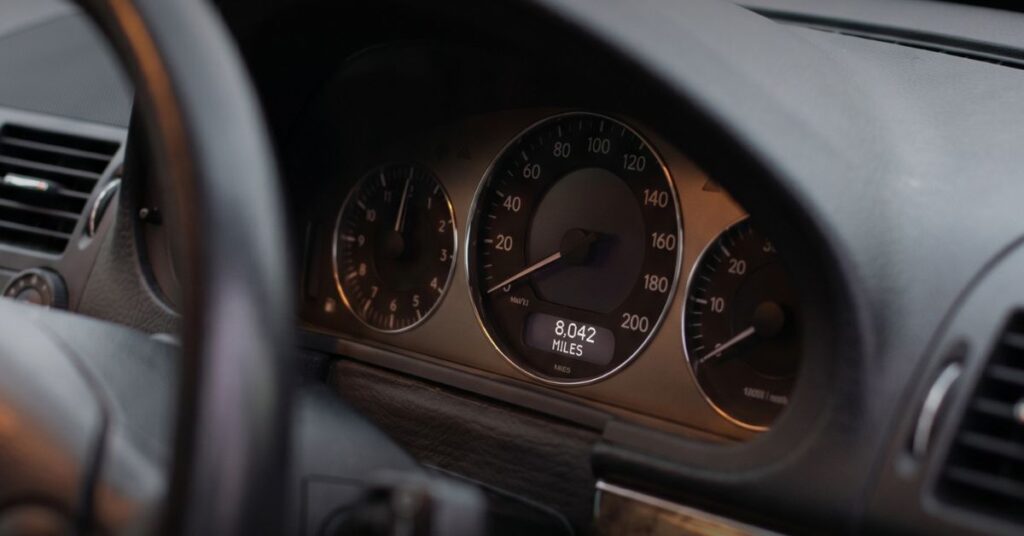
It looked at average comprehensive premiums by annual mileage. The pattern is not a straight line.
Drivers doing 0 to 5,000 miles a year paid an average of £514. Those doing 10,001 to 20,000 miles actually paid less, around £495. Then it climbs steeply, with 40,001 to 50,000 mile drivers paying £726.
Read that again. On average, the people driving barely any miles paid more than the people driving up to four times as much.
That’s the bit that makes people do a double take.
More news:



Why On Earth Would That Happen?
It’s not a glitch. There are two real reasons behind it.
The first is the experience factor. If you hardly ever drive, insurers may see you as someone who’s a bit rusty behind the wheel. Less practice can mean slower reactions to the unexpected, and insurers price that in.
The second is more subtle. Some higher-risk groups, like very young drivers, also happen to drive very few miles. So they cluster in the low-mileage brackets and drag the average premium for that group upwards. You might be a careful low-mileage driver being averaged in with much riskier ones.
So it’s less “driving less is bad” and more “the low-mileage bracket is a mixed bag, and the average reflects that”.
The Dangerous Conclusion To Avoid
Here’s where people can go badly wrong with a stat like this.
Some will see “low-mileage drivers pay more” and think the answer is to tell their insurer they drive far more than they actually do, to land in a cheaper bracket.
Please don’t. Deliberately overstating your mileage is misrepresenting yourself to your insurer. If you ever needed to claim and it came out, your claim could be reduced or refused and your policy potentially voided. A slightly cheaper quote is not worth driving around effectively uninsured.
Always give your real, honest mileage. Underestimating it to look low-risk carries the same danger in the other direction.

So What Can You Actually Do About It?
The useful takeaway isn’t to change your driving or fib about it. It’s to shop differently.
These figures are for standard car insurance. For people who genuinely drive very little, specialist low-mileage or pay-as-you-go policies often work out cheaper than a standard policy, because they’re designed around low mileage rather than lumping you into a broad average.
So if you’re a low-mileage driver looking at a standard quote that seems oddly high, it may be worth specifically comparing a pay-as-you-go or telematics option alongside it. The standard market average is not the only price available to you.
It’s also a good reminder that car insurance rarely rewards loyalty or assumptions. The pattern that “feels right” isn’t always what the pricing does, which is exactly why comparing properly at renewal tends to beat sticking with what you’ve got. Younger drivers, who pay the steepest premiums, can stack this with the other ways young drivers can avoid high car insurance costs.
None of this means low mileage is bad. It means the cheapest cover for a low-mileage driver often isn’t the standard policy everyone defaults to. Worth knowing before your next renewal lands. When did you last actually check whether a low-mileage policy would beat your standard one?
This is general information, not financial advice. Always give your insurer accurate information, and compare policies for your own circumstances or speak to a regulated adviser before deciding.