You know that feeling when you buy a coffee and immediately regret it?
Or when you treat yourself to something nice, then spend the next three days calculating how much you “wasted”?
That’s money guilt.
And it’s exhausting.
Here’s the thing: saving money shouldn’t make you miserable.
And spending money shouldn’t make you feel terrible.
Let me show you how to save without the guilt.
Your Money Mindset Is Probably Wrong
Most people think saving means punishment. Deprivation. Saying no to everything fun.
That’s rubbish.
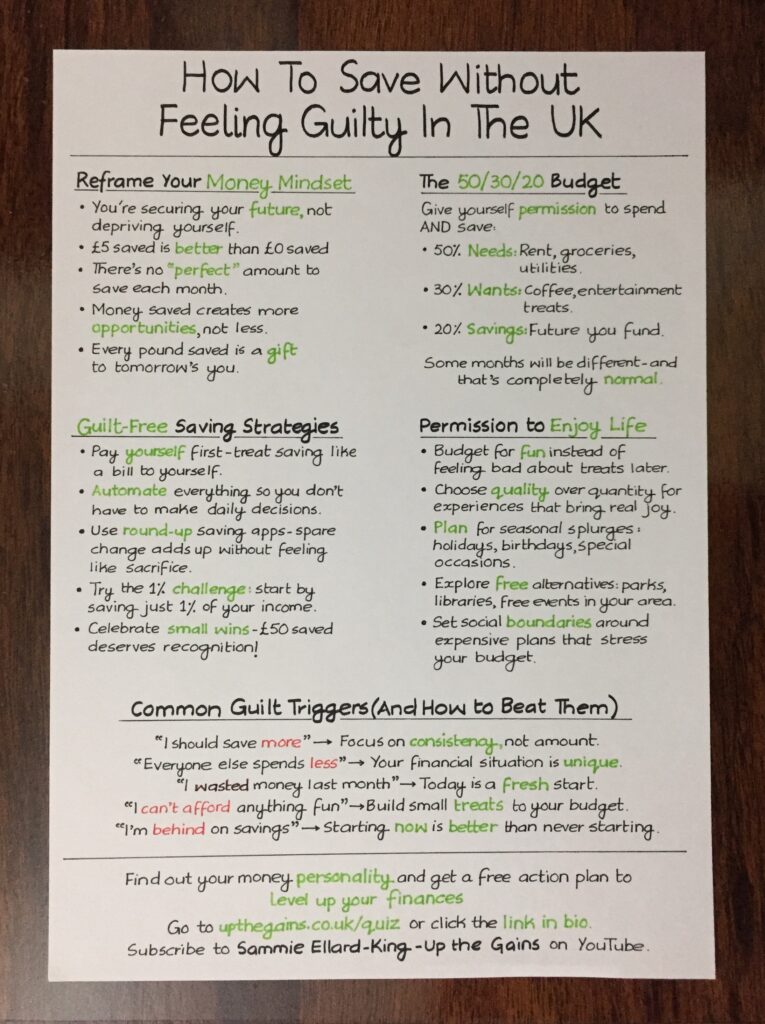
Saving isn’t about depriving yourself. It’s about securing your future. There’s a massive difference.
When you save £5, you’re not losing £5. You’re giving yourself options later. That’s powerful.
And here’s something nobody tells you: £5 saved is genuinely better than £0 saved. It doesn’t matter if your mate saves £500 per month. You’re not competing with anyone.
There’s no “perfect” amount to save each month. There’s just the amount that works for you, right now, with your income and your expenses.
Every pound you save is a gift to tomorrow’s you. Think about it like that. You’re not taking money away from today. You’re giving money to your future self.
To learn more about how to improve your money mindset watch this episode of The Money Gains Podcast with money mindset coach Laura Ann-Moore.
The 50/30/20 Rule Actually Makes Sense
You’ve probably heard of this budgeting rule before.
But most people don’t actually use it properly.
Here’s how it works:
50% goes to needs. Rent, groceries, utilities, transport. The stuff you genuinely have to pay for.
30% goes to wants. Coffee, entertainment, treats, nights out. The stuff that makes life worth living.
20% goes to savings. Your future fund. Your emergency money. Your options.
Notice something? 30% of your money is specifically for fun stuff. That’s not an accident.
You’re supposed to spend money on things you enjoy. That’s literally built into the system.

But What If The Numbers Don't Work?
Some months will be different. That’s completely normal.
Maybe you had a big expense. Maybe your income was lower. Maybe Christmas happened and you needed to buy presents.
The percentages are a guide, not a prison sentence. If you do 50/35/15 one month, that’s fine. If you do 60/30/10, that’s also fine.
The point is to have a rough framework. Not to stress about hitting exact numbers every single month.

Strategies That Actually Remove The Guilt
The problem with most saving advice is that it relies on willpower. Making good decisions every single day.
That’s exhausting. And it doesn’t work.
Here’s what does work.
1) Pay Yourself First
Treat saving like a bill. One you owe to yourself.
As soon as you get paid, move your savings amount into a different account. Before you pay for anything else.
If you wait until the end of the month to see what’s left over, there won’t be anything left over. There never is.

2) Automate Everything
Set up automatic transfers on payday. The money moves before you can spend it.
You can’t feel guilty about spending money you never see. Your brain just adjusts to living on what’s left.
This is genuinely the most effective saving strategy there is. It takes willpower completely out of the equation.
3) Use Round-Up Apps
These apps round up every purchase to the nearest pound and save the difference.
Buy something for £2.30? They save 70p for you.
It feels like nothing. But it adds up to about £20-30 per month for most people. That’s £240-360 per year.
4) The 1% Challenge
If saving 20% of your income feels impossible, start with 1%.
Earn £2,000 per month? Save £20. That’s it.
Next month, try 2%. Then 3%. Gradually build up.
Starting small is infinitely better than not starting at all.
5) Celebrate Small Wins
Saved £50? That’s brilliant. Tell someone. Do something small to mark it.
We’re so focused on big goals that we forget to celebrate progress. But progress deserves recognition.
Every milestone matters. Even the tiny ones.
You're Still Allowed To Enjoy Life
This is where most saving advice goes wrong. It acts like fun is optional.
It’s not. Life without enjoyment isn’t worth living.
The trick is to plan for fun instead of feeling guilty about it later.

Budget For Treats
Put money aside specifically for treats. Coffee money. Cinema money. Whatever brings you joy.
When you’ve budgeted for it, there’s no guilt. You planned for this. You’re allowed to enjoy it.
Some treats cost nothing at all. You can get free stuff on your birthday from dozens of UK brands.
Quality Over Quantity
One really nice meal out per month beats four mediocre takeaways that you feel guilty about.
One amazing holiday beats three rushed weekends away that stress your budget.
Choose experiences that bring real joy. Skip the ones that don’t.
Plan For Seasonal Splurges
Christmas costs money. Birthdays cost money. Holidays cost money.
These aren’t surprises. They happen every year.
Save for them in advance. Put £50 per month aside for Christmas. That’s £600 by December. No stress. No guilt. No emergency credit card use.
Free Alternatives Are Everywhere
Parks are free. Libraries are free. Most museums have free entry days. Community events are usually free.
You don’t need to spend money to have a good time. You just need to plan a bit.

Set Social Boundaries
This is the hard one. But it matters.
If your mates always want to go for expensive meals and you can’t afford it, say so.
“I’m saving for a house deposit, so I can’t do expensive dinners right now. Want to grab a coffee instead?”
Real friends will understand. The ones who don’t? They’re not your problem.
The Guilt Triggers Nobody Talks About
Let’s address the thoughts that actually stop you saving.
"I Should Save More"
Stop comparing yourself to other people. You don’t know their income. You don’t know their expenses. You don’t know their situation.
Focus on consistency, not amount. £10 saved every month for a year beats £100 saved once and then nothing.
"Everyone Else Spends Less"
Do they though? Or do they just talk about spending less whilst actually spending loads?
Your financial situation is unique. Your income is yours. Your expenses are yours. Your goals are yours.
Stop worrying about what everyone else is doing.
"I Wasted Money Last Month"
Okay. But what does that have to do with today?
Last month is gone. You can’t change it. But today is a fresh start.
Every single day is a chance to make better choices. Yesterday doesn’t matter.
"I Can't Afford Anything Fun"
Then you need to build small treats into your budget.
Even £20 per month for “whatever I want” money makes a difference. That’s one nice coffee per week. Or one cinema trip per month.
Fun isn’t optional. It’s necessary. Budget for it properly.
"I'm Behind On Savings"
Compared to who? Some imaginary perfect person who saves 50% of their income and never buys anything fun?
That person doesn’t exist.
Starting now is better than never starting. Even if you’re 40 and have no savings yet. Even if you’re 25 and feel like you should have more.
Start today. That’s all that matters.
Stop Comparing Yourself
Social media makes this worse. Everyone posts about their wins. Nobody posts about their struggles.
You see someone your age buying a house. You don’t see their parents helping with the deposit.
You see someone going on amazing holidays. You don’t see their credit card debt.
You see someone with huge savings. You don’t see them living at home rent-free.
Stop comparing your full story to everyone else’s highlight reel.
When You Actually Mess Up
You will overspend sometimes. Everyone does.
You’ll have a month where you save nothing. Or where you dip into savings for something that wasn’t an emergency.
That’s fine. That’s normal. That’s being human.
The people who succeed at saving aren’t the ones who never mess up. They’re the ones who mess up and keep going anyway.
Here are some things you shouldn’t feel guilty to do:
Buy coffee if it makes you happy. Just budget for it.
Take holidays. They’re not a waste of money. They’re an investment in your mental health.
Spend money on hobbies. Life without interests is miserable.
Save less some months. Flexibility is fine.
Change your goals. They’re yours. You’re allowed to change them.
What Actually Matters
Consistency beats intensity every single time.
Saving £50 per month for five years is better than saving £500 per month for three months and then giving up.
Small, sustainable habits beat big, dramatic changes that you can’t maintain.
Progress beats perfection. Always.
Start Where You Are
Not where you think you should be. Not where your friends are. Where you actually are right now.
If that’s saving £5 per month, brilliant. Start there. You can always increase it later.
If that’s 1% of your income, perfect. That’s your starting point.
If that’s just tracking your spending for a month before you start saving, great. That’s progress.
Saving money isn’t about punishment. It’s about choices.
You’re choosing to give yourself options later. You’re choosing to reduce stress. You’re choosing to build security.
But you’re also allowed to choose joy. And fun. And treats. And experiences.
The two things aren’t opposites. They’re partners.
Save money. Enjoy life. Feel good about both.
That’s the goal.