£100,000 sounds impossible when you’re starting from zero.
Most people look at that number and think it’s for other people. People with high-paying jobs. People who inherited money. People who got lucky.
Wrong.
Regular people hit £100k all the time. They just follow a system and stick with it for long enough.
Here’s the exact roadmap. No shortcuts. No get-rich-quick schemes.
Just the boring stuff that actually works.
Every little helps when you are building wealth. Claiming the best free money offers in the UK can give your investing pot a free head start.

Get Your Foundation Right (Months 1-6)
You can’t build wealth whilst money is leaking out of your accounts.
Before you think about investing or saving, you need to stop the bleeding.
Audit Your Spending
Download three months of bank statements. Categorise every transaction. Find where money is disappearing.
Most people find £50-150 per month in forgotten subscriptions, wasteful spending, and things they don’t value.
That’s your first £600-1,800 per year recovered. Just from paying attention.
This is even easier if you use Gains App instead.

Cancel Unused Subscriptions
That gym membership you used twice? Cancel it.
That streaming service you got for one show six months ago? Cancel it.
That app subscription you forgot about? Cancel it.
Every £10 per month you cancel is £120 per year saved.
Over 10 years invested at 7% returns, that’s £1,760.
Still think £10 per month doesn’t matter?

Switch To Cheaper Contracts
Phone contracts get expensive when you’re out of your minimum term.
Call them. Ask for a better deal. Or switch providers.
Same with broadband. Same with insurance. Same with energy.
Shopping around once per year saves most people £300-600.
That’s money that can start building wealth instead.
Stop The Debt Spiral
If you’re using overdrafts or credit cards to get through the month, you’re going backwards.
Cut spending until you’re living within your means. Sounds harsh. But you can’t build wealth whilst drowning in debt.
This first six months isn’t exciting. But it’s essential.
You’re plugging the holes in the boat before you start rowing.
Emergency Buffer (Months 6-12)
Once you’ve stopped the bleeding, build a safety net.
Save £1,000 minimum as an emergency fund. Keep it in a high-interest savings account where you can access it quickly.
Why £1,000? Because that covers most emergencies. Boiler breaks. Car needs fixing. You lose your job and need money for essentials whilst you find another one.
Without this buffer, you end up going backwards. Every emergency hits your credit card. The debt builds. You’re back where you started.

Automate £100-200 Per Month
Set up an automatic transfer on payday. £100-200 moves into your emergency fund account before you can spend it.
At £150 per month, you hit £1,000 in about 7 months.
Then stop. £1,000 is enough for now. Time to move to the next step.
Eliminate High-Interest Debt (Year 1-2)
Credit cards and personal loans are wealth killers.
If you’re paying 15-20% interest on debt, you can’t build wealth.
Every pound you pay in interest is a pound that can’t compound for you.
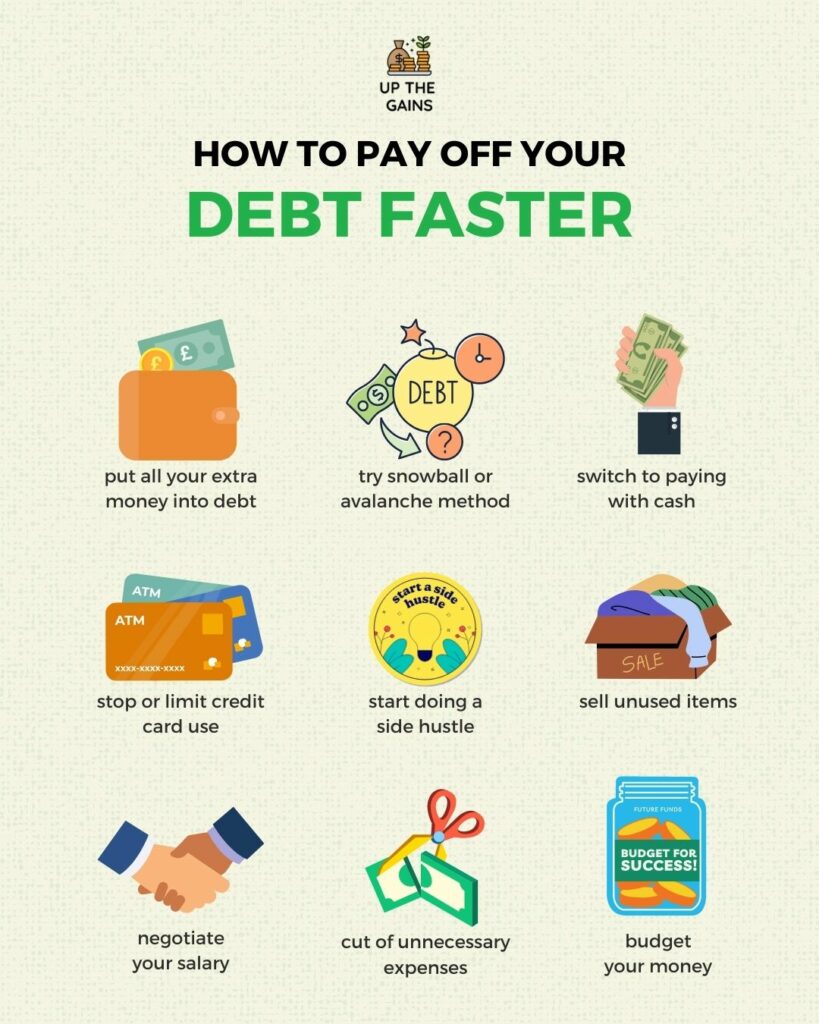
Two Methods That Work
Snowball method: Pay off smallest debts first. Gives you quick wins. Builds motivation.
Avalanche method: Pay off highest interest debts first. Saves more money. Mathematically optimal.
Pick whichever one you’ll actually stick with.
Both work if you follow through.
Try out a debt repayment calculator to see which works for you.
How Long This Takes
Depends how much debt you have. £3,000 in credit card debt at £300 per month repayment? About 11 months.
£10,000 in various debts at £500 per month? About 22 months.
This step sucks. You’re putting loads of money towards debt and have nothing to show for it.
Push through. Getting debt-free changes everything.
Start Investing Small (Year 2)
Once you’re debt-free (except mortgage and student loans), start investing.
Don’t wait until you have loads of money.
Don’t wait until you understand everything. Start small and learn as you go.
If you do want to build that understanding, a few of the best investing books for beginners will give you the fundamentals.
This is not financial or UK tax advice. Capital is at risk when you invest. Always do your own research.
Open A Stocks & Shares ISA
This is your tax-free investment account. Any growth is yours to keep. No tax on profits.
Pick a platform. Open an account. Takes about 20 minutes.
I like Trading 212 because you can start with as little as £1 and get free fractional shares worth up to 100 EUR/GBP. Just open an account using promo code ‘GAINS’.
Capital at risk when you invest. ISA rules and terms apply
Global Index Fund
Put your money in a global index fund.
This gives you a tiny piece of thousands of companies worldwide. When the global economy grows, you make money.
No stock picking. No trying to time the market.
Just boring, simple, works-over-time investing.

Start With £50-100 Per Month
That’s all. Just £50-100.
At 7% average returns, £100 per month for a year becomes £1,260. You put in £1,200. Growth gave you £60.
Doesn’t sound like much. But this is the foundation of everything that comes next.
Don’t worry about timing the market. Consistency beats perfection. Every single time.
Trading 212 provides access to over 10,000 stocks, funds, ETFs and investment trusts.
They offer commission-free trading* and their auto investing feature is excellent.
OUR OFFER - To get free fractional shares worth up to 100 EUR/GBP, you can open an account with Trading 212 using promo code 'GAINS'. Terms apply
*Other fees may apply. See terms and fees
**When investing, your capital is at risk. If you enable interest, Trading 212 will hold your cash in qualifying money market funds and banks. Otherwise, your cash will be held only in banks. Interest applies on cash in an investment account. Terms apply.
- Commission free trading*
- Earn interest on uninvested cash**
- Fantastic mobile app
- Award winning ISA
- Personal pension
- No Junior ISA
- Fewer research tools than other platforms

Scale Your Income (Years 2-4)
Here’s the truth most personal finance advice ignores: you can’t cut your way to wealth.
Saving £20 by making coffee at home is fine. But earning an extra £5,000 per year changes everything.
Ask For Raises
If you’re good at your job and haven’t had a raise in 18+ months, ask for one.
Most people never ask. They wait to be offered. They wait forever.
Have the conversation. Worst case, they say no. Best case, you get £2,000-5,000 more per year.
Switch Jobs For Higher Pay
Job hoppers earn 10-15% more than people who stay put.
Every 2-3 years, test the market. See what you’re worth. If someone offers significantly more, take it.
Loyalty to employers rarely pays. Loyalty to yourself always does.
Develop Side Income Streams
Freelancing. Consulting. Selling things online. Teaching.
Whatever uses skills you already have.
Even £200-300 per month extra adds up. That’s £2,400-3,600 per year. All of which can be invested.
Try one of these side hustle ideas if you aren’t sure where to start.

Invest In Skills That Increase Earnings
Take courses. Get certifications. Learn things that make you more valuable.
Spending £500 on a course that helps you earn £3,000 more per year is a 600% return. And it keeps paying year after year.
A £5,000 pay rise is better than cutting £20 from your weekly expenses. Focus your energy accordingly.
The Sweet Spot (Years 4-7)
Once you’re earning more, you can invest more.
This is where things accelerate. Compound growth starts to become noticeable.
Aim For £500+ Per Month
At 7% average returns, £500 per month gets you to £100k in about 12-13 years.
Want to hit it in 10 years? You need around £700 per month.
That sounds like loads.
But if you’ve followed the previous steps, you should be earning more now than when you started.
The Numbers That Matter
£500 per month at 7% returns:
- Year 5: £35,800
- Year 10: £86,900
- Year 12: £111,200
£700 per month at 7% returns:
- Year 5: £50,100
- Year 8: £92,400
- Year 10: £121,700
See the difference those extra few years make? Compound growth is slow at first. Then it explodes.
Keep Increasing Contributions
Every pay rise, put at least half towards investing. Your spending is already comfortable. Extra income accelerates your timeline.
Get a £3,000 raise? Put £1,500 towards investing. Keep £1,500 for lifestyle improvements.
You improve your life and accelerate wealth building. Both matter.
Be Tax-Efficient (Years 5-8)
Taxes eat returns. Smart people minimise them legally.
Use Your Full £20k ISA Allowance
If you can afford it, max out your Stocks & Shares ISA every year.
Everything in there grows tax-free. No capital gains tax. No dividend tax. Nothing.
Over decades, this saves tens of thousands in taxes.

Workplace Pension Matching Is Free Money
If your employer matches pension contributions, take it. All of it.
They’ll match 5%? Put in 5%. That’s literally free money. Plus tax relief.
A £100 contribution only costs you £80 (basic rate taxpayer) or £60 (higher rate). The government tops it up.
SIPP For Additional Tax Relief
If you max your ISA and still have money to invest, consider a SIPP (Self-Invested Personal Pension).
You get tax relief on contributions. Money grows tax-free inside. You pay tax when you withdraw after 55.
For higher earners, this makes sense. For basic rate taxpayers, ISAs are usually better.
Stack These Accounts To Minimise Taxes
Use all three if you can. ISA, workplace pension, SIPP.
Each has tax advantages. Using them strategically keeps more of your returns.
The difference between paying attention to tax efficiency and ignoring it? Probably £20,000-40,000 over 10 years.
Stay Consistent (Years 6-10)
Markets will crash. Your investments will go down 20-30%. Maybe more.
This is normal. This is expected. This is not a reason to panic.
The People Who Reach £100k Keep Investing
When the market crashes 30%, most people panic. They sell. They lock in their losses. They miss the recovery.
The people who get rich keep investing through the scary times.
Market crashes are sales, not disasters. Everything is cheaper. You’re buying more shares for the same money. Neil Invests opened his first ISA a month before a 40% COVID crash and calls it the best thing that ever happened to his portfolio.

2008 Financial Crisis Example
Markets dropped about 50%. Terrifying if you were watching.
People who kept investing through 2008-2009 bought shares at bargain prices. When markets recovered in 2010-2013, they made enormous returns.
People who sold in panic crystallised their losses and missed the recovery.
You Can't Time The Market
Nobody knows when markets will crash or recover. Not professionals. Not algorithms. Nobody.
The winning strategy is simple: keep investing regardless. Every month. Good times and bad.
Time in the market beats timing the market. Always has. Always will.
Don't Lifestyle Inflate (Years 7-10)
As your income grows, every instinct tells you to spend more.
Bigger flat. Nicer car. Better holidays. Fancier restaurants.
Fight that instinct.
Live Like You Earn 80% Of Your Actual Income
When you get a raise from £40k to £50k, your take-home goes from about £2,486 to £3,040 per month.
Most people immediately increase their spending by £554 per month. Better flat, better car, more stuff.
Now they’re stuck at that higher spending level. The raise didn’t improve their financial position at all.
Invest The Difference
Instead, keep your spending at £2,486. Put that extra £554 straight into investing.
Now you’re investing £924 per month instead of £370. Your timeline to £100k just dropped from 13 years to 9 years.
One decision. Massive difference.
Spend More Just Because You Can
This is the trap that keeps high earners broke.
People earning £80k with nothing saved. Because they spend £80k per year.
People earning £40k with £100k invested. Because they spend £30k per year and invest the rest.
Income doesn’t build wealth. The gap between income and spending builds wealth.
The Final Push (Years 8-10)
You’re close now. Maybe £60k-75k invested. The finish line is visible.
Review And Rebalance Annually
Once per year, check your portfolio. Make sure you’re still in low-cost global index funds.
If something has grown massively and now dominates your portfolio, rebalance back to your target allocation.
Takes 30 minutes per year. Keeps your risk level appropriate.
Increase Contributions During Bonus Months
Got a work bonus? Put at least 50% straight into investing.
Got a tax refund? Investing.
Sold something? Investing.
One-off money doesn’t go towards lifestyle. It goes towards your goals.
Track Your Net Worth
Once per quarter, calculate your net worth. All assets minus all debts.
Watching this number climb is addictive. £25k. £40k. £60k. £80k.
Each milestone proves the system works. Keeps you motivated for the final push.
Celebrate Milestones
£25k: You’ve built a proper emergency fund plus investing foundation.
£50k: You’re halfway there. Compound growth starts accelerating.
£75k: You can practically see £100k from here.
£100k: You’ve done something most people never achieve. You’re in the top 10% of savers in the UK.
Don’t skip these celebrations. You’ve earned them.
The Reality Of This Journey
This isn’t easy. It takes discipline. It takes years. It requires sacrifices.
You’ll miss out on some things your friends do. You’ll drive an older car. You’ll live in a smaller flat. You’ll say no to expensive holidays.
But in 10 years, you’ll have £100k invested whilst they have nothing.
In 20 years, you’ll have £500k+ whilst they’re still living payday to payday.
In 30 years, you’ll be financially free whilst they’re stuck working until 70.
Different choices. Different outcomes.
Start This Month
Don’t wait for the perfect time. Don’t wait until you earn more. Don’t wait until you’ve figured everything out.
Start this month with whatever you can afford. Even if it’s £50.
Ten years passes whether you do this or not.
In 2035, you’ll either have £100k or you’ll have nothing.
The only difference is what you do this month.
Your future self is watching. Make them proud.
If you found this interesting, please share!
Disclaimer: Content on this page is for informational purposes and does not constitute financial advice. Always do your own research before making a financially related decision.