“Money can’t buy happiness.”
You’ve heard it a thousand times. Usually from people who have plenty of money.
Here’s the truth: money absolutely affects happiness. Just not in the way most people think.
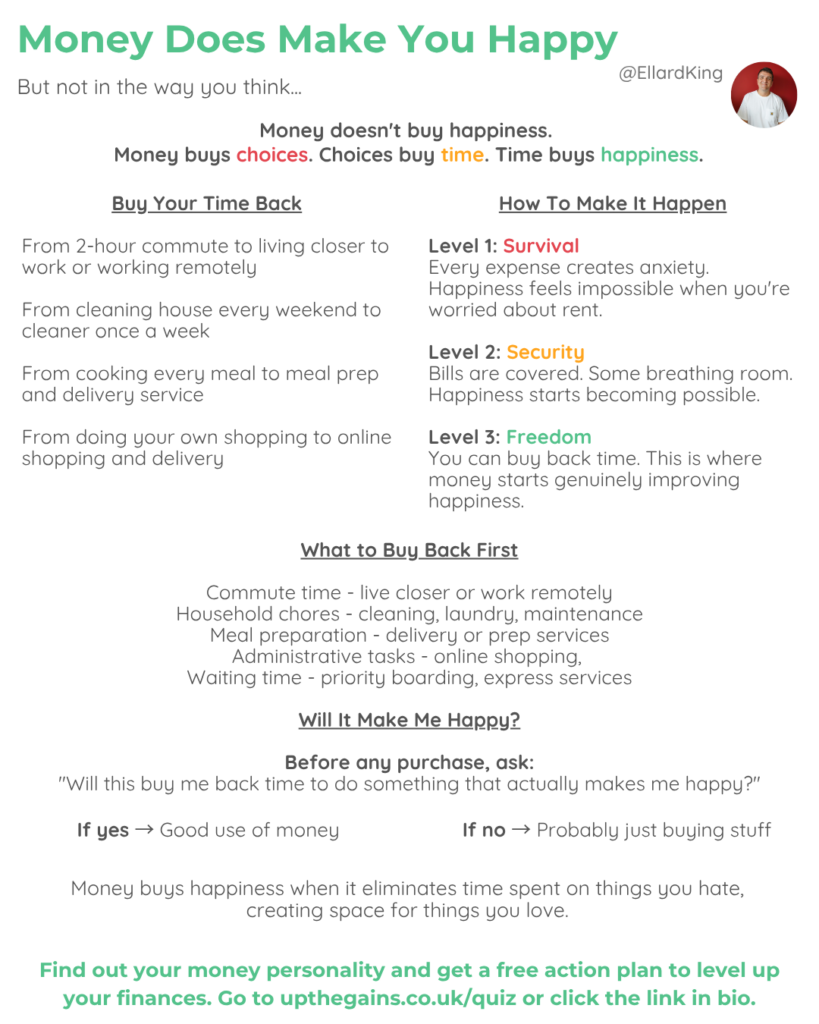
Money doesn’t buy happiness directly.
But money buys choices.
Choices buy time.
And time buys happiness.
Let me break down exactly how this works.
What Money Actually Buys
Not fancy cars. Not designer clothes. Not impressing people you don’t like.
Money buys you out of situations that make you miserable.
A shorter commute
You spend 2 hours per day commuting. That’s 10 hours per week. 520 hours per year.
That’s 21.6 full days spent sitting in traffic or on crowded trains. Nearly a month of your life gone every year.
Money lets you live closer to work. Or work remotely. Or choose jobs based on commute time rather than just salary.
Suddenly you have 520 hours back. That’s time with your kids. Time for hobbies. Time to sleep properly.
That buys happiness.
Less weekends spent cleaning
Every Saturday and Sunday morning spent cleaning. Hoovering, mopping, scrubbing toilets, doing laundry.
4-6 hours per weekend. That’s 200-300 hours per year.
Money lets you hire a cleaner once a week. £60-80 gets you 3 hours of cleaning.
Your weekends are yours again. Time with family. Time for rest. Time for things you actually enjoy.
That buys happiness.
Not knowing what to cook
Coming home exhausted. Having to plan dinner. Shop for ingredients. Cook. Clean up afterwards.
1-2 hours every single evening. Plus the mental load of planning what to eat.
Money lets you buy meal prep services. Or quality meal delivery. Or even just getting pre-chopped vegetables and ready meals.
Your evenings are less stressful. You’re not exhausted from cooking after being exhausted from work.
That buys happiness.
Less life admin
Food shopping. Dropping off dry cleaning. Post office queues. Waiting on hold with utility companies. Sorting out problems with subscriptions.
Hours per week on tedious admin tasks you hate.
Money lets you order groceries online. Use services that handle admin. Pay someone else to deal with the tedious stuff.
Your mental energy goes to things that matter rather than things that drain you.
That buys happiness.

The Three Levels Of Money And Happiness
Not all money buys the same amount of happiness.
There are distinct levels.
Level 1: Survival
Every expense creates anxiety. Choosing between heating and eating. Overdraft fees. Payday loans.
Happiness feels impossible when you’re worried about keeping a roof over your head.
Money at this level doesn’t buy happiness. It buys the absence of constant stress and fear.
Getting out of this level should be everyone’s first priority.
Level 2: Security
Bills are covered. Small emergency fund. Not wealthy, but not drowning either.
You can afford your rent without anxiety. You can buy groceries without checking your balance first. Unexpected £200 bill doesn’t destroy you.
Happiness starts becoming possible at this level. The constant fear is gone.
But you’re still trading time for money. Still commuting. Still doing everything yourself because paying others feels extravagant.
Level 3: Freedom
You can buy back time. This is where money starts genuinely improving happiness.
Not buying stuff. Buying time. Buying freedom from things you hate doing.
You hire the cleaner. You work remotely. You order food delivery guilt-free when you’re tired.
Every pound spent on buying back time is a pound that genuinely improves your life.
This is where the correlation between money and happiness actually kicks in.
What To Buy Back First
You can’t buy back all your time immediately. You need to prioritise.
Start with whatever makes you most miserable.
Commute Time
This is usually the biggest one. Hours per day spent going nowhere.
Options: Live closer to work (higher rent, but massive time savings). Work remotely some days. Change jobs to somewhere with a shorter commute.
Cost varies hugely. But even paying £200 extra per month to cut commute from 2 hours to 30 minutes is worth it.
That’s 7.5 hours per week back. £200 divided by 30 hours per month equals £6.67 per hour to buy back your time.
Absolute bargain.
Household Chores
Cleaning, laundry, ironing, general tidying. Hours per week you hate.
Hire a cleaner for £60-80 per session. Once a week or once every two weeks.
That’s 3-4 hours back. At £20-25 per hour, you’re buying back time at reasonable rates.
Some people feel guilty about this. “I should be able to clean my own house.”
Why? So you can be exhausted and miserable with no free time? That’s silly.
Meal Preparation
Not every meal. But the ones that stress you out.
Meal prep services like Gousto or HelloFresh. Pre-chopped vegetables. Quality ready meals for busy nights.
Costs £5-10 extra per meal compared to cooking from scratch. But saves 30-60 minutes of time and mental energy.
Worth it for nights when you’re exhausted and cooking feels impossible.
Administrative Tasks
Online grocery shopping with delivery. Costs £1-5 for delivery. Saves 1-2 hours of shopping time plus travel.
Services that handle subscription management, utility switching, admin tasks. Costs vary, but time saved is substantial.
Virtual assistants for tedious tasks. Can find VAs for £10-20 per hour who handle things you hate doing.
Waiting Time
Express checkout queues. Priority boarding. Fast-track security at airports. Premium gym memberships with no queuing.
These feel extravagant. But if you value your time at £20 per hour and priority boarding saves you 30 minutes, paying £10 is logical.
Not for everything. But for situations where waiting genuinely ruins your experience.
The Question That Changes Everything
Before any purchase, ask yourself one question:
“Will this buy me back time to do something that actually makes me happy?”
If yes: Probably a good use of money.
If no: Probably just buying stuff that won’t improve your life.
Examples
New car: Does it save commute time? No. Does it make you materially happier than your current car? Probably not. Bad use of money.
Cleaner once a week: Buys back 3-4 hours. Eliminates something you hate doing. Good use of money.
Designer handbag: Doesn’t buy back time. Doesn’t eliminate something you hate. Bad use of money.
Living closer to work: Buys back 10 hours per week. Massive quality of life improvement. Excellent use of money.
Latest iPhone: Doesn’t buy back time. Your current phone works fine. Bad use of money.
Meal prep service: Buys back 5-7 hours per week. Reduces stress. Good use of money.
See the pattern? Money spent on time buys happiness. Money spent on stuff doesn’t.
The Lifestyle Inflation Trap
Most people earn more and immediately spend it on stuff. Bigger house. Nicer car. More expensive holidays.
Their time stays the same. Their happiness doesn’t increase.
They’re still commuting 2 hours. Still cleaning every weekend. Still stressed about meals.
They just have nicer stuff whilst being miserable.
The Better Way
Earn more. Spend the extra money buying back time.
Got a £5,000 raise? That’s £416 per month.
Don’t buy a nicer car. Buy back 20 hours per month of your life.
Cleaner twice a week: £120 Meal prep service: £150 Better location with shorter commute: £200 extra rent
You still have £100+ left over. And you’ve bought back 20+ hours per month.
That’s 240 hours per year. 10 full days of your life back. To spend however you want.
The Income Threshold
Research shows money increases happiness up to about £60,000-75,000 household income in the UK.
After that, additional money has diminishing returns on happiness.
Why? Because £60,000-75,000 is enough to cover basics, build security, AND buy back meaningful amounts of time.
Beyond that, you’re mainly just accumulating stuff. Which doesn’t increase happiness much.
But That Doesn't Mean Stop Earning
Earn more. Just be strategic about what you buy with it.
Don’t buy a £40,000 car. Buy back 500 hours per year of your life.
Don’t buy designer everything. Buy freedom from tasks you hate.
Don’t buy a massive house. Buy time with people you love.
The Time Vs Money Trade-Off
Everyone makes this trade constantly. Usually without thinking about it.
Cheap Option = More Time
Buy cheapest flight with 3 connections and 12-hour journey. Save £200. Lose entire day.
Is £200 worth a full day of your life? Maybe if you’re broke. Definitely not if you earn decent money.
Expensive Option = Less Time
Direct flight costs £200 more. Journey takes 2 hours instead of 12.
You just bought back 10 hours for £200. That’s £20 per hour.
If you earn more than £20 per hour, this is logical. You’re buying back time at less than you earn it.
Think About Every Trade
Do-it-yourself vs hiring someone. Spending 6 hours building IKEA furniture vs paying £80 for assembly.
If you earn £30 per hour, DIY costs you £180 in time value. Paying £80 saves you £100.
Drive 3 hours to save £50 on a purchase vs ordering online for £50 more. Saving £50 costs 6 hours (3 hours each way). That’s £8.33 per hour.
Unless you earn less than £8.33 per hour, this is a bad trade.
What Actually Makes People Happy
Not stuff. Not status. Not impressing strangers.
Time with people you love. Hobbies you enjoy. Proper sleep. Reduced stress. Freedom to choose how you spend your days.
Money buys all of these things. Indirectly. By eliminating the things that prevent them.
Can’t spend time with family because you’re commuting 2 hours and then exhausted? Money fixes this.
Can’t pursue hobbies because weekends are consumed by chores? Money fixes this.
Can’t sleep properly because you’re stressed about bills and admin? Money fixes this.
Money doesn’t directly buy happiness. But it removes obstacles to happiness. Which is basically the same thing.
The Guilt Problem
People feel guilty about “wasting” money on convenience.
“I should be able to clean my own house.” “I should cook all my meals from scratch.” “I should handle my own admin.”
Why? Who decided this?
Your Time Has Value
If you earn £25 per hour and a cleaner charges £20 per hour, hiring them is logical.
They clean. You work an extra hour. You net £5 plus your house is clean.
Or you clean. You earn £0. Your house is clean but you’re exhausted.
First option is objectively better. But people still feel guilty.
The Productivity Myth
“If I have a cleaner, I’ll just waste the time.”
Maybe. But probably not.
Most people use bought-back time for things that matter. Family. Hobbies. Rest. Exercise.
And even if you waste some of it? You’re choosing to waste it rather than being forced to spend it on tasks you hate.
Choice is the point. That’s what money buys.
Making It Happen
You can’t buy back everything immediately. Start small.
Calculate Your Hourly Value
Take your annual salary. Divide by 2000 (roughly 40 hours per week for 50 weeks).
Earn £40,000? Your time is worth £20 per hour.
Now evaluate trades through this lens.
Start With What You Hate Most
What task do you absolutely despise? That drains your energy? That ruins your weekend or evening?
That’s the first thing to outsource. Even if you can only afford it once a month initially.
Increase As Income Grows
Get a raise? Don’t inflate lifestyle. Buy back more time.
Every £100 extra per month can buy back 4-5 hours of cleaning or admin time.
Within a few years, you’ve eliminated most tasks you hate. Your time is actually yours.
The Bottom Line
Money doesn’t buy happiness by letting you buy stuff.
Money buys happiness by eliminating time spent on things you hate, creating space for things you love.
Buy the cleaner. Cut the commute. Order the meal delivery. Hire the VA.
Stop feeling guilty about “wasting” money on convenience. You’re not wasting it. You’re investing it in the most valuable thing you have: your time.
Time with family. Time for hobbies. Time to rest. Time to actually live rather than just survive.
That’s what money buys. That’s how it creates happiness.
Not through stuff. Through freedom. Through choice. Through time.
Your life is made of hours. Money lets you spend those hours on things that matter rather than things you hate.
That’s the secret wealthy people know and broke people don’t understand.
Money absolutely buys happiness. You’ve just been buying the wrong things with it.
If you found this interesting, please share!
Disclaimer: Content on this page is for informational purposes and does not constitute financial advice. Always do your own research before making a financially related decision.