What if getting better with money could actually be fun?
Most of us learned about finances the hard way.
Trial and error. Mistakes. That sinking feeling when you check your bank account.
But games let you mess up without real consequences.
You can go bankrupt in Monopoly and still have dinner that night.
Here are seven games that’ll teach you more about money than most school lessons ever did.
1. Monopoly
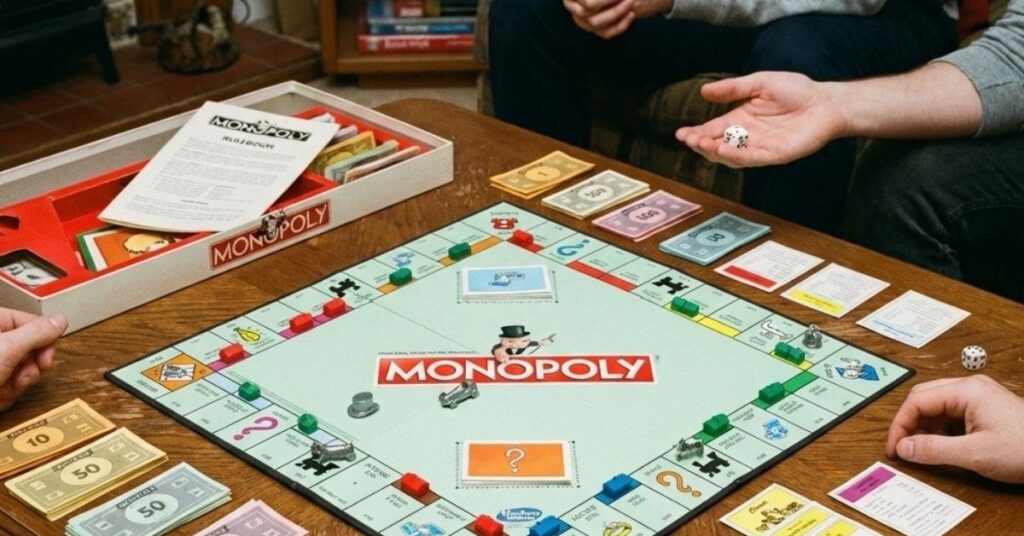
You’ve probably played this a hundred times. But did you actually learn anything?
Here’s what Monopoly gets right: owning assets that pay you while you sleep. Every time someone lands on your property, you collect rent. That’s passive income in action.
It also shows how going all-in on one big purchase can wipe you out. Sound familiar?
Quick tip: ditch the “free parking jackpot” house rule. It’s not in the official rules and it makes the game drag on forever. Play it properly and you’ll see how cash flow actually works.

2. Cashflow 101
Robert Kiyosaki created this one. The whole point? Build enough passive income to cover your expenses and escape the “rat race.”
It makes the concept of money working for you actually click. You buy assets, collect income, and watch your financial statement change in real time.
It’s not cheap.
But there’s a free app version if you want to try before you buy.

3. The Game of Life
This one simulates the major money choices most of us face. University or straight to work? Buy insurance or risk it? Have kids or stay child-free?
It’s simple, but it shows how early decisions compound over time.
Great for teenagers who think money stuff is boring. Watching your little plastic car fill up with tiny plastic people while your debt piles up tends to make a point.

4. Animal Crossing
Bear with me here.
Tom Nook gives you a mortgage with zero interest. You pay it back whenever you want. No pressure, no deadlines. It builds the habit of chipping away at debt without the stress.
Then there’s the turnip market. Buy low on Sunday, sell high during the week. It’s basically supply and demand for beginners.
Perfect for younger players or anyone who wants to learn without realising they’re learning.

5. Stardew Valley
You inherit a rundown farm. Your job? Make it profitable.
Every day you’re making decisions. Do I spend this gold on seeds now, or save up for a better watering can that’ll save me time later?
It teaches reinvesting in your business. And it shows how income can be lumpy – you might be skint in spring but rolling in cash come autumn harvest.
Anyone who’s ever been self-employed will recognise that feeling.

6. Payday
This classic board game is all about surviving from one payday to the next.
Bills show up randomly. Your car breaks down. The dentist needs paying. Sound familiar?
It’s basically a crash course in why emergency funds matter. Kids especially benefit from seeing how quickly money disappears when you’re not paying attention.

7. Ticket To Ride
This one’s sneaky. On the surface, you’re just collecting train cards and claiming railway routes across a map.
But really? You’re learning opportunity cost.
Do you grab that short route now, or save your cards for the big one worth more points? Wait too long and someone else takes it.
It’s the same decision you make with money every day. Spend now or save for something better?

Why Games Work Better Than Textbooks
There’s a reason these stick with you.
When you lose fake money, you still feel it.
That little sting when you land on someone’s hotel in Monopoly? That’s emotional learning.
It sticks around way longer than reading about compound interest ever will.
Games let you make mistakes safely.
And mistakes are how we actually learn.
Share this article with friends
Disclaimer: Content on this page is for informational purposes and does not constitute financial advice. Always do your own research before making a financially related decision.