
Sammie Ellard-King
I’m Sammie, a money expert and business owner passionate about helping you take control of your wallet. My mission with Up the Gains is to create a safe space to help improve your finances, cut your costs and make you feel good while doing it.
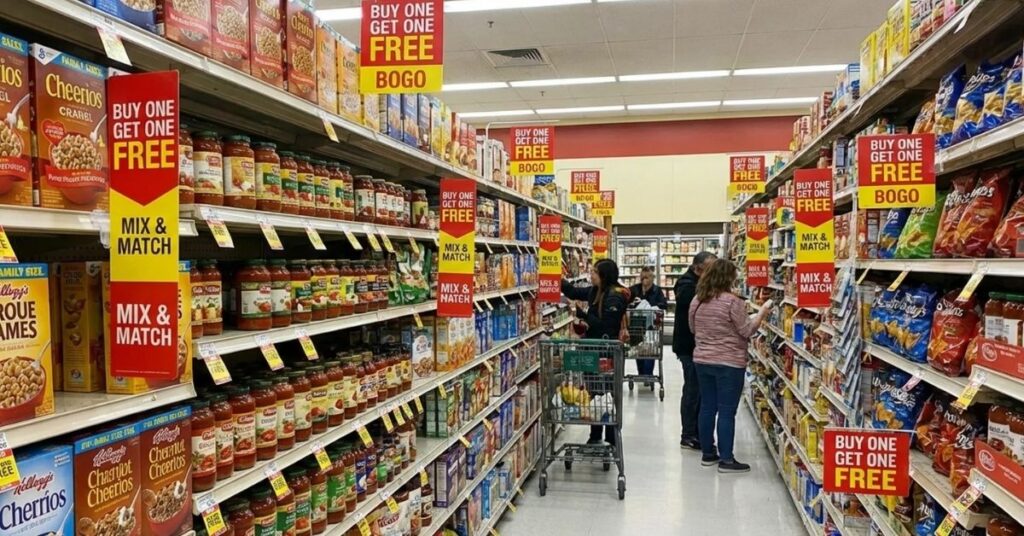
Martin Lewis has exposed another supermarket trick designed to make you think you’re getting a bargain when you might not be.
The Money Saving Expert shared a snap from a recent visit to Co-op showing the price of two different-sized packets of Jaffa Cakes on the shelves.
One box was a twin pack with 18 Jaffa Cakes for £1.85 (down from £2.85). The other was a single pack with 12 Jaffa Cakes for £2.25.
According to Martin, this is an example of a retail strategy known as “price referencing.”
What Is Price Referencing?
Price referencing is a marketing strategy used in stores across the UK. A lower advertised price is compared against a higher “reference price.”
The Advertising Standards Authority (ASA) says the reference price can be “the price at which the product was previously sold, a price recommended by a manufacturer or a competitor’s price.”
These prices are shown to make the current deal seem like better value – but that doesn’t necessarily mean you’re getting an amazing bargain.
While you are watching the prices, do not miss the birthday freebies you can claim from UK brands.
More news:

Does the Twin Pack Actually Work Out Cheaper?
Yes. In the Co-op Jaffa Cakes example, the twin pack does work out cheaper per cake:
- £1.85 divided by 18 = about 10p per Jaffa Cake
- £2.25 divided by 12 = roughly 18p per cake
But that’s not the point Martin is making.
So What's the Problem?
Martin explains: “£1.85 isn’t particularly cheap for 18 Jaffa cakes, yet by leaving the single pack there with 12 for £2.25 it provides a psychological reference which makes the discounted price feel cheaper.”
The twin pack isn’t actually a great deal. But compared to the single pack next to it, it looks like one.
Martin also pointed out: “Let alone the fact the twin pack doesn’t have double the single pack. It should be a one and a half pack.”
What Should You Do Instead?
In the comments, shoppers recommended checking the “unit price” instead.
This is the cost for a single unit of the product – per kilogram, litre, pound, or even per item. Looking at this price lets you compare different-sized packets to see which is actually better value.
One commenter said: “I try to always check the cost per unit. Sometimes I have to stand for ages, as it’s not always easy to compare a twin pack because the single pack and the twin pack are made up of different volumes.”
Another added: “This is when my maths GCSE comes in. I would be straight on the calculator (you know the one I’d ‘never be carrying around in my pocket’) and working out how much each individual Jaffa cake was.”
One commenter explained: “I am fed up with all supermarkets doing this. Takes so long checking out what size pack works out cheaper (and it’s not always the bigger pack), and even more annoying is when some get broken down per 100g and other per kilo.”
The inconsistency makes it deliberately hard to compare prices. Some products show price per 100g, others per kilo, others per item. This makes quick comparisons almost impossible without a calculator.
Once you’re checking unit prices, it’s worth checking the total too. Here’s what the average food shop costs per week for every household size.
If you found this interesting, please share!
Disclaimer: Content on this page is for informational purposes and does not constitute financial advice. Always do your own research before making a financially related decision.