
Sammie Ellard-King
I’m Sammie, a money expert and business owner passionate about helping you take control of your wallet. My mission with Up the Gains is to create a safe space to help improve your finances, cut your costs and make you feel good while doing it.
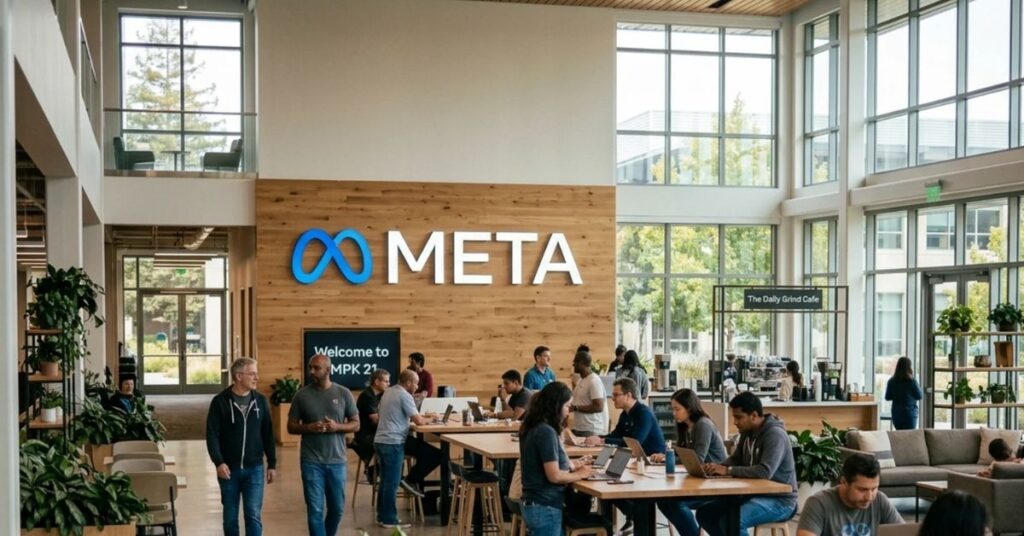
Meta has filed lawsuits against four scam operations in Brazil and China who were using AI-generated deepfakes of celebrities and doctors to sell fake investment schemes and dodgy health products on Facebook and Instagram.
The legal action, filed on 27 February 2026, marks a significant escalation in the fight against AI-powered scams on social media.
What Were the Scams?
One operation used a deepfake of a prominent doctor to promote unapproved healthcare products.
Another used altered celebrity images and cloned voices to promote fraudulent investments.
A China-based company ran “celeb-bait” ads targeting people in the US and Japan, funnelling them into fake investment groups on Facebook and Instagram.
These scams relied on AI technology that can generate convincing fake videos and clone voices in minutes, making it increasingly difficult to spot what’s real.
More news:



Meta's New Facial Recognition System
To combat the surge in deepfake scams, Meta has now enrolled 500,000+ celebrities into a facial recognition system that automatically flags scam ads using their faces.
The system scans ads for matches against enrolled celebrity faces and can take down fraudulent content before it reaches millions of users.
This represents a major shift in how platforms are tackling AI-generated scams, moving from reactive removal to proactive detection.
How Bad Is the Deepfake Problem?
Global deepfake production hit 8 million files in 2025 – a 16x increase since 2023, according to DeepStrike’s Deepfake Statistics 2025.
Europol has warned that by 2026, up to 90% of online content could be AI-generated.
What was once a niche technology has become a mass-scale tool, capable of generating convincing audio, video, and images in minutes.
4 years ago I tried to make a deepfake video to warn people about the dangers.
— Coffeezilla (@coffeebreak_YT) March 12, 2026
It would require a world class team, broadcast equipment, days of training.
Today I released a new video. I used 2x $20 subscriptions with 2 days of work, did it myself.
Absolutely terrifying. https://t.co/zD6fLO0E7v pic.twitter.com/hFE0W5FV0G
Which UK Celebrities Have Been Targeted?
UK-specific scam ads have used deepfakes of:
- Martin Lewis
- Keir Starmer
- Rachel Reeves
- Stacey Solomon
- Anton Du Beke
- Naga Munchetty
- Dr Hilary Jones
- Prince Harry and Meghan Markle
Most of these ads relate to cryptocurrencies and investments, but some promote weight-loss supplements or other health products.
The UK’s Advertising Standards Authority (ASA) sent 10 Scam Ad Alerts in 2025 for ads that used deepfake videos, all relating to cryptocurrency scams.
A viewer asked me for help on @ThisMorning after losing £140,000 to a fake crypto scam advert using an AI video of me to promote it… I’ve had enough of this, its time SOMETHING WAS DONE… pic.twitter.com/T3cf3Ru63X
— Martin Lewis (@MartinSLewis) May 6, 2025
How Do These Scams Work?
Modern celebrity scams use multiple AI systems working together. One tool identifies potential victims, another generates deepfake video or audio, while a third refines messages based on responses.
Fraudsters use “persona kits” which bundle cloned voices, synthetic faces, and fabricated backstories. These kits reduce technical barriers and allow scams to be repeated at scale.
The abundance of public footage of celebrities makes them ideal targets. High-quality source material allows scammers to train AI models that closely replicate real voices and facial movements.
What Are the Warning Signs?
Despite the sophistication of deepfakes, patterns still emerge:
- Requests for secrecy or urgency
- Unconventional payment methods (gift cards, cryptocurrency, bank-linked transfers)
- Offers that seem too good to be true
- Pressure tactics to act quickly
- Claims of celebrity endorsement for complex investments or miracle cures
Deepfake videos can be very convincing, although you may be able to spot unnatural facial movements, jerkiness or unusual-sounding speech.
Real Victims Are Losing Thousands
One well-documented case involved an AI-generated impersonation of actor Steve Burton. Scammers used synthetic video and cloned voice messages to convince a fan she was in a private relationship with him.
The victim transferred more than £63,000 via gift cards, cryptocurrency, and other services before her daughter uncovered the fraud.
Deepfake tech used to fool worker into paying out $25M to fraudster.
— Linus ✦ Ekenstam (@LinusEkenstam) February 4, 2024
This won’t end well.
Imagine trying 100 companies and hitting hjackpot on the 101.
Incentives are so high for fraud at this scale. pic.twitter.com/hWLlpzWRU1
What Should You Do?
If you see an online ad featuring a celebrity endorsement, carry out some checks before handing over your details:
- Check whether the content comes from an official account
- Consider whether the ad seems out of character for that celebrity
- Pause to ask: would this celebrity really be promoting complex investments or wonder cures?
- Check reviews on third-party websites like Trustpilot
- Look for unnatural facial movements or unusual-sounding speech in videos
The ASA encourages reports of any suspected scams seen in paid-for ad space online. You can report scam ads through their website.
Why Is Meta Suing Now?
Meta’s lawsuits represent a shift from simply removing scam ads to taking legal action against the operations behind them.
By enrolling 500,000 celebrities in facial recognition and pursuing scammers through the courts, Meta is sending a signal that platforms are getting serious about AI-generated fraud.
But with deepfake production continuing to scale and 90% of online content potentially AI-generated by the end of 2026, experts warn that recognising what’s real is becoming harder just as the stakes for victims grow higher.
If you see celebrity ads for investments, health products, or anything that promises quick money or miracle results, pause before clicking. The celebrity probably isn’t involved – and you could lose everything.
If you found this interesting, please share!
Disclaimer: Content on this page is for informational purposes and does not constitute financial advice. Always do your own research before making a financially related decision.