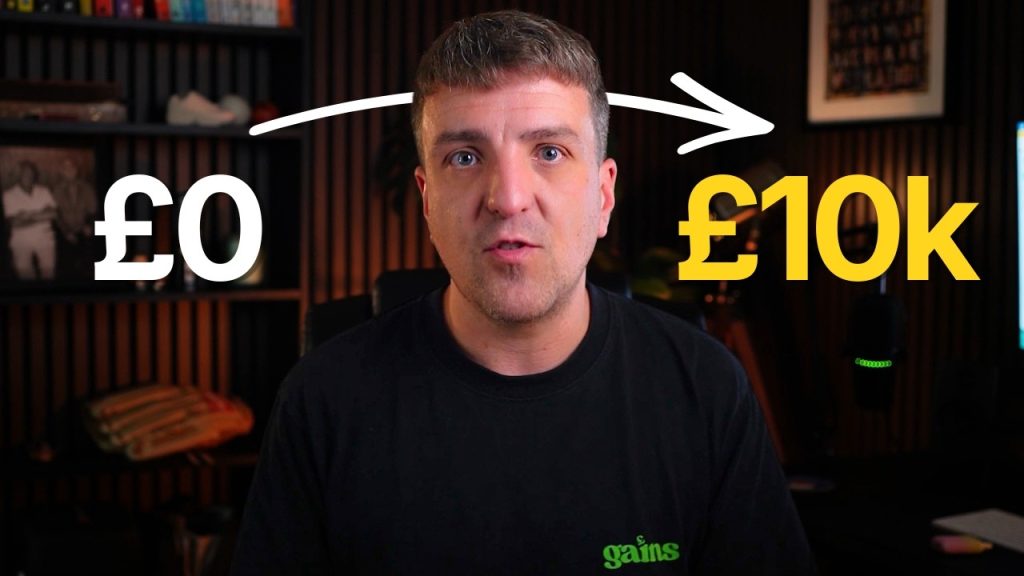
Most people who set out to save £10,000 never get there. And it’s not because they don’t earn enough.
Before you read another word of this, answer one question honestly:
Is the £10,000 more important to you than what you’re currently spending money on?
If the answer is yes, you’ll find a way. If the answer is no, that’s fine too, it just means your timeline needs to stretch until the answer becomes yes. There’s no shame in that. There is shame in pretending you’re “trying” to save while the honest answer is still no.
Before you pick a plan, it’s worth answering one question: what’s your money personality?
I was £24k in debt in my mid-20s. I cleared it in 18 months, mostly through side hustles stacked on top of a normal job. I know what it’s like to stare at a number that feels impossible and wonder where you’d even start.
So here’s where I’d start.
The maths, and the honest caveat
£10,000 in 18 months works out at roughly £550 a month.
For some people that’s genuinely realistic. For others, it isn’t, and I’m not going to pretend otherwise. If you’ve got young kids, you’re on minimum wage, or you’ve already cut your spending to the bone, £550 a month might not be on the table right now.
That’s fine. The framework doesn’t change, only the numbers do. Swap £10,000 for £3,000 or £5,000, swap 18 months for three years. Same two levers, different target.
There are only two levers
Everything you’ll read about saving money boils down to two things: spending less, and earning more. That’s it. Every tip, hack and app is just detail sitting on top of one of those two levers. So let’s go through them properly.
Lever one: cut spending
Targets, not budgets
Budgets look backwards. You look at what you spent last month and feel bad about it. Targets look forwards: you decide what you want to spend next month, and you aim at it. Same numbers, opposite direction, completely different feeling.
Track everything for 30 days first
Before you cut anything, track it. Most people underestimate their day-to-day spending by 30 to 40%. You can’t hit a target you can’t see.
Kill the subscriptions you've forgotten about
Citizens Advice found UK households waste £680 million a year on subscriptions they don’t use, and 82% of those renew automatically without anyone noticing. The rule is simple: if you haven’t used it in 30 days, cancel it. Most people find £100 to £300 a year just sitting there.
Stop wasting food
The average UK household wastes around £470 of food a year. For a family of four, it’s closer to £1,000. You don’t need a spreadsheet, just a rough meal plan before you shop. That alone claws back a decent chunk of the target.
Give impulse spends 24 hours
Anything over £50, wait a day before you buy it. Most of the time the urge passes. If it doesn’t, buy it, but at least it was a decision, not a reflex.
Let an app do the boring bit for you
This is where I’m biased, because I co-founded Gains App. The Set a Goal feature takes your target, whatever it is, and uses your real spending to show you how long it’ll actually take to hit it. The Targets feature then shows you, live, what happens to that date if you cut a category like takeaways or subscriptions by 10%. You watch the finish line move as you make the decision. It’s free to download, there’s a full Gains App review if you want the detail first, and you can see how it stacks up against the best budgeting apps in the UK.
Stop paying the loyalty tax
Check whether you’re out of contract on broadband, mobile, car insurance and energy. If you are, you’re almost certainly overpaying. Shop around, then ring your current provider and tell them what you’ve found. Loyalty tax is one of the easiest hundreds of pounds a year to get back, and most people never bother.
Switch your bank account
This one surprises people. Switching takes seven working days, your direct debits move automatically, and all you need to do is tell HR your new account details. Average switching bonuses run £150 to £200 each.
I gave a talk at Calm Charity in London recently and a woman in the front row told me she’d done about five switches over the year and made £800 from it. £800, from filling in a few forms.
Lever two: increase income (this one has no ceiling)
Cutting spending has a floor. You can only cut so much before there’s nothing left to cut. Earning more doesn’t have that limit, which is why it’s the more powerful lever, even though most people ignore it.
Ask, or move
Official figures show people who move jobs get pay rises averaging around 9.5%, compared to about 2.9% for people who stay put. On a £30k salary that’s roughly £2,000 versus £870. That’s not a small gap, it’s more than double. Run any offer through the take home pay calculator to see what it’s actually worth after tax.
If you’re not ready to move, at least ask. Around two in three people who ask for a pay rise get one, and over half of people never ask at all. Loyalty is quietly one of the most expensive financial decisions people make.
Side income, with honest numbers
You’ll see claims that the “average” side hustle makes £800 a month. Ignore that figure, it’s dragged up by a small number of people at the top. For most people, a realistic side income is £100 to £500 a month, and plenty make less than £100. That’s still real money.
The fastest way to start is selling things you already own. Vinted, eBay, Facebook Marketplace. No new skill required, just stuff sitting in cupboards.
After that, look at freelancing something you already know how to do, in the evenings. Fiverr, tutoring, whatever fits your skillset. Your first £1,000 a year of side income is tax-free under the trading allowance, so for a lot of people this is genuinely low-friction. Declare anything past that.
The maths that actually matters
£300 a month from side income is £3,600 a year, or around £5,400 over 18 months. That’s more than half of a £10,000 target from one lever alone.
This is exactly how I cleared £24k of debt. Not through one clever trick, through side income stacked month after month while I kept an eye on what I was spending. It wasn’t glamorous. It worked.
Back to the question
Your £10,000 might actually be £4,000. Your 18 months might realistically be three years. Neither of those is a failure, it’s just your actual context, and it’s better to work with it than pretend it isn’t there.
Pull both levers, spending and income, in that order, and keep going for however long it takes. Do that for 18 months and you’ll almost certainly save more than you have in the last five years combined. If you’re wondering where that would put you, here’s how much you should really have saved by age.
It’s worth remembering most of the UK can’t cover a £1,000 emergency without borrowing. So whatever number you land on, it counts.
If you want a free way to track this without building your own spreadsheet, download Gains App. If a spreadsheet is more your thing, that works too. The tool matters less than actually starting.
Once the money’s actually saved, don’t let it sit there earning nothing. Park it in one of the best savings accounts you can find, and don’t overlook the money you can claw back on everyday spending too. Earning cashback on everything you buy is one of the easiest wins going, and it’s built into Gains App as well, so you’re saving and earning back at the same time.