Nutmeg is now called J.P. Morgan Personal Investing. JPMorganChase bought Nutmeg in 2021 and retired the Nutmeg name on 3 November 2025, folding it into its own brand. Existing customers didn’t need to do anything, same portfolios, same fees, same login.
It’s designed for beginners: you pick a risk level and the platform handles the investing. It’s FCA regulated and FSCS protected. If you were happy with Nutmeg, there’s nothing here that should worry you.
Nutmeg is now called J.P. Morgan Personal Investing. If you’ve landed here searching for “Nutmeg review”, that’s not a typo or a scam site, it’s the same company under a new name.
JPMorganChase bought Nutmeg in 2021 and ran it as a separate brand for four years. On 3 November 2025 it retired the Nutmeg name entirely and folded the platform into its own brand. nutmeg.com now redirects straight to personalinvesting.jpmorgan.com. Existing Nutmeg customers were moved across automatically, no action required, same account, same portfolio, same login (via the app update).
In this review I’ll cover what actually changed, what the fees and portfolios look like now, whether the performance numbers stack up, and whether it’s still worth it in 2026.

J.P. Morgan Personal Investing (Nutmeg) Rating
- Useful Features
- User Experience
- Suitable For Beginners
- Customer Service
- Price / Fees
- Customer Feedback
Table of Contents
Who owns Nutmeg now?
J.P. Morgan owns Nutmeg. JPMorganChase, the US banking giant, bought Nutmeg in June 2021 for a reported £700 million and has now absorbed it fully into its own consumer brand as J.P. Morgan Personal Investing. It’s regulated in the UK by the Financial Conduct Authority (FCA) under the same permissions Nutmeg held. Nothing about the regulatory backing changed, only the name on the tin.
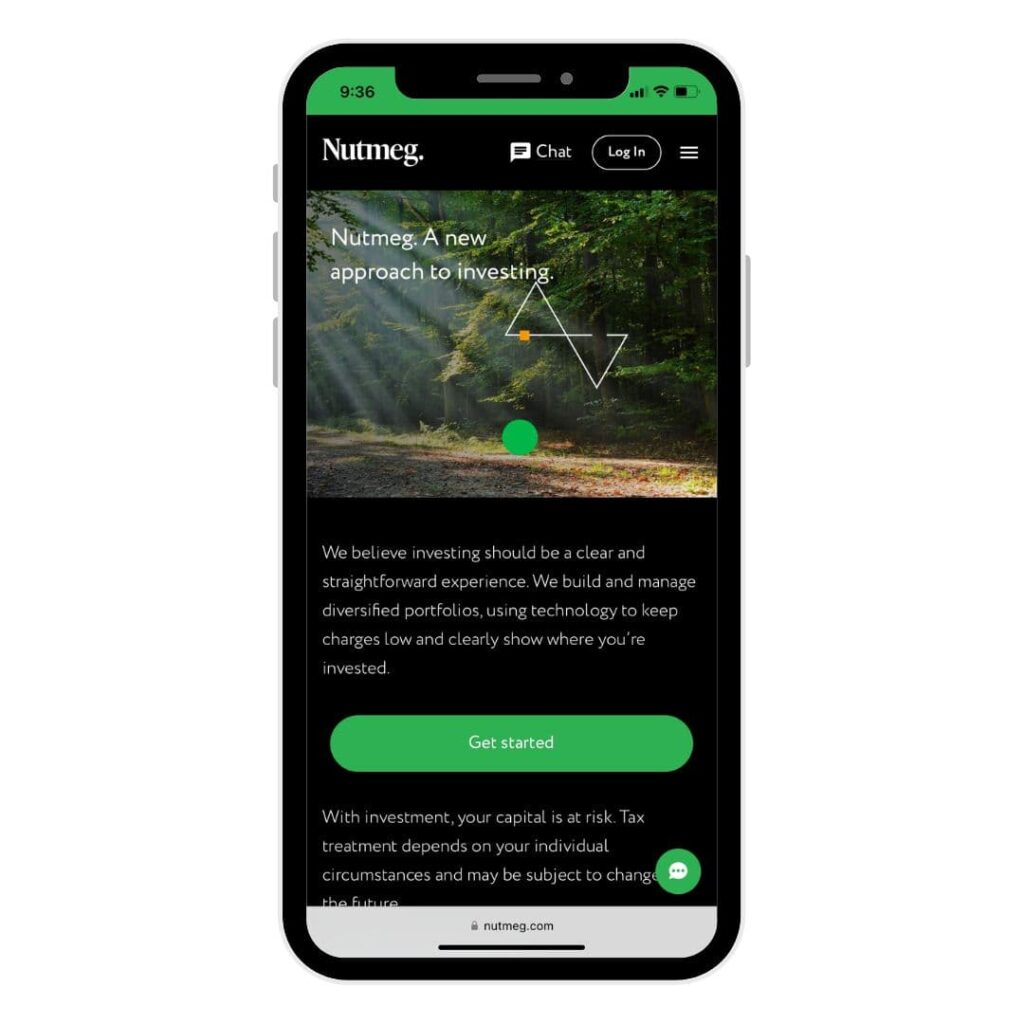
What changed, and what didn't
Changed:
- The brand name, app icon and website (nutmeg.com now redirects)
- Slightly refreshed styling and navigation, but the core dashboard and portfolio views work the same way
- A 2026 roadmap that includes a DIY share-dealing platform (for people who want to pick their own stocks, not just use managed portfolios) and dedicated relationship managers for clients with £250,000+ invested
Didn’t change:
- Your portfolio, holdings and risk level
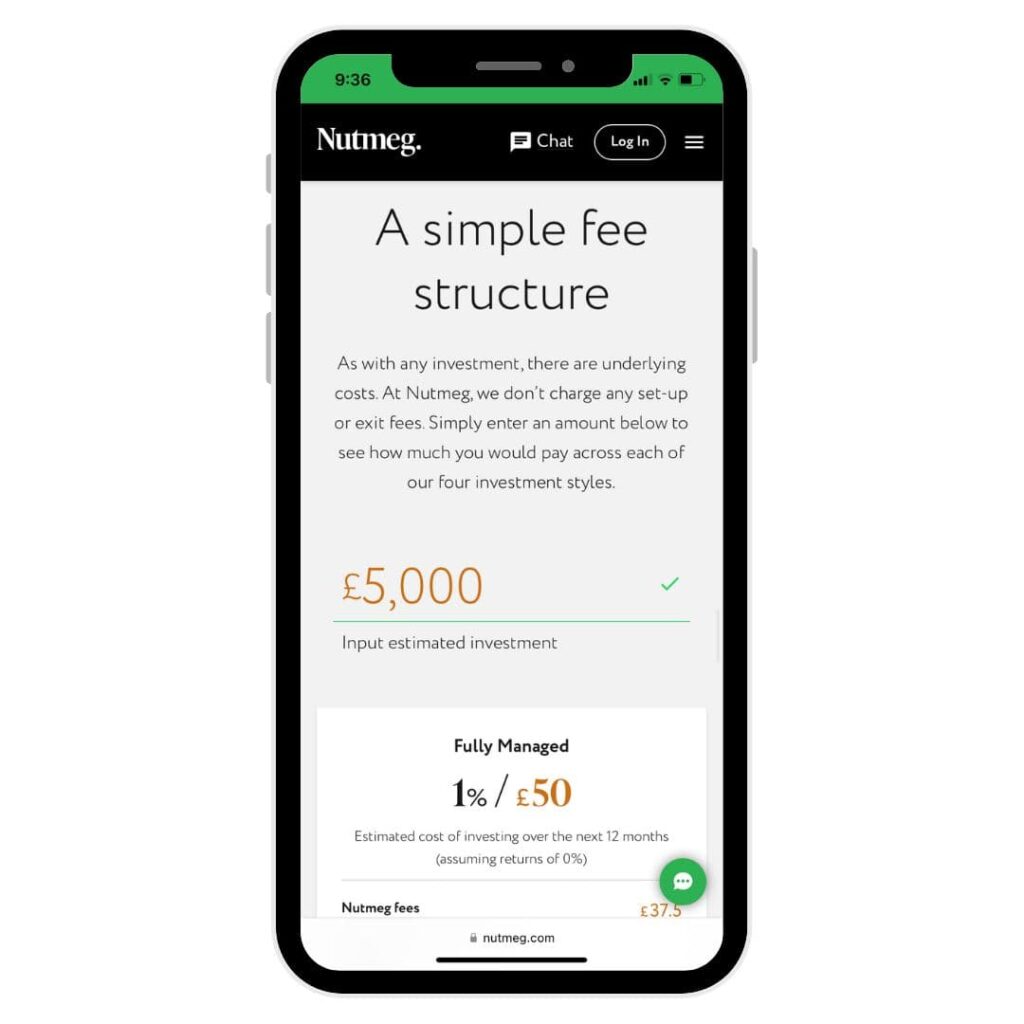
- The account types on offer (ISA, LISA, JISA, Pension, GIA)
- The investment styles (Fully Managed, Smart Alpha, Fixed Allocation, Socially Responsible, Thematic, Income)
- FCA regulation and FSCS protection
- The fee structure, broadly (see below for the current numbers)
If you’re worried this is some kind of scam rebrand or a sign the company is being wound down, it isn’t. It’s JPMorganChase choosing to trade under its own name in the UK retail investing market rather than keeping Nutmeg as a separate brand. Plenty of acquired fintechs go this way eventually.
Accounts and minimums
J.P. Morgan Personal Investing offers five account types:
- General Investment Account (GIA): no tax wrapper, no contribution limit, but gains and income are taxable.
- Stocks and Shares ISA: tax-free growth and income up to the £20,000 annual ISA allowance.
- Lifetime ISA (LISA): for a first home or retirement, with a 25% government bonus on contributions up to £4,000/year. Withdrawal penalties apply outside qualifying uses.
- Junior ISA (JISA): tax-free saving for under-18s, locked until the child turns 18.
- Pension (SIPP): contributions get income tax relief; money is locked until 55, rising to 57 from 2028.
Minimums: £500 to open a GIA, Stocks and Shares ISA or Pension. Just £100 to open a LISA or JISA. If your balance stays under £5,000, you’ll need to keep contributing at least £100/month to avoid the account being treated as inactive.
Fees
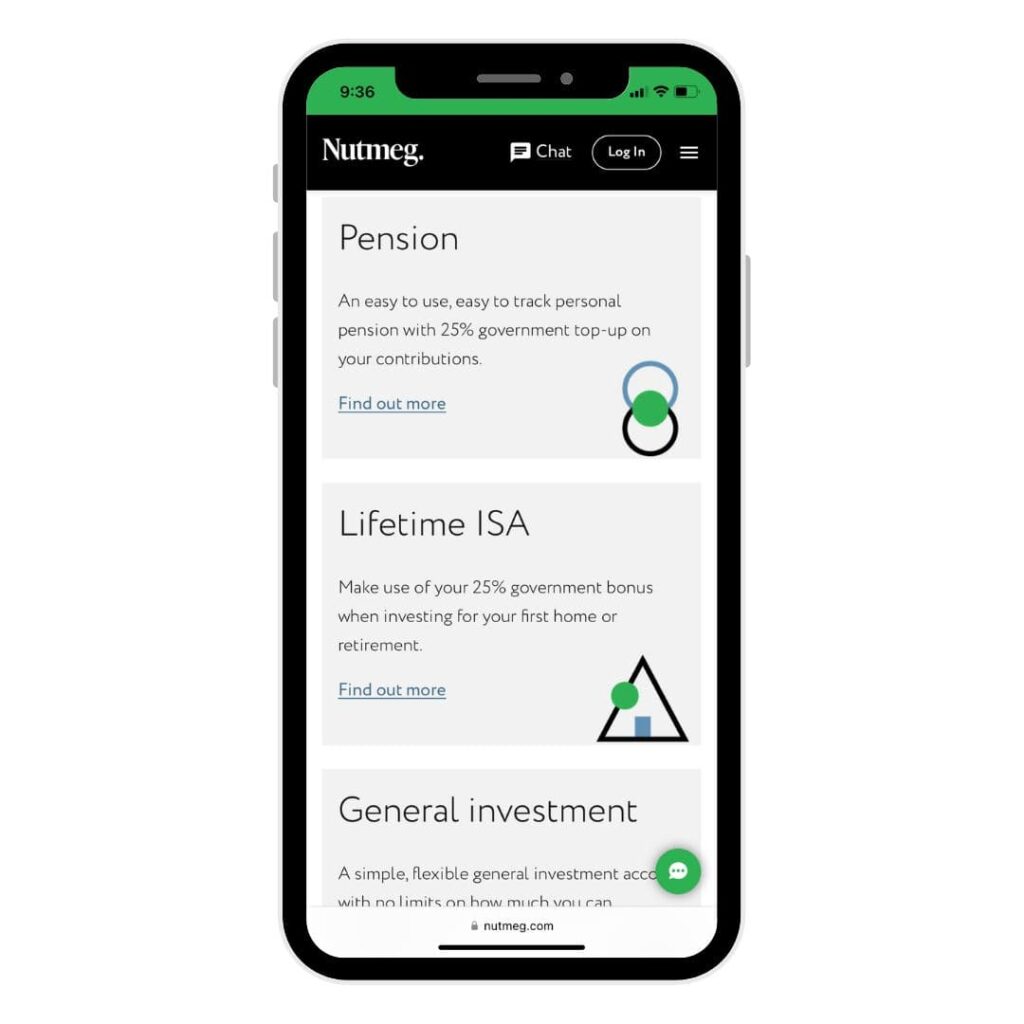
The fee structure is layered: a management fee, an underlying fund cost, and a small market spread. Here’s what it looks like as of mid-2026 (management fees confirmed directly from J.P. Morgan Personal Investing’s published fee schedule, effective 17 June 2025):
| Investment style | Management fee (first £100k) | Management fee (above £100k) | Approx. fund cost |
|---|---|---|---|
| Fully Managed | 0.75% | 0.35% | ~0.17%-0.31% |
| Smart Alpha | 0.75% | 0.35% | ~0.17%-0.31% |
| Socially Responsible | 0.75% | 0.35% | ~0.31% |
| Thematic | 0.75% | 0.35% | ~0.17%-0.31% |
| Income | 0.75% | 0.35% | ~0.17%-0.31% |
| Fixed Allocation | 0.45% | 0.25% | ~0.17% |
On top of that, all portfolios carry a small market spread (the buy/sell price gap on the underlying ETFs, historically around 0.03%-0.07%). There are no set-up fees, exit fees or trading fees.
For a typical £10,000 Fully Managed portfolio, that works out to roughly £75-£100 a year all-in once fund costs and spread are added. It’s not the cheapest robo-advisor on the market, but it’s not the most expensive either, and the fee structure hasn’t materially changed since the rebrand.
Portfolio styles
J.P. Morgan Personal Investing offers six investment styles, each available across ten risk levels (1 being the most cautious, 10 the most adventurous):
- Fully Managed: the original, most popular style. A human investment team makes strategic adjustments to your portfolio as markets move. Available across all products.
- Smart Alpha: managed using J.P. Morgan Asset Management’s in-house research, aiming to beat the market rather than just track it. More active, and priced the same as Fully Managed.
- Fixed Allocation: a human team picks the ETFs, but rebalancing is automated rather than actively managed. Cheaper as a result.
- Socially Responsible Investing (SRI): excludes fossil fuels, tobacco and similar sectors. Worth noting: this sits inside a group, JPMorganChase, that still has fossil fuel exposure elsewhere in its business.
- Thematic Investing: targets specific trends (technology, clean energy and similar themes) rather than a broad market spread.
- Income Investing: designed to pay out a monthly income from your ISA or GIA rather than compound growth.
Smart Alpha vs Fully Managed
This is the comparison most people actually need to make, since both sit at the same 0.75%/0.35% price point. Fully Managed is the more conservative of the two: it makes periodic strategic shifts based on the investment team’s broader market view, and it’s been running the longest, so it has the deepest track record. Smart Alpha layers in J.P. Morgan’s active research and rebalances more frequently, aiming for genuine outperformance rather than just steady diversification. It’s a higher-conviction, slightly higher-turnover approach.
If you want the platform’s most tested, longest-running option, Fully Managed is the safer pick. If you want to back J.P. Morgan’s in-house research to add value beyond the market, Smart Alpha is built for that, and recent performance (below) suggests it’s been earning its fee.
Performance: are Nutmeg's returns any good?
This is the number most people searching this page actually want, so here it is straight.
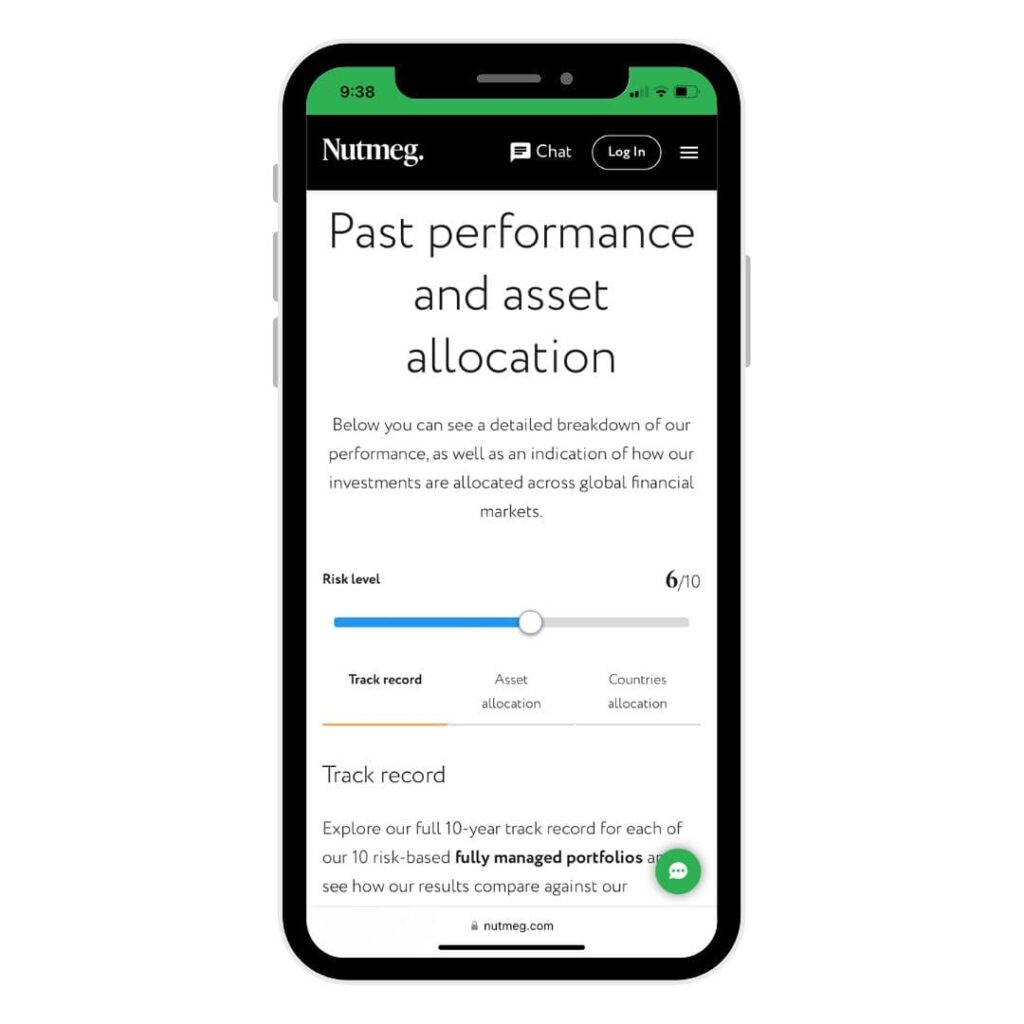
J.P. Morgan Personal Investing publishes a live, interactive track record on its site that updates by risk level. The figures below are the headline cumulative returns J.P. Morgan itself has published for each style, aggregated via a third-party review site that draws on the same official data (as of 31 January 2026):
| Portfolio style | Period | Cumulative return | Industry average (same period) |
|---|---|---|---|
| Fully Managed | 10 years (31 Jan 2016 - 31 Jan 2026) | +71.5% | +68.68% |
| Smart Alpha | 5 years (31 Jan 2021 - 31 Jan 2026) | +74.5% | +34.28% |
| Fixed Allocation | 5 years (31 Jan 2021 - 31 Jan 2026) | +71.6% | not published |
| Socially Responsible | 5 years (31 Jan 2021 - 31 Jan 2026) | +49.3% | not published |
The “industry average” comparison is calculated against data from Asset Risk Consultants (ARC) and Macrobond, covering average returns from other UK discretionary investment managers after fees.
Two things stand out. First, Fully Managed has modestly beaten its peer average over ten years, which is a genuinely respectable outcome for a low-touch robo-advisor. Second, Smart Alpha’s 5-year outperformance (+74.5% versus a +34.28% industry average) is a big gap, and it’s the strongest evidence yet that the higher-conviction, actively-researched approach is delivering, not just charging the same fee for a similar result.
Past performance isn’t a guide to future performance. These are cumulative, not annualised, figures, so the headline percentages look bigger than the year-on-year reality, and returns vary significantly by risk level within each style, from close to flat at risk level 1 up to double-digit annualised swings at risk level 10.
Is it safe? Is J.P. Morgan Personal Investing a scam?
No, it isn’t a scam, and your money is safe in the sense that matters most: regulation and protection.
J.P. Morgan Personal Investing is authorised and regulated by the Financial Conduct Authority (FCA), the same regulator that covered Nutmeg. Your investments are protected by the Financial Services Compensation Scheme (FSCS) up to £85,000 if the firm itself goes bust (this is separate from, and lower than, the £120,000 limit that applies to cash deposits at UK banks). FSCS protection doesn’t cover normal market losses, if your portfolio falls in value because markets fall, that’s investment risk, not a compensation event.
Given the “JPM Nutmeg scam” search volume this page also picks up, it’s worth being direct: this is one of the largest banks in the world taking full ownership of a platform it already ran for four years. The rebrand itself is the “scam”-adjacent signal that’s confusing people, not any change in regulatory status or safety.
My experience
I’ve used Nutmeg (now J.P. Morgan Personal Investing) since before the rebrand, and the day-to-day experience hasn’t shifted much. The platform is still designed for beginners: you pick a risk level, and the platform handles the investing. It isn’t built for day traders or people who want to pick individual stocks (that’s what the 2026 DIY platform is for, once it lands), it’s built for long-term, hands-off investors.
The goal-setting tools in the app are genuinely useful, they show how different contribution levels and asset allocations change your projected outcome over time, and it’s one of the clearer ways I’ve seen this explained on a UK investing app. Customer service has stayed reasonably accessible too: phone, email, live chat and in-app messaging, plus the option (unusual for this category) to meet an adviser in person at the London office if you want that.
Alternatives
The two closest UK alternatives are Moneyfarm and Wealthify.
If you want a direct fee and feature comparison, read our Moneyfarm vs Nutmeg breakdown, or our full Moneyfarm review if you want to look at Moneyfarm on its own merits. Moneyfarm has generally undercut J.P. Morgan Personal Investing on fees since its 2025 price cuts, but offers a narrower range of investment styles.
Moneybox is worth a mention too, since “Nutmeg or Moneybox” is a search people are actively making. Moneybox leans more towards simple stocks and shares ISA/LISA investing with a strong savings-app feel and a lower entry point, while J.P. Morgan Personal Investing offers a wider range of managed portfolio styles and account types (including a full SIPP and GIA). If you want the simplest possible starting point with round-up saving built in, Moneybox is the friendlier on-ramp. If you want more portfolio choice and a longer track record to judge, J.P. Morgan Personal Investing has the edge.
Verdict: is Nutmeg worth it in 2026?
Yes, with the caveat that “Nutmeg” is now a search habit rather than a brand you’ll actually see. J.P. Morgan Personal Investing keeps the same beginner-friendly proposition that made Nutmeg popular: pick a risk level, let a large, well-resourced team manage it, and get access to a genuinely useful set of planning tools along the way. The fees sit in the middle of the market rather than at the cheap end, and the performance data, where I could verify it, backs up the fee: Fully Managed has modestly beaten its peer average over ten years, and Smart Alpha has meaningfully outperformed over five.
If cost is your main driver, shop the comparison table against Moneyfarm first. If you want the backing of one of the world’s largest banks, a wide choice of portfolio styles, and a platform that’s about to add DIY share dealing, it’s still a solid pick.
More like this
FAQs
Nutmeg is owned by JPMorganChase, which bought it in 2021 and fully absorbed it into its own brand as J.P. Morgan Personal Investing in November 2025. It’s the same underlying platform and team, just trading under J.P. Morgan’s name rather than as a separate brand.
Yes. The platform is regulated by the FCA, and your investments are protected by the FSCS up to £85,000 if the firm itself fails. That protection doesn’t cover normal market losses, if your portfolio value falls because markets fall, that’s investment risk, not something FSCS compensates for.
No. The Nutmeg brand name was retired on 3 November 2025 when JPMorganChase rebranded it to J.P. Morgan Personal Investing, but the platform, portfolios and accounts carried over unchanged. Existing customers didn’t need to do anything. It’s a rebrand, not a closure.
Fully Managed, Smart Alpha, Socially Responsible, Thematic and Income portfolios charge 0.75% on the first £100,000 and 0.35% above that. Fixed Allocation charges 0.45% up to £100,000 and 0.25% above. Add underlying fund costs of roughly 0.17%-0.31% and a small market spread on top.
Based on the company’s own published figures (as of 31 January 2026), Fully Managed returned +71.5% cumulatively over 10 years against a peer average of +68.68%, and Smart Alpha returned +74.5% over 5 years against a peer average of +34.28%. Both styles have modestly to significantly beaten their industry comparisons over those periods, though past performance isn’t a guide to the future.
Moneybox is the simpler, lower-entry option with a strong round-up savings feel, better suited to beginners who want the absolute simplest starting point. J.P. Morgan Personal Investing (formerly Nutmeg) offers a wider range of managed portfolio styles, a fuller account range including a SIPP, and a longer institutional track record. Choose Moneybox for simplicity, choose J.P. Morgan Personal Investing for portfolio choice and depth.
Withdrawals aren’t instant. The platform typically needs to sell down the relevant assets to free up cash, which usually takes a few working days to clear into your bank account once requested. Build in a buffer if you need the money by a specific date.
Yes, for hands-off investors who want a managed portfolio without picking individual stocks. The fees sit mid-market rather than at the cheap end, but the performance data available backs up what you’re paying for, and the platform now carries the backing and resources of one of the world’s largest banks.
Share this article with friends
Disclaimer: Content on this page is for informational purposes and does not constitute financial advice. Always do your own research before making a financially related decision.