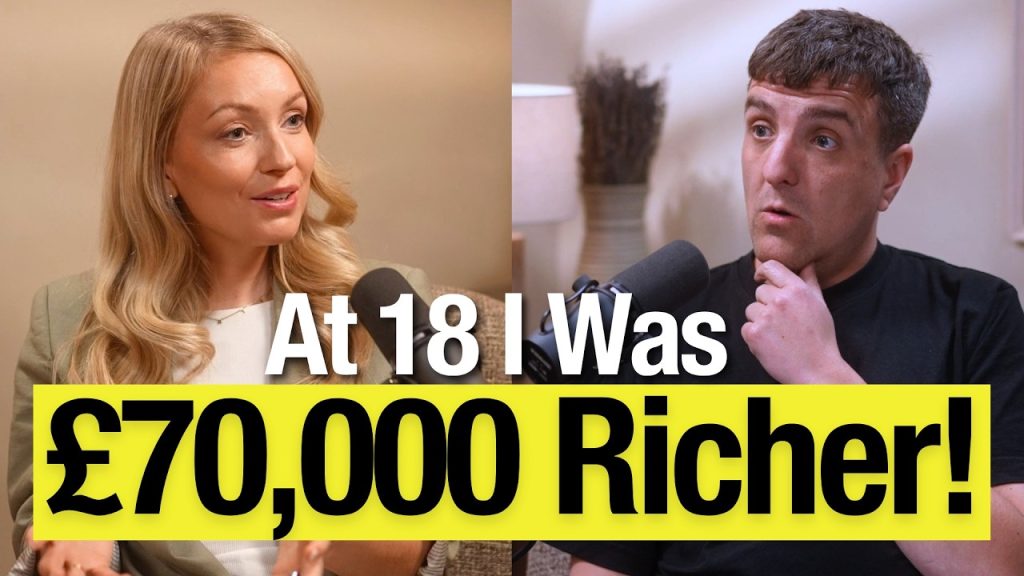
This week’s guest is Amy Ward, the founder of Amy’s Budgeting, who joins the podcast to talk through her own money journey, from overspending at university to buying her first home, and the practical budgeting methods, savings apps and small habits she now shares with over 32,000 followers.
Amy started Amy’s Budgeting during the pandemic as a way of holding herself accountable while saving for a house deposit, never expecting it to turn into a community of thousands of people looking for straightforward budgeting and saving tips.
She’s built the page up over two and a half years alongside a full career change: she studied psychology at university, spent around four years working in medical communications, and is now studying for her Diploma in Financial Planning after landing a role in financial services.
In this episode Amy talks candidly about losing control of her money at university, the moment after graduating that forced her to sort it out, and how she and her partner saved a house deposit through the pandemic using Lifetime ISAs.
She also shares why she doesn’t believe in a one-size-fits-all budget, walks through the apps and spreadsheets she actually uses day to day, and explains how small habits like round-ups can add up over time.
It’s a genuinely practical episode for anyone starting out with budgeting or wondering whether a career change into finance is realistic.
———
Gains App is LIVE!
An AI-powered budgeting and cashback app designed to help you make more of your money.
Download here: https://gainsapp.onelink.me/8IhT/oiaimr1z
———
Get a FREE FRACTIONAL SHARE worth up £100 when you deposit £1 with Trading 212
https://www.trading212.com/join/MGP
If you don’t receive the free fractional share, head to the menu and put the word ‘MGP’ into the promo code section.
(Capital at risk when you invest)
Key takeaways
- Amy Ward founded Amy’s Budgeting during the pandemic as a personal accountability tool and has grown it into a following of over 32,000 people sharing practical budgeting and saving tips.
- There’s no one-size-fits-all budgeting method: Amy tried the 50/30/20 approach first, found it didn’t suit her income, and now recommends testing a few methods before settling on one.
- She and her partner saved their house deposit during the pandemic using Lifetime ISAs, splitting costs 50/50 and researching every fee involved before setting a savings goal.
- Amy moved from a medical communications career into financial services after winning a St James’s Place competition, and is now studying for her Diploma in Financial Planning.
- Small automated habits like round-ups and reviewing bank statements for forgotten subscriptions can free up meaningful money without requiring a complete lifestyle overhaul.
Timestamps
- [0:49] Who Is Amy Ward and Amy’s Budgeting
- [3:51] Growing Up With Money and Overspending at University
- [6:19] The Wake-Up Call After Graduating
- [9:08] Buying a First Home During the Pandemic
- [12:15] Saving a House Deposit With Lifetime ISAs
- [14:54] Career Change From Medical Communications to Finance
- [17:46] Winning a St James’s Place Competition
- [25:00] Budgeting Methods That Actually Work
- [28:17] Budgeting Apps Versus a Simple Spreadsheet
- [31:54] Round-Ups and Small Savings Habits
From pocket money to an overdraft: Amy's early money habits
Amy says she was always slightly interested in money, even as a child, saving pocket money rather than spending it all straight away. Her parents talked openly about bills and household finances, which gave her what she describes as good foundations.
That changed at university, when she had her own student loan and no one keeping an eye on her spending. She admits she went “a little bit off the rails”, running up an overdraft on fast fashion and takeaways she says she didn’t need.
The turning point came after graduating, when she moved back in with her parents and looked honestly at her bank balance. She realised she couldn’t afford to move out and live with her partner unless she got her overdraft under control first.
That period of paying it down while living at home, she says, was what pushed her to start researching budgeting properly for the first time.
If you want a clearer picture of where your own money is going before you set a budget, our guide to auditing your spending is a good place to start.
Buying a first home during the pandemic
Amy and her partner bought their first house just after the height of the pandemic, at a point when house prices were rising quickly and they were repeatedly outbid on properties.
She describes viewing dozens of homes and losing out to buyers offering tens of thousands of pounds more, which she calls one of the most stressful parts of the process.
They’ve now been in the house for just over a year and are slowly renovating, which she says has taught her a whole new layer of budgeting she hadn’t considered before.
Being able to save for the deposit came down to circumstances specific to the pandemic: working from home meant less spending on socialising, eating out and commuting, which freed up extra money each month.
Amy and her partner both opened Lifetime ISAs to claim the government bonus as first-time buyers, split the deposit 50/50, and researched every fee involved in buying a house before setting a savings target.
Working out what you can realistically put towards a goal each month is easier with a clear view of your take-home pay, and our take-home pay calculator is a quick way to check that.
Leaving medical communications for a career in financial planning
Before Amy’s Budgeting, Amy studied psychology and spent around four years working in medical communications, a career she says she genuinely enjoyed but never felt was quite right for her.
Running Amy’s Budgeting on the side meant she was constantly thinking about finance outside work, which she describes as feeling like living two different lives.
That mismatch eventually pushed her to look seriously at finance-related careers rather than treating the page as just a side project.
The breakthrough came through a competition run by St James’s Place for young professionals, which asked entrants to write about an important money conversation.
Amy submitted a piece about discussing house-buying finances with her partner, was invited to a week of work experience, and went on to secure a junior role in financial services.
She’s since been studying towards becoming a financial adviser, sitting exams alongside her day job while continuing to run Amy’s Budgeting as a creative outlet rather than a full-time business.
Why Amy doesn't believe in a single "right" budgeting method
A recurring theme on Amy’s Budgeting is that there isn’t one correct way to budget. Amy tried the well-known 50/30/20 method early on and found the percentages simply didn’t match her income and outgoings, so she adjusted them rather than abandoning budgeting altogether.
Her advice to anyone starting out is to try a few different structures, including pay-yourself-first approaches, and expect to change the numbers as life changes, rather than sticking rigidly to a plan set months earlier.
She also emphasises reviewing expenses regularly rather than setting a budget once and forgetting it. That means going through bank statements line by line, spotting forgotten subscriptions or regular takeaway spending, and calling providers to ask for a better deal.
Small changes spotted this way, she says, can free up real money each month for savings or investing goals. Our budgeting calculator is a straightforward way to see how those changes affect your overall numbers.
Budgeting apps, spreadsheets and cash envelopes
Despite recommending various apps to her followers, Amy says she personally sticks to a basic spreadsheet she can access on her phone and laptop, logging spending as it happens.
She uses her banking app’s built-in categories to spot overspending, and has tried apps like the Emma budgeting app in the past, alongside mentioning Snoop and Money Dashboard as other options her followers use.
She notes that automated, bank-syncing apps suit some people well, while others prefer the more manual cash envelope method of withdrawing cash and physically dividing it between categories.
Her point is that the right tool depends entirely on personal style rather than which app is objectively “best”. Some people need automation to stay on top of things, others find that manually tracking every transaction is what actually keeps them engaged with their budget.
Round-ups, cashback and small savings habits
Beyond formal budgeting, Amy and the host both flag round-up features as an easy way to build savings without noticing the impact day to day.
Every purchase gets rounded up to the nearest pound, with the difference automatically moved into savings, meaning the habit requires no ongoing effort once it’s switched on.
Amy also shares an example from another finance creator whose parents leave cashback earned throughout the year untouched until November, then withdraw the full amount to cover Christmas spending in one go.
These small, largely automated habits won’t replace a proper budget, but Amy argues they’re a low-effort way to start building better money habits, particularly for people who find traditional budgeting overwhelming.
If irregular costs like Christmas or home repairs tend to catch you out, it’s also worth checking your buffer is sized properly; our piece on how much should be in your emergency fund covers how to work that out.
This transcript is auto-generated and lightly edited for readability, it may contain errors.
[0:00] Sammie Ellard-King: Hello and welcome to another episode of the Money Gains podcast. This is your host, Sammie Ellard-King, and today I’m going to be joined by Amy Ward, who runs an incredible Instagram and personal finance channel called Amy’s Budgeting. Now, Amy’s Budgeting has grown tremendously since starting in the pandemic. It now has over 32,000 followers on her Instagram channel. She posts some wicked content. We get her on today to talk all about her journey and her uh career change, recent career change where she’s jumped headfirst into finance, and then we discuss all about some budgeting tips and tricks which people can implement themselves too. Um but for now if you are listening on YouTube, please do whack that subscribe button. And if you’re listening on Spotify or Apple, give us a follow. It really does help the show. And um, yeah, let’s get started on the Money Gains podcast.
[0:49] Amy Ward: The Money Gains Podcast, the financial guide, agree now. Let’s get with the Money Gains Podcast. Let’s make some break. The 24th seven podcast. So hi Amy, welcome to the Money Gains Podcast. How’s it going? You well? I’m good, thank you. Yeah, thank you for inviting me on. It’s been a pleasure to be here. Oh, awesome. Yeah, I’ve been following your Instagram channel now for a good year, and I am loving the content. So I just have to get you on here and chat about your journey because uh yeah, I really, really like your story as well. Um but to start off, um, would you mind giving the the guests a little sort of uh 411 on who Amy is? Yes, of course. So yeah, my name’s Amy and I run an Instagram page called Amy’s Budgeting, and I’ve been running this for about two years now, two and a half years in total. Um this kind of came out during the pandemic, it was not meant to be what it is today, but I’m very happy it’s grown into this lovely community of people. Um it started off as a very little blog for myself, kind of keeping me myself accountable, same with my house deposit, but then it turned into a lovely community, into more general saving tips, budgeting tips, and yeah, it’s been really great. So that’s the me in a nutshell, that’s who Amy’s budgeting is.
[2:02] Sammie Ellard-King: So another pandemic business, I love it. Yeah. We had all had all that, didn’t we? So what we meant to be doing. Exactly. We’re sitting there and then we realise, oh cool, I could be doing something cool and creative, and suddenly it all comes flying back out. Like it was the same for me without the gains. I started writing blogs and then got really, really into it. Um and then it was like, oh, cool, now maybe I’ll start the social channels now. And um yeah, you can’t do that. Exactly, yeah, yeah. Who knew? Um, but it it’s it’s great to see though, like a lot of my friends started businesses in COVID that are doing really well, and you know, we we wouldn’t have had that opportunity. Obviously, it was an awful time, but you know, uh it did bring a lot of kind of a reset, I think, for a lot of people.
[2:48] Amy Ward: Um totally agree, yeah. How um so how’s it been going with Amy’s budgeting then? Yeah, I mean the growth is phenomenal. Yeah, so it has really it really surprised me. Like I said, I didn’t set out to create, become a content creator, influencer, whatever you want to call it. I just really wanted to keep myself accountable with my finances. Um, it was something that I thought people found quite boring. So I thought I’ll create this page and see what happens, not thinking anyone would actually want to follow it, but then when people did, I was actually really pleasantly surprised. And it’s changed really from being just my journey to a bit about my journey, but also just more general tips and tricks, general information, like deals I find here and there as well. Um it’s been getting really great. So I think in the last 12 months has been the biggest growth. I think partly accountable due to the cost of living crisis. Obviously, it’s a lot harder on most of us now. So I think there’s obviously that need out there for these, you know, money-saving tips, just understanding how to manage our money a bit better, um, which has been it’s been great to see so many people getting like actively involved, you know, wanting to get on top of their finances and find ways to make their money go further, which is yeah, obviously so important in this current climate.
[3:51] Sammie Ellard-King: I couldn’t agree more. It’s it’s an insane time right now for a lot of people. And you know, you have seen the the growth across, you know, there’s a number of really great financial influences out there, and they they’ve grown so much in this time, and it’s just testament to the types of content that they’re putting out. But I wanted to sort of take you back a little bit and learn a little bit about your journey. I think it’s a big part of what we do here on the podcast, is sort of showing how people come to get to where they get to today. Um, so what was it like growing up for you? Um, what was your money situation? You know, how were you were you good with money as a kid or as a teenager? And you know, how’s that sort of work for you? I think I was always slightly interested in money to some extent, even with pocket money. I kind of wanted to save some of it. I wasn’t like the typical kid to go out and just start buying, like spending all my money straight away. I was always quite aware of the saving aspect as well. Um, so I think I probably always had those foundations kind of for my parents, they were quite big on talking about money in the household, which was nice. So even from a young age, I was involved in the conversations about money, which was good, kind of aware of you know, bills and things like that from a very young age, which was, you know, slightly terrifying, but also interesting. Um, so that was really good. And I think, yeah, being like a small child, pocket money was a big thing, like saving a little bit, saving up big purchases. So that was quite a nice foundation. Um, it was all quite good. And I think my maybe my turning point was university. So it was the first time I had, you know, several amounts, like a bit of money, you know, like student loan, that kind of thing. And it was the first time I had no one really having oversight of what I was spending on, had complete control. And I think that’s a bit where my money kind of went a little bit off the rails. I was spending more than I should have been for sure. I can say that. Lots of things I didn’t need, a lot of like, you know, fast fashion, lots of online orders. Um, meaning I was in my overdraft quite a lot actually at university, which was kind of never how I was beforehand. It was just almost that freedom and I was to do what I want. I kind of went a little bit wild of that. So that was kind of the turning point. That was about three years at university. When I left university, that’s when I was looked at my financial situation being in like a negative figure and thought, right, this needs, this needs turning around. This needs, I can’t live like this, I can’t achieve my goals, you know, buying a house, giving on these holiday trips if I, you know, don’t sort this situation out. But as a whole, I feel like my foundation was built well. It was just maybe my lack of control when I had my own, you know, my own experiences at university, kind of surrounded by everyone wanting to spend all that money all the time, which is fine. I feel like we’ve kind of got to do it at some point. I think the the key thing was actually the realisation that I can’t continue to do this forever.
[6:19] Sammie Ellard-King: I can relate to that for sure. Like that’s where uh that’s really where I sort of went wrong was suddenly you’re let loose into this big bad world with a student loan, and someone turns around to you and says, Do you want an overdraft in a credit card? And you say, Yes, please. And it’s like, oh no, you know, three months later, you’re right, it’s like fast fashion, lots of going out. Um, but you know, you’re 18 and you’re like, Let’s live a little. Um and it’s what you do after that makes the big difference. And it seems like you got yourself a bit of a handle on it after. What was your kind of moment that you sort of looked and thought, uh-oh. I think it’s when I’d finished university, graduated, and I moved back home my parents um straight away. But I knew I wanted to move out and start, you know, renting, um, having my own independence because my partner was moving up to live with me from down south. So I thought, well, can’t we can’t live in my parents’ house, it’s just not gonna work. I need to be able to afford to rent somewhere. But then looking at the figures in my bank account, I thought, well, I can’t rent anything right now because I probably couldn’t, but I wouldn’t be in a good financial situation because I’d be more outgoings and incoming. Um, so that was kind of the main thing. And I was fortunate enough to be able to live at home for a few months and start to work away, chip away it, paying off my overdraft to get me in a good position. But I think it was that like next step into adulthood of you know, leaving a family home, having a bit more independence, starting my first job, seeing this money coming in for the first time, which I hadn’t really seen before, was exciting. And it was like I looked at the money and thought, what do I do with this? There’s different options here. I can either go out and spend it all like I have been, or I can start actually looking into it and working out should I save X amount each month? Should I, what should I do with it? And that’s kind of when the turning point was, and when I started just doing a lot of research, really looking online, like different money management methods and things like that.
[8:09] Sammie Ellard-King: I did the second thing of what you said, which was just the carry on. Uh, and I got worse and worse and worse and worse and worse, and then suddenly hit a point where I was like, oh my god, what is going on? And kind of like, it’s a temptation though, it’s there. Yeah. It is a temptation. And I I I had um I had an extremely social circle, and you know, we really enjoyed going out. We were a big part of them of a of a the music scene when we were in our early 20s, and you know, that comes with a you know, you you’re out, you spend money, right? It’s just the way it is. Um, but yeah, eventually I sorted it out. It’s just when it happens, and everybody’s different, and that’s why I love asking that question because it, you know, some people have that moment in their 40s, some people have that moment in their when they were 17 and they’re legit like savers from day one, but everybody’s different. So it’s so interesting to hear about how that happens to different people. So you you’ve you’ve gone and got yourself your first house with your partner. How did it go?
[9:08] Amy Ward: It was good, it was stressful, as everyone says of a house-buying journey. It’s never going to be plain sailing. Um, for us, it was like just at the end of the pandemic, so house prices were just ridiculous, really high. Um, we viewed so many houses, it was like an ongoing journey, over-offering on things and still getting you know rejected. People we would over-offer by like, you know, 10k, some would overoffer by 50k. And it was like, well, we can’t do that. It’s our first house, we don’t have these funds at all. Um, it was yeah, it was really it was a bit stressful, but it was good. It was it was good, very eye-opening, seeing how the whole you know, housing market works and things like that. But yeah, we’ve been in our house now for just over a year, so we got a house eventually, which is very exciting, and yeah, I know we love it, and a bit of a renovation project in some aspects. So we’d be doing like doing little bits up, got like a new bathroom and new kitchen, which has been great. And yeah, it’s taught me a lot again about finances, completely new things I didn’t even think that I had to consider, but you know, budgeting for renovations and being blown away every single time you get a quote on anything because the whole world of renovation is so expensive. Basically, that’s like what it’s like.
[10:11] Sammie Ellard-King: Great, yeah. I know, yeah, it’s probably dual like a radiator, and you’re like, Oh, that’s really expensive, but I need a new radiator. So yeah, but like that’s what we live for. Uh, you know, I love all of that type of stuff. So for me as well, getting and learning it as well. Because I was obviously doing the personal finance thing, and I was like, Oh, cool, now I’m gonna buy a house. And it’s like, let me learn everything about this so I can actually talk about the process and and and actually teach people like this is what happens to you, like this is what you go through. You know, you don’t always get your first house. You get you with you, you are over offering on on tons of things. Like, you’ve got to be ready for those kind of things because the emotions that fly around, you put an offer in and you think, yeah, we’ve got this, like we love it, we love it, we love it. And then some guy comes in and offers 50 grand. You’re like, It’s just the worst feeling, I know. Yeah, I completely agree. And I think it’s like just goes back to the whole thing about like education, the lack of education around finance. I think people talk about all the time because it’s just so apparent. Um, with mortgages, I had I had no idea, like I really did have no idea. I had like a rough, like thought, you know, this is the process, but when you’re in it, I kind of thought someone would hold my hand a bit more through the process too. I was a bit like, okay, what next? And I thought someone would just tell me what’s next. And I was like, trying to people like, what do I do next? Like, what’s the next step? So I definitely learned a lot about that, which was it was good and very eye-opening. And I’m glad I went through it because I yeah, honestly learned so much from actually going through it yourself.
[12:15] Sammie Ellard-King: Talk to us about the process of saving for the house deposit. How did you go about that? And what was your kind of like, did you go halves with your partner? And how did you work towards it? Yeah, definitely. So because it was like over the pandemic, we were both fortunate enough to be working through the pandemic. So we worked from home. And because we weren’t socializing as much, we weren’t going out spending our money on the alcohol or like different things, like eating out as much, we realised we had quite a lot of more money to put away each month, which was a very fortunate position. Um, so we just started like kind of you know saving little bits at a time. We both opened Lifetime ISAs as well, which was really, really beneficial because we’re both first-time buyers and we knew it was in our price range. Uh, we live in the northwest, so like cheaper house prices, which was lucky. So we yeah, started saving Lifetime ISAs to get like the government bonus, which was really good. And then just kind of, I think communication was the key thing, really, talking about what you know, what we kind of want in a house, what we’re looking for, but also being mindful that we can’t just go buy a mansion, it’s our first house. You know, we’re in our early 20s, it’s not going to work just like that. So I wish don’t get me wrong, that would be lovely, but we couldn’t. So just doing some like background research as well, um, kind of looking into what things we should save for, because before I did that, I just thought let’s save for the deposit, that makes sense. But then I Googled like all the different fees we had to save for. So just kind of taking that time out of like, you know, just busy life and schedules, have a look and do a bit of background checks to get a bit of a rough goal and like a budget. And then I think once we had that goal amount in mind and that you know written down, we could work towards it a lot easier than have a bit more of a timescale, which was really nice. And yeah, we split things 50-50, me and my partner. So that was really fortunate as well. Because I can imagine it’s much harder, you know, you’re doing it by yourself and things like affordability. Uh so it was working that sense.
[13:59] Sammie Ellard-King: Uh I was the same. We we did the we, you know, me and my partner uh went in on the house together, and no, we wouldn’t never have been able to get what we got if we were on our own. We or I simply would have been completely unaffordable, to be totally honest with you. And and the pandemic allowed us that that breathing space to really find that bit of extra cash that we needed to get it over the line. I don’t think we would have done it otherwise, and we’d have just carried on with our with our lives. Or we may have, but it would have been five, six years later, probably than we did. So yeah. No, really just timelines. I think that’s the thing the pandemic like it threw a lot of things back, but maybe it pushed some things forward for some people in terms of like you saving goals because we would be the same if if life was just the same as it had been, we wouldn’t have been able to save the amounts we had. And even though the pandemic was a very interesting time, I will be thankful that we could save those amounts of money. Um, because I don’t know if I was in such a fortunate position. So yeah, we we are very grateful for that.
[14:54] Sammie Ellard-King: So many good things come out of it in the end when you look at it all. It’s it it you have to take the positives from situations like that, and you got a house, so hey, look at that. So you um I was reading your blog before I jumped on this um because I I saw your posting about this last year, and I was really interested in asking you about what happened when you um decided your current career wasn’t for you, and um you’ve jumped into your new career. Do you want to talk to us a little bit about that and that moment for you and and when you were like, right, this is what I want to do? Yeah, no, of course. So for context, I worked like the medical field to like pharmaceuticals, which was very interesting during the pandemic. It was very relevant, which was good. Um, and I so I studied psychology, goes back step, actually, study psychology at university, and I was never like set on being like a psychologist or clinical psychologist. I was a bit like I don’t really know what exactly what to do. I really like the health sector, so that’s why I ended up in this like medical communications kind of field of work. So did that for about four years, and I always really enjoyed it, like I liked it, um, but I kind of always deep down knew it wasn’t really the exact career for me, but I had no idea where I’d really branched off to. But because of like creating this like Amy’s budgeting and the whole Instagram page, I was constantly talking about finances, constantly thinking about finances. And then that would be like every evening, every night, you know, every morning. And then in my day, I’d just be at work doing medical, and I’d be like, it just doesn’t, it doesn’t really align with everything I’m thinking about. So I felt like I was living two different lives in a way, and like everyone at work and like the medical field knew that I was doing this finance stuff on the side, they were all like following my page, and it was even for them, it probably felt like a bit of a disjoint going on. So I think I just started thinking, how can I make this what I really care about and what I’m passionate about, which is the finance side into a career. And I know a lot of people would say the obvious option is to start putting all the effort into like the blog, the side of things like that, which for me was an option, but I felt like I wanted to build a I don’t know, just another career as well. I I like doing this on the side. A lot of people love doing it full time, which I really appreciate. But for me, it’s quite nice as a side thing. So I think that was when I thought, well, there’s so many financial jobs out there. What can what would what would I actually like to do? So I just started exploring some options really. Um, again, a lot of research, that’s a recurring theme. I like to Google things um and just kind of looked at different jobs out there in the finance space. And I thought, well, this financial advising stuff sounds really great. Like I love to talk to people, I like the client that’s facing fight side of things. So that was kind of it, really. I just thought this mismatch between my day job and my side job is too big. I needed things to be more like just add up a little bit more because that’s where my passions are, it’s what I’m always thinking about. And that was kind of the key, the key turning point to start to look for something different.
[17:46] Sammie Ellard-King: And so you’ve done this moment with um is it St. James’s Place you did into the competition? Is that right? Yeah, so it was like a little competition, which I just again stumbled across on Instagram. It’s full of amazing things, isn’t it? Social media when you think about it. Um and it was just like a competition entry. It was for like young professionals, I think that age up to like mid-20s. So I like just scraped the age, just got in it. So I was like, okay, cool, I’m just in this little age bracket, I’ll try and squeeze in. Um and it was like a competition, and it was very simple. It basically just said, like, I submit an entry about your most important conversation about like money. Um, and for me, it was just after buying the house. So I did a little like infographic poster about the comp communication with me and my partner about buying a house, which was very relevant. Nice. So, yeah, submitted that and then didn’t really think too much about what would happen, but then got invited to do like a week’s work experience at St. James’s Place, which was great. Um, really eye-opening, talking about all different careers we could go for um to the full extent that you know, like investment managers, financial advisors, operations, everything. So it was really, really great to see different options out there. Um, so once that was done, I then started sending my CV to different like St. James’s Place partners um to see if they’ll get any interest, and then yeah, managed to secure a job, which was really exciting. It happened very fast over last summer, basically. I was like, okay, wow, this is really going ahead now. It’s like just a little like dream of mine, it’s actually happening, which was great. Um, so yeah, that all happened and then went my notice period, then started my new job end of last October. So I’ve been there for about six months now, which is great.
[19:20] Sammie Ellard-King: Yeah, it’s really cool. You know, like it’s is is you you were doing something you you studied and you thought you were gonna go into, and you know, that’s what a lot of us do, and then suddenly we go, actually, um, I’m way more interested in this, and you go down that road, and uh, you know, this happened to you now, this could happen to people in their 30s, 40s, 50s, exactly the same with their money situation as well, the career situation. Yeah, you’re not stuck in one career, you can go and experience different things and start again, you know, it’s it’s easily done. So, how you how are you finding the new role? What is it financial advisor or did you go to the professional side? Yeah, so it’s more financial advisor and section of financial services, but obviously I don’t have any, well, I didn’t at this point have any of my exams. So I came in quite like a junior level, like a marketing and admin kind of level, which is good because it was very new to me, obviously, very completely new field of work. So it starts off that way, and alongside I’ve been studying my exams to become a financial advisor. So I’ve done how many have I done now? Three, three exams in total, so I’ve got four more to go. So I’m like near the halfway mark, which is feeling really good. Um, but it’s yeah, it’s really great because I’m working and studying. It’s very busy, don’t get me wrong, but building up that knowledge has just been amazing because it all applies into daily life at work, but also the knowledge builds into my like Instagram posts, my blog posts, everything like that. So I feel like from what it used to be was very much like tips and tricks, it’s becoming quite more like valuable content, is what I’m hoping to start producing anyway. Because like at the moment, I’m studying my pensions exam, so I’m learning so much about pensions, which is great. And then that should hopefully feed into new blog posts, new content, but also be able to help clients at work. So feels like a great way to help a lot of people, not just like one audience or you know, one client. So it’s really, really nice. Yeah, and it’s yeah, full of my brain’s full of information at the moment, trying to process it all, but it’s now I’m enjoying it.
[21:15] Sammie Ellard-King: But if you love it, you love it, and that that’s one of those things. It’s not work, right? It’s like, oh, let me learn that. And then I’m you’re thinking, oh, yeah, I’m gonna take that little nugget and I’m gonna turn that into a uh blog post or an Instagram graphic, and these these little things now you’re picking up that you should never have known unless you were deep in Google, for example. Exactly, yeah. You know, so I I love I love how you’re you’re leveraging that, but you’re keep you’re very smartly keeping Amy’s budgeting as your side hustle when that’s like your kind of creative outlet, I suppose, isn’t it? Yeah, that’s the thing. And like I said, the main thing for me is it all ties together now, so it feels a lot more natural, a lot easier. I’m not having to switch different minds all the time, which is great. And yeah, building that knowledge is always key. I like, as you know, I like researching, so be able to build it up from the textbooks and things like that. And it is true, I completely love what I do. So it was a bit scary having to start studying again because I’ve not done that since university. So my life was very different from the whole studying in textbooks days, but because I am so interested in the content, it’s yeah, it’s not it’s never that fun studying, don’t get me wrong, but it’s better than it could be that it was a topic I wasn’t interested in. So yeah, all good.
[22:22] Sammie Ellard-King: I totally feel you. I today is actually my last day um at my other job. Um so I ran a hospitality business. Yes, yeah. Um, so uh today’s my last day, so I’m actually going full time on App Again, so it’s a it’s a big day uh for sure. Um so yeah, no, I feel you because I was like right. Writing blogs in the morning, doing Instagram content, making videos, doing this podcast, and then going in and trying to make a hospitality venue busy. And it’s like there is such a divide here, and I’m my brain was just like clashing constantly. It’s literally living two lives. It is living two lives, absolutely. And you know, I I I I love hospitality, it’s great, but it didn’t fill the void that was creeping up on me, and I think I’d never really noticed it, and the pandemic really heightened it for me. It was like actually, I don’t know whether or not I want to be in this industry anymore. Um it, you know, it’s relentless hospitality, and I you know, I fully appreciate anybody that does it because it’s it’s brutal, man. But um the um the other but the the thing was I found what I wanted to do and I went for it, but I carried on working for another two and a half years, three nearly three years now, just to get it to the point where it was like, okay, now I can make the switch. Um and a lot of people find that really difficult to comprehend. Like sometimes you have to build up a side hustle to the point where you could take it full-time, or you could jump into the industry like you’ve done and keep it as a side hustle and as a secondary form of income.
[24:03] Amy Ward: That’s the thing. I think the transition period’s always the hardest bit, isn’t it, when you’re deciding what to do because there’s so many options, but there’s also it feels like there’s so many risks as well. It’s just trying to weigh up what is best for you. Because I’ve definitely done that too. I have considered, you know, Amy’s Budgeting full-time, and then you know, I may I may do one day, but it’s just it’s got to feel right for you as well, and like feel like you’re comfortable to do that. But I think it’s something that a lot of people struggle with. I think you’re right, just knowing what is the best option. But it’s never really right or wrong answer. I think you just kind of have to explore and whatever feels feels right for you at the time. Exactly. And then like there it got to the point where it was like, well, if I don’t do this, I’m probably will stay forever just sort of being uh being a being a side hustle, and that’s great, like that’s absolutely fine. There’s nothing wrong with that at all, but I didn’t want that. Um so it got to the point, and then I was just like, Oh my god, I’ve got to do this now, and I’ll pick off the clip. So tomorrow I’ll let you know whether or not I I I fall flat on my face or button. Oh no, you’re too great.
[25:00] Amy Ward: I’m excited for you. Cheers, Amy, I appreciate that. Um so let’s talk a little bit about um some of the tips and tricks that you provide on Amy’s budgeting, um, specifically sort of uh with the cost of living crisis, obviously in full swing. Um what’s some of the like most popular sort of posts that you’ve had come out and you you feel that you want to you know talk to us about? Yeah, definitely. So I think um fitting with the name is budgeting is a massive thing. So I think it’s something I’d not all I’ve not always done budgeting, but once I’d like discovered it and kind of understood what budgeting really was, I really found like it really was impactful and helped me a lot. So it’s something I speak about often. And things I try and highlight a lot on my posts are the fact that there’s so many different ways to budget. There’s not just you know one budgeting method that you all have to stick to. Something really key for me is the fact that you can customize a budget and it doesn’t have to be a one-size-fits-all thing, different methods, and even month to month your own budget, you can change that. It doesn’t have to be such a like a fixed, structured thing. Um, I think that’s where a lot of people not go wrong, but kind of feel uncomfortable with their budgets, where they feel like they have to stick exactly to the set parameter they put out in January of 2020. But life changes, and I think that’s one of the key things, being flexible with your budget. So that’s something I like to talk about quite a lot. Um, I get a lot of questions saying, like, how do I even start with budgeting? And what I often recommend is just having a look at the different methods out there. So I do a lot of posts and different types of methods, how to get started, the key bits of information that you need, and then just trialing them. Like you don’t have to choose one and live for that one forever, just try different methods because that’s what I did myself. I saw the you know the 50, 30, 20 methods, and I was like, that sounds good, but that just didn’t work for my income or my outgoings at all. So I was like, well, that doesn’t work. Let’s adjust these percentages or try different things, you know, like pay yourself first and different methods like that. So that’s something that’s huge, and people really like to hear about it because a good budget will help you like maximize your savings. So then in turn, that will help you achieve your goals. And I think that’s what a lot of people are looking to do and also just make their money go further. So people are seeing like obviously increases in our expenses, just basically working out how they can you know review those expenses, anything that you can get rid of or you know, make cheaper, like you ring up a ring up your provider, see they can get a better deal, things like that that some people don’t even know that you you can do because it’s not really spoken about very often. So that’s a key thing, really. The budgeting and reviewing expenses, I think is a key, a really key thing.
[27:29] Sammie Ellard-King: It’s about awareness, isn’t it? Really? It’s like knowing where it’s like having that 360 view of what’s coming in and what’s coming out. Yes. And often when you just write it down, even just writing it down at a list on a bit of paper could sometimes be like, oh my god, like I’ve got all of these subscriptions, I spent 97 quid on Ubers last month, and I’m essentially just getting it back from the station or whatever. That you might find those little things, and you’re like, oh, okay, cool. If I don’t act like such a excuse my French knob this month, uh then I might have 150 quid. And what could I do with that 150 quid? I could put it into a stocks and shares ISA, I could open a Lifetime ISA and start saving towards a house. There’s so many options for you, and I think it’s having that 360 approach to it.
[28:17] Amy Ward: Yeah, yeah, I totally agree. And I think one of the key things there is just looking back at you know previous bank statements, having a look at like your banking app, what have you been spending on? Because you know, you can think, oh, maybe we’re buying this like one thing here and there, like and went out like twice last week. But when you actually start looking through all the individual transactions, you get a bit more of oversight and think, oh wow, like did I really need to buy that many drinks or that many whatever? Like it’s it’s one of those things, isn’t it, that you don’t like look at it and actually face what you’re spending, it’s really hard to actually make any changes or see there actually needs to be any adjustments or not. So yeah, I think that being aware and that having that oversight really is really is important there. Do you use any technology to help you? Yeah, so I have well, I use literally just like a basic Excel spreadsheet. So there’s loads of budgeting apps out there which are great and you know, really good. But for me, I just find it easiest to be on a spreadsheet because I have it on my phone and also my laptop. So as I like, you know, spend things or whatever, I’ll just put it into the spreadsheet, uh, which is really useful and even pen and paper can be can be good. But I use any banking apps, things like Monzo, where you can look at your categories, which are really, really helpful. Actually, I think that’s quite quite useful just to see and get those notifications that you’re spending more than last month, which are always lovely for a thing.
[29:29] Sammie Ellard-King: You’re overspending, you’re like, oh great. It’s a bit of like a cringe moment, but it’s good to see at the same time. Yeah. It’s like you’ve got 87 pounds to live for 13 days. You’re like, uh okay. You know, bars on red, and you’re like, oh it’s the red bar, isn’t it? It’s killer. So have you tried any have you tried any other apps? So I’ve tried the Emma’s budgeting app, which I thought was good. Um I did like that one. I didn’t use it for quite a while, but again, for me, I just preferred a simple, simple way of um doing all the budgeting. But like I said, I know loads of people got on with them really, really well and enjoy that. There’s like the Snoop app as well, I think, which is a nice budgeting one that people use, like money dashboard. There’s so many options out there. So again, as you know, people come and ask me about different apps. I will say there’s so many, kind of give like some recommendations about the ones to look into because a lot of these like sync with your bank accounts, so it’s all done automatically as opposed to having to manually input. Um I guess a lot a lot depends on your budgeting style. I mean, you get people who do like no cash envelope, so spend all their money with cash, withdraw that, and put it into different categories. So I guess like the automated thing wouldn’t be as important for them. But yeah, there’s so many options out there. And I think that’s one of the things in the finance space. There’s just so many apps like which are really good. Yeah. All different categories. Like you said, you know, obviously, budgeting apps, there’s cashback apps, survey site apps, the side puzzles. There’s so many out there. Like my phone is full, I really need to go through it actually and just kind of work on what I need because my storage is bad. But there’s yeah, so many great apps.
[31:00] Sammie Ellard-King: I tried a few. I went through pretty much all of them, and I did it because I reviewed them as well, just to make sure that you know I was giving an honest, uh, honest review on it. I wanted to use them sort of two, three months to check out which one I liked, and and also to to yeah, to make sure it’s covering it properly. But I love Plum. I think Plum’s awesome. It’s been a really good one for me because it does every it um it maps out exactly what I’ve been spending and then it knows automatically, based on the thresholds that I’m setting, what to take out of my account for me. Um, and it just does it automatically. Like I logged in this morning thinking that I’d had a I had a certain amount in there, thinking, oh, I’ve got this amount in there. Looked on there, I was pleasantly surprised. I was like, Yeah, well, I’ve actually got way more, and it’s been just been like taking it out, um, and that roundup feature they have, etc. It’s just really smart and really clever.
[31:54] Amy Ward: And so there’s a lot of different things out there, isn’t it now? Like the Roundups, which are great. I always have Roundups turned on on like my banking apps too, because if someone’s £1.80, that £20p in your head it kind of already is two pounds. You’re like, oh one, okay, it’s two pounds, and then that £20p will go into savings, and that’s great because every purchase, every every transaction, that really does add up over time. And I think those little like methods that people can put into place can like make a huge, huge difference to their finances overall. And it’s like starting these little habits, especially when like you don’t really have to do anything there, you just automatically get your roundups taking place, is a great way to start building those like great money foundations and like way to start saving, even if it’s just really small amounts, it’s still saving money. So I completely agree. Um Emma from Be Money Savvy had a wicked uh way of doing things. It’s in fact her parents who did it, they um they use their cashback apps and they leave everything in there until the middle of November and then they withdraw all of it out and basically pay for the entire Christmas with the money that they’ve made off cashback apps throughout the year. And I love that. Like, what an amazing way of taking such a pressure period of your life season why financially it can be so overwhelming. They’re gonna be able to do that.
[33:05] Amy Ward: Yeah, and that’s amazing technique. Yeah, I really like that. So smart. That’s why I asked, because people everyone’s different. I’m not you. I actually I use Plum just as my little like side uh like my little savings hack. Um, but I have my budgeting spreadsheet, which uh which I built to get me out of debt when I was you know 24 grand in debt. I was like, how am I gonna do this? I built myself a tool when I use it to this day, and it’s evolved and it changes all the time. And you know, I’ve built things in there for myself, like to make myself uh do do better self-development, and I’ve got a fun part and all of these types of things. And I use them because that’s the way my life does evolved, and that’s why I really like what you said there, because your budget isn’t doesn’t need to be fixed ever, and it shouldn’t be fixed ever, because one month to the next changes as you get into Christmas, it’s gonna be a lot more hectic than it is perhaps in in March this year, you know. Like you, you know, these things change. Um I love that. Cool. Well, um I just wanted to say thank you very much for coming on. I’ve had a really good time today chatting through everything with you. Um where can people find you? And what’s your best sort of your plug links? It’s plug time.
[34:16] Amy Ward: Yeah, it’s plug time. We love plug time. So yeah, everything’s always at Amy’s Budgeting, so it’s quite easy and primarily on Instagram, also on TikTok, and my website is amysbudgeting.com. So nice and simple, no variation there, but yeah, mainly on Instagram, so that’s where you can really find me. Awesome. Wicked. Well, I’ll I’ll hook all of those links up in the show notes if everybody do encourage you to go and follow Amy, and she’s got a wicked channel. I really enjoy it. Um so yeah, thank you very much, Amy. Really appreciate it. Well, thank you for having me on, it’s been great. Cheers.
Frequently asked questions
Amy Ward is the founder of Amy’s Budgeting, an Instagram and TikTok personal finance page with over 32,000 followers. She works in financial services and is studying for her Diploma in Financial Planning.
Amy’s Budgeting is a personal finance page Amy Ward started during the pandemic to keep herself accountable while saving for a house deposit. It has since grown into a community focused on practical budgeting and saving tips.
Amy doesn’t recommend a single fixed method. She suggests trying a few approaches, such as the 50/30/20 method or pay-yourself-first, adjusting the percentages to suit your own income, and revisiting your budget as circumstances change.
Amy mentions using a basic spreadsheet herself alongside her banking app’s spending categories. She also references the Emma budgeting app, Snoop and Money Dashboard as options other people use, plus the manual cash envelope method.
Amy and her partner saved during the pandemic by cutting back on socialising, opening Lifetime ISAs to claim the government bonus as first-time buyers, splitting costs 50/50, and researching every associated fee before setting a savings goal. This episode is for educational purposes only and isn’t personal financial advice. When you invest, your capital is at risk. This page contains affiliate links; if you click one and make a purchase we may earn a small commission at no extra cost to you. Amy’s follower count, job title and exam progress were accurate at the time of recording and may have changed since.
———