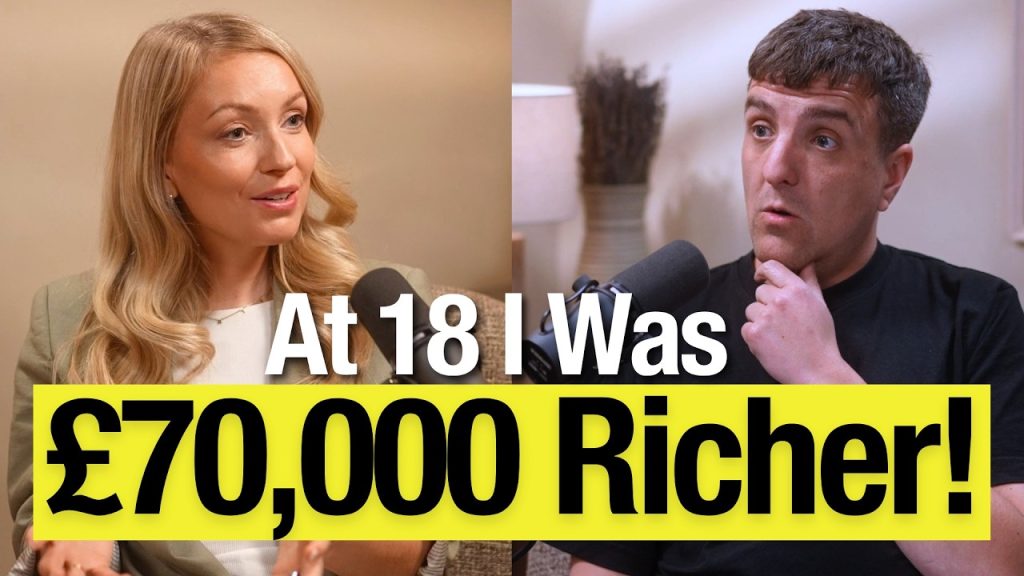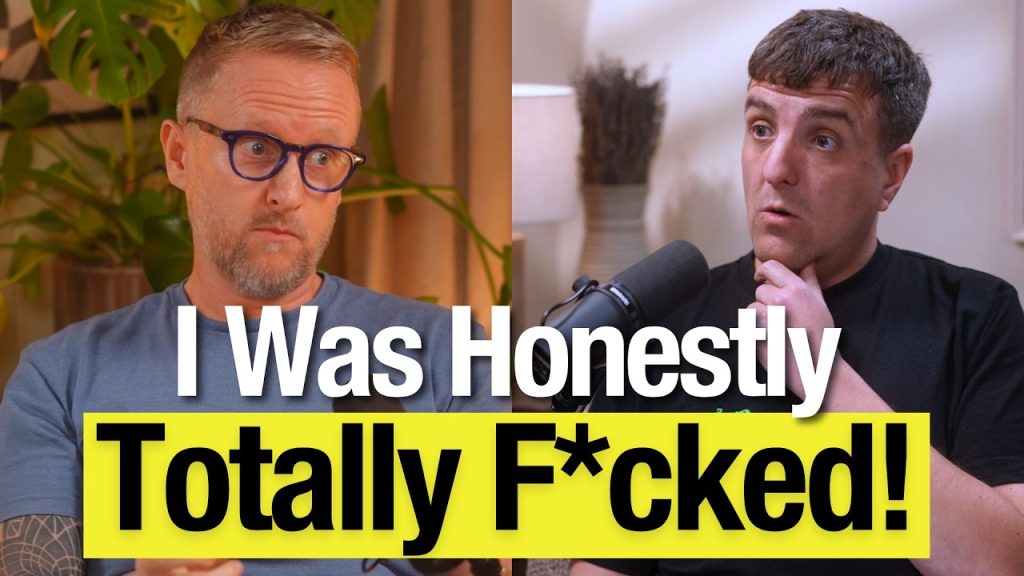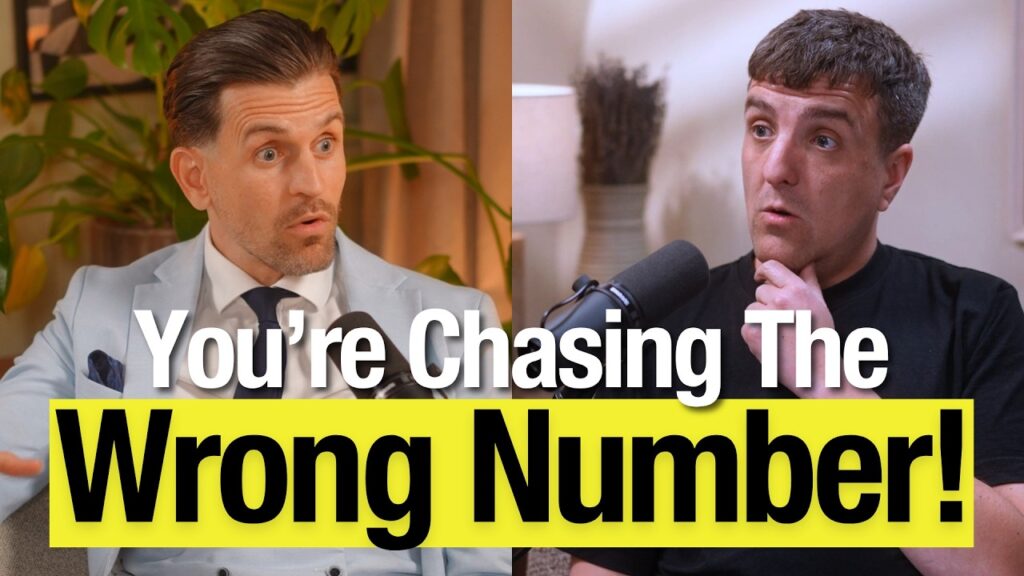
This week’s guest is Laura Ann Moore, Money Mindset Expert, Financial Wellbeing Speaker and founder of Mind Money Soul, who joins the podcast to unpack why our relationship with money is emotional long before it’s practical.
She also explains how she went from being a childhood “hoarder” scared to spend to a coach who helps other people feel confident about their finances.
Laura’s story starts in a house of six, watching her self-employed plumber dad work constantly while giving jobs away for free, and never quite feeling like there was enough money to go round.
That early stress turned her into a saver by 15 or 16, but a saver driven by fear rather than confidence.
It took a genuine crossroads moment in her early twenties, choosing between drama school and travelling with her best mates, to show her that money is really about choice, not just numbers in an account.
From there Laura talks us through rebuilding her savings twice over, stumbling into investing after an offhand comment on a date, and the journey from a scattergun personal blog to building Mind Money Soul, her coaching business and podcast focused on the emotional, practical and spiritual sides of money.
It’s a genuinely useful conversation for anyone who has ever wondered why the “logical” advice to just budget better never seems to stick, and it’s her first appearance on the show, well before she came back as a co-host on later episodes.
———
Gains App is LIVE!
An AI-powered budgeting and cashback app designed to help you make more of your money.
Download here: https://gainsapp.onelink.me/8IhT/oiaimr1z
———
Get a FREE FRACTIONAL SHARE worth up £100 when you deposit £1 with Trading 212
https://www.trading212.com/join/MGP
If you don’t receive the free fractional share, head to the menu and put the word ‘MGP’ into the promo code section.
(Capital at risk when you invest)
Key takeaways
- Laura’s childhood in a house of six, with a self-employed plumber dad who gave work away for free, turned her into a fear-driven “hoarder” with money from around 15 or 16.
- A crossroads at 22, choosing between £15,000 saved for drama school or travelling with friends, taught her that money is really about choice and options, not just a number.
- She rebuilt her savings to £25,000 in London and later invested for the first time after a date pointed out her money was losing buying power sitting in a bank account.
- Laura believes practical fixes like budgets don’t stick until you address the emotional beliefs underneath, since our spending decisions are driven by emotion, not logic.
- Tools like a daily money journal and a regular “money date” help build awareness of spending triggers, which Laura says matters more than how much money you actually earn.
Timestamps
- [2:07] Growing Up in a House of Six: Laura’s Early Money Story
- [5:14] Saving £15,000 for Drama School by Age 22
- [7:30] Travelling for Seven Months and Learning to Spend
- [10:24] Coming Home, Rebuilding Savings and a Quarter-Life Crisis
- [14:59] The Date That Sparked Laura’s Investing Journey
- [17:42] Getting Started With Trading 212 and Index Funds
- [24:12] From Money Blog to Full-Time Financial Coach
- [27:06] Limiting Beliefs and the Emotional Side of Money
- [33:16] The Money Journal: Spotting Your Spending Triggers
- [37:00] Money Dates: Building a Healthier Relationship With Money
Growing up with a plumber dad who gave his work away for free
Laura grew up in a house of six, with two parents who both worked and three siblings around her.
Her dad was a self-employed plumber who, in her words, “used to just give stuff away to clients for free all the time,” so despite the assumption that plumbers earn well, money was tight and her dad was rarely home.
Laura says she absorbed the stress that came with that rather than any specific lesson about budgeting, and by the time she got her first job at Argos aged 15, she’d developed a fear of losing money that made her “a bit of a hoarder” from a young age.
It’s a reminder that the way you view your parents’ relationship with money shapes your own, even when you consciously try to do things differently.
Her first job set the tone for how she’d talk about work and money for years afterwards. She started as a customer service rep before being promoted to jewellery team leader, the coveted spot on the shop floor away from the chaos of the counter.
It’s a small detail, but it fits the pattern Laura describes: money stress at home, but a work ethic that kicked in early and never really let up.
The £15,000 gamble: drama school savings vs a once-in-a-lifetime trip
Wanting to go to drama school but unable to get a student loan for it, Laura set herself a target of saving £15,000, working full time from 19 and hitting the goal by 22.
Two weeks before she was due to start, two best friends invited her travelling instead, and she chose the trip over the lifelong dream, deferring her place.
As she puts it, the decision “wasn’t based on which one I could afford, it was which one did I really want to do,” and that was the moment she realised money buys choice and freedom rather than being an end in itself.
If you want a clearer sense of what you’re actually working with before making a similar trade-off, our budgeting calculator is a useful starting point.
From saver to spender and back again in London
Laura spent almost the entire £15,000 over seven and a half months travelling through Australia, Asia and New Zealand, describing it as the moment she learned “the positive impact that money can have when you are good with it.”
She came home, kept £1,000 aside for a car, went back to her old job with a promotion, and had what she calls a “quarter-life crisis” about her direction.
She and friends moved to London when she was 25, and rather than spiralling into overspending in an expensive city, she rebuilt her savings to £25,000, driven partly by wanting financial security and partly by the itch to travel again.
A first date that sparked Laura's investing journey
It was a date in 2019 that changed Laura’s relationship with money again.
A man pointed out that by leaving her savings sat in a bank account she was losing buying power, a comment that sent her down a year-long research path before she actually started investing at the end of 2020.
She opened a Trading 212 account, began with a small amount in an S&P 500 index fund alongside a handful of individual shares, and now holds a stocks and shares ISA and a self-invested personal pension, with individual stocks making up only a small slice of her portfolio.
Laura is candid that she’s still learning, which is part of what makes the message land for her audience.
Anyone starting from scratch might find our guide to investing for beginners in the UK a useful next step.
What pushed Laura to start talking about investing publicly was reading research on women and investing that she found overcomplicated to the point of being off-putting.
A conversation over a beer with a friend who works as a wealth manager demystified terms like index funds and compound interest, and she was struck by how simple the concepts actually were once someone explained them without jargon.
That’s become a theme of her content since: stripping the intimidation out of investing so that starting with a single pound doesn’t feel like a barrier.
Limiting beliefs, coaching and the emotional side of money
Laura’s move into full-time coaching grew out of a personal blog that, despite ten planned categories, always ended up being about money.
Her first post shared how she’d saved £15,000 and how she did it, and the response told her there was an appetite for this kind of content long before she saw it as a career.
She got a financial coaching qualification because, although coaching isn’t formally regulated, she wanted the skills to support genuine change, going full time in her business the July before this recording. Central to her approach is the idea that practical advice alone doesn’t change behaviour.
She traces her own limiting belief, that “making money is really hard,” directly back to watching her dad struggle as a self-employed plumber, and says that belief held her back from starting her own business long after she was ready.
The money journal and money dates: building awareness of spending triggers
Laura’s go-to tool with clients is a money journal: tracking every purchase for a week or two alongside the emotion behind it, to reveal patterns like spending when stressed, bored or celebrating.
She’s clear that money mindset isn’t about earning more, arguing that “how you manage £10 is how you’ll manage £10,000,” and that without addressing emotional triggers, extra income just leads to lifestyle inflation rather than progress.
Anyone wanting to see exactly where their own money is going before starting a journal could try our piece on how to audit your spending.
She also recommends a monthly or weekly “money date,” reviewing what went well, checking progress on goals and planning ahead, treating it as building a relationship with money rather than a chore, done somewhere comfortable with a candle and a cup of tea rather than as a stressful chore squeezed in at the last minute.
Laura runs Mind Money Soul as a podcast, launched the previous August and made up of short, holistic episodes covering the practical, emotional and spiritual sides of money, alongside a Feel Good Investor mini-course designed to take people from confused to confident enough to make their first investment, and 1:1 coaching.
Listeners can take our own money personality quiz to start understanding their own patterns before diving into any of it.
This transcript is auto-generated and lightly edited for readability, it may contain errors.
[0:00] Sammie Ellard-King: Hello and welcome to another episode of the Money Gains Podcast. This is your host, Sammie Ellard-King, and today I’m going to be joined by Laura Ann Moore, who is a money mindset expert and a financial well-being speaker. Laura and me, we unpack all about how to make you feel good about money, get you financially confident, and how money mindset sort of plays into some of the financial decisions that you can make. So for now, if you’re listening on YouTube, please do whack that subscribe button and on Apple Podcasts or Spotify, give us a follow. It really does help the show. But for now, let’s get into it on the Money Gains Podcast. The Money Gains Podcast.
[0:54] Sammie Ellard-King: So Laura, um, it’s great to have you here. How are you doing? I’m good, thank you. How are you? Not too bad yet, not too bad. It was um I think we were just chatting offline. We had a had a bit of a busy weekend this this weekend, so I’ve been feeling it a little bit, but you know, we’re we’re we’re ready, we’re right and ready to go again. Whole extra day. And that’s why I like going out on a Friday because it gives you the extra Saturday to recover. Right, exactly. Yeah, those two-day hangovers now hit hard, unfortunately. So, yeah, I’m I’m really excited about this conversation. Obviously, I’ve been following you for a long while, and your journey has been incredible, and you know, the rise, and obviously, now the podcast as well, and you’ve got some really cool products, and um, I just really like your approach to money as well, your kind of no-nonsense approach, you know, thrills, which is which is awesome. You know, you when you jump on camera, you just come on with so much confidence, and I I feel like that kind of transmits as well to your audience, and it has certainly has to me. So, I’m yeah, I’m really excited to dive into this today. But first off, I like to sort of take people back a little bit to find out a bit about you and and your kind of relationship with money. So, what was it like for you growing up? What was your relationship with money when you were when you were a kid?
[2:07] Laura Ann Moore: So, growing up, I think I had a you know, I I was in a house with three other siblings, and my mum and dad, like six people in one house, you know, like um my mum and dad both worked, and I saw the kind of I guess negative side that of money in regards to the stress that it can cause and how it kind of yeah, can impact a family or individuals negatively. Um, and you know, that was partly down to my dad and him working all the time, um, and he was a self-employed plumber, so um, you’d think he would have a lot of money because you know, plumbers are meant to make a lot of money, but he used to just give stuff away to clients for free all the time. So, yeah, so you know, my experience of that was was dad being out the house all the time, but us never really having any money. And um, I think by the time I kind of got to like 15, 16, when I started, you know, I got my first job at 15, I had this relationship with money that was like, I was so scared to lose it. I was so scared of like not having it that it kind of made me a bit of a hoarder with money um from like a really young age. So yeah, it’s funny, isn’t it? How like the the the the way that you view your parents and the impact that they have on your relationship with money, it doesn’t mean that you’re gonna have the same relationship, but it just has a direct impact. So, yeah, for me it kind of turned me into a bit of a hoarder with money.
[3:31] Sammie Ellard-King: Um it’s one of those things like it that you as you mentioned, like completely rubs off on you. Definitely did with me, you know. My parents were spenders, I became a spender, had to realise the hard way, yeah, made ever made every mistake going, but it makes you, you know, that people find their money moment as such in their own way, and but often it is led by a parent. So you’ve had that moment, you’ve started work at a young age. But what was your first job? I worked at Argos. I was um I I actually I mean I can’t remember customer service like rep. Um, and then I got promoted to jewellery team leader, which was cool because everybody would wanted to be on the jewellery counter because it was like you get your own little space, you get to like just chat with customers and talk about rings and like when everyone else is like running around headless getting shouted at by customers. Um so yeah, Argos.
[4:27] Sammie Ellard-King: I remember it back in the day, Argos catalogue was the one. Yeah. Do you know what? Argos catalogues were the one, but when you worked there, they used to make you stand outside and like hand them out. And when it is cold in winter and you’re stood outside, you used to hate it when a new catalogue came out. But yeah, I think um Argos catalogues were a lot of people’s uh childhood um. And the jewelry bit was like that bit on the side, wasn’t it? You couldn’t like you couldn’t go over, you go and look and you’d be like, Oh no, no, not for me. Elizabeth Duke, yeah, yeah, yeah. Pandora. Yeah. Well, um you’ve you’ve kind of gone into this into work, so you and you mentioned you were a bit of a hoarder with money, but did you have a moment that kind of clicked for you and you went, right, like I need to do something about this?
[5:14] Laura Ann Moore: Yeah, definitely. So for me, I so yeah, from like the age of like 15, 16, I was I was it turned me into a saver, so like it kind of had a good consequence because it meant I was quite good with my money, um, but it was all from a place of fear and you know lack. And when I was so I decided not to go to university because I wanted to be an actress, I wanted to go to drama school, and at the time, but drama school was well, it probably still is about £15,000 per year, but you couldn’t get a student loan, kind of like you do when you go to university. So I was like, right, I need to find, make, you know, save £15,000 somehow. And I decided to get a job. So when I was 19, I got my first ever full-time job as a sales, uh, like I was an account exec for a marketing company in Stevenage, and I started saving really, really hard. And by the time I was 22, I had 15 grand. And my biggest moment was when it was about two weeks before I was due to go to drama school, and two of my best friends were like, Laura, we’re gonna go traveling. Do you want to come with us? And I decided. Yeah, I had this big toss-up of like lifelong dream of going to drama school, or like once in a lifetime chance of traveling with your best mates. And I decided to go traveling, so I deferred my place at drama school, went traveling, and I had this moment of realising that when I was deciding between the two, it wasn’t based on which one I could afford, it was which one did I really want to do. And that was a real moment for me, like realising like money can give you choice and options and freedom. And it was, yeah, it was a massive moment. And then I went traveling and I spent pretty much every penny. So I went from being a saver and being scared to spend my money to seeing how spending money could bring me all these amazing experiences. Like I got to do the most insane stuff whilst I was away. You know, I skydived, I scuba dived, we did everything, and I really got to that was a really pivotal moment for me, like learning the positive impact that money can have when you are good with it and when you have it and when you manage it in a way that kind of works. Um so yeah, so that was sort of my big aha moment with money for sure.
[7:30] Sammie Ellard-King: I love that. And you know, you going on those trips as well, you know, I did it in my mid-20s and early mid-20s, it does make you as a person as well. You’re kind of out in the big, bad world, traveling with mates in situations that kind of get thrown at you, and you know, your sensory overload. And you can’t it can it some people will blow all their cash and phone home to mum, like, you know, I can’t afford my plane ticket home, or can you lend me 200 quid? But some people embrace it, and it sounds like you embraced it. Yeah, no, I did. Like we just kind of the first sort of couple of weeks were hard. So basically, I would have a savings account with my 15 grand. I obviously bought, we you know, paid for the Airbnb, paid for the flight, and then when I was out there, I was just like giving myself an allowance because my two friends that I was with, they both got jobs. So one went and had like got like a proper nine to five in like the city, and one of them like waited like at a restaurant. And I had that moment where I was like, I don’t really need to work. So I honestly would just like hang about the pool. Um, and I would just kind of like literally, I was just living my best life, and we decided whilst so we were just living in Australia, like we had an Airbnb and stuff, and we decided while we were there that we would do, seeing as we’re this side of the world, we’d do a trip around Asia. And my sort of like job while whilst the girls were at work was I created the full itinerary. I like made this six-week plan, like going around Asia, like how we budget our money, how much it’s all gonna cost. Um, it was in my element. Um, but yeah, I was like transferring myself money over, and there was that moment of like seeing the money go down, and I had to really be like, money is a resource, like it is replaceable because I just get a job when I get home, like I’m not unsafe by spending this money. Um, and that’s a you know, though those are beliefs kind of sort of had to be worked through on the job whilst I was there.
[9:18] Sammie Ellard-King: That’s a that’s wicked. So you you got how long were you out there for in total? Uh about seven and a half months, I think it was. Seven and a half. Oh wow, okay. So you went you went big. We went big, yeah, yeah, yeah. We did Australia and then we did like all round Asia and then back to Australia and we did a bit of New Zealand as well. So it was really cool. Oh wow, yeah. My um my sister’s actually getting married in Sydney next weekend. Oh my god, no way! I know she dropped it on us. Unfortunately, I’m not, I know it’s how bad is that, but she um she uh she picked a date and was getting married within six weeks, and like half of us were like, we couldn’t turn it around in time. Yeah, yeah, yeah. So we’re live streaming. Um that’s cool. Thank you. The power of the internet, yeah. Yeah, exactly. Love that so you talk about saving, um, and it seems like you’ve you’ve you you’ve understood from quite an early age what money meant and what the what it could give you as a resource. But having sort of come back from travelling, you obviously then dwindled down that pot. What was your next move?
[10:24] Laura Ann Moore: So I actually managed to leave myself a thousand pounds out of that because I knew I’d need a car when I got back. So I was like, that is not to be touched because I have to have a car when I get home. So I came home, bought a car, and I was working the company that I was working for, my boss. Um, he was like, I want you to come back, like I want you to have your job back. So I was very like, I was very lucky that I was able to literally. I came back in the July, we got in touch, and I was like, yo, like I’m ready to have my job back, but I don’t want to start for another month. And he was like, no worries. So I gave myself a month to kind of sort my shit out. And then, yeah, started in August. I I got promoted to being a business development manager, so I got a cut, so I ended up with a company car, which meant I could sell my car, and I got to like, I learned all these skills like driving around the country, like, so I kind of just stepped back into this job where I was like, I know I don’t want to do this long term, but I need money and I’m good at it. I’ll figure out my next move on the way. So um, whilst I was in Australia, I was like, I decided I didn’t want to be an actress anymore. I was like, you know, the life’s too hard. And I had probably, and I’m sure a lot of people listening to this might agree, but like what could only be classed as a quarter life crisis as like, what the fuck am I doing with my life? Like, what am I gonna do with the job? What is my career? What, you know, why am I here? What is my purpose? Um yeah, and it’s intense, isn’t it, when you’re younger because well, young, it was only like fucking five years ago, but you know, I’m trying to figure out how am I gonna make money and enjoy it and like all of those things. But me and my friends have decided that we would move to London when we got home. So between us, we we sort of all you know saved up and then I moved to London when I was like 25, and I said I was gonna replace the money that I’d spent travelling, and I did. I saved, I ended up saving 25 grand. Um, lived in London, and then set up my business. So yeah, like I think as well, that experience led me down to what I do now for sure.
[12:17] Sammie Ellard-King: That’s amazing. So you’ve moved into the big city, and instead of going crazy, you’ve even increased your savings part up to 25 grand. Mm-hmm. Yeah, I I that was the goal, and I kind of, yeah, the goal was 20 grand and I just kept going. That’s amazing. Well, and what was the goal for? What is it to put money just aside for you or are you saving for something? Well, I think so. I kind of obviously at this point I’d I knew the power and the importance of saving, of having that financial security, you know, having that blanket. And I I I didn’t really have anybody I could rely on financially, so it was like partly for security, and then I also got the the bug for traveling, and I was like, I know I’m gonna go traveling again. So I might as well. And because I’ve had that experience where I’d saved to go to drama school, and then I used the money for something completely different. In my head, I was like, as long as I’ve got the money there, I can decide whatever I want to do. I think it’s really common that people go, Oh, I don’t really save because I don’t really have anything to save for, but like, we’re always gonna need money for stuff. There’s always gonna be something that we want that is more that costs more than what we can pay for and afford from one paycheck. So having savings is always gonna benefit you, always for security, for big goals and stuff like that. So I think that that idea of just building it back up was was enough to motivate me to do that, and also the thought of going travelling again. So it was kind of the combination of the two.
[13:41] Sammie Ellard-King: You you’ve given yourself options, options, yeah, completely. And like I, you know, move into London, London is not cheap. So I was like, I need to be prepared, like I need to have money in the bank. So um, yeah, the original plan, the the plan was to then go to go traveling around South America after I’d lived in London for a bit, but then then COVID happened. So yeah, wow, that thing that we don’t we really all want to talk about, right? That shall not be named, yeah, it’s a bit crazy. But businesses like mine and yours came out of COVID, so there’s it was time for us to double down on stuff that we really wanted to do. And I think that that even though we look back at it as a kind of odd period, I do think there are positives from it. It did allow a lot of people that reset and actually understand who they are and what they want to be, and it helped a lot of people actually save money and that they’d never done before and actually installed a lot of good money habits in people because of that. They weren’t allowed to leave the house or they actually didn’t have much to spend it on, you know. And it did help. So you’ve gone quite a long way. I actually had a look this morning in your bio says 40 grand. So you’re up, are you up to that now?
[14:59] Laura Ann Moore: Yes, well, it was the combination of like the 15 plus the 25. Um, so I’ve saved 40 grand, you know, altogether um over the course, you know, since I was 19 to now. But then when I when I was in London, I um obviously I was really proud of my savings. I was like, yeah, I got all this money saved. And I went on a date, and a guy was like, Do you know by having your money sat in a bank account, you’re losing like it’s you’re losing its buying power? And I was like, what does that even mean? Um, and that led me down the path of getting into investing because I was like, obviously, I was like, I don’t want to lose money. So I went, you know, I started looking into understanding investing, and then um yeah, ended up going down that path, which was a whole nother journey in itself, but a very worthwhile one.
[15:45] Sammie Ellard-King: So talk to us about that. So you started it off. So how long ago was that? Uh so it happened in that conversation happened in 2019. So was that like four weeks, four years ago? And I it took me from the point of sort of getting having that realization, it still took me a in a whole nother year to invest because I was scared, I didn’t understand it. And I I read a piece of investing and like research from Fidelity, and it was amazing. It was talking about women and investing, and I was like, I put it on my stories, and I was like, What on earth? Like, this is crazy. And uh, someone, a friend of mine who’s a wealth manager, was like, I agree with you, the language is overcomplicated and confusing, and women and you know, everyone should be investing more. And he was like, Do you want, do you want to meet for a drink? And I’ll just tell you everything I know. And I was like, uh, yeah. So we did. We went and met and met in Brixton, met for a beer, and I just asked him all the questions. I was like, What’s an index fund? What is compound interest? What is this? What is this? And he just explained it to me. And once I understood it, I was like, why isn’t everybody investing? Like, right, I couldn’t get my head around it. I was like, This, why this seems so simple? I hate the fact it’s overcomplicated. So started investing myself um in 2020, end of 2020, and then just kind of like built it up um over time. Um and started talking about it online with people and realised how little people knew about it. And yeah, it just sort of became part of my passion, you know. I I’ve now got 15 grand invested in the stock market, and yeah, which is amazing, and like sharing that and helping especially women understand like the power of it and why it’s important and like getting started and not being scared of it. Like, I’m so passionate about it because you know, back when our parents were younger, they would use buying a house as financial security, and it’s like it’s not as accessible for us to do that now. So, yeah, I think it’s really important.
[17:42] Sammie Ellard-King: That’s one thing I love about your channel. You know, you are really empowering women to go out and take notice of these things, and you know, you mentioned it um when you were talking about it then that about this kind of confusion around it and how much jargon there is created, and it’s created for one reason it’s to keep the little people out of the market, and that’s changed now with technology, yeah, social media, people like yourselves there talking about these things and giving people the opportunity from all walks of life, you know, you could start get started for a pound these days, whereas back in the day it was you know five, six hundred quid, sometimes even more, and most of these guys. So it really has changed the landscape. So, where did you start out? What was the what was your first investment? And and was it with an ISA or yeah?
[18:28] Laura Ann Moore: So I basically I downloaded Trading 212 because I decided that I wanted to be able, I understood index funds and the power of you know long-term investing and and all of that. Um sorry, my focus went off. Um I understood all of that, and I wanted to be able to invest still in individual stocks. I found it interesting. So I did that so that I could do both. And I I think my first investment was like I actually think it was an index fund. I think it was like the S&P 500, I think it was £70, £70.70p into an S&P 500 like index fund. But over that period, I also I I got a bit of Apple, I got a bit of Tesla, I got a bit of Amazon, like because I was just trying it out. Now, fast forward, you know, two, three years, stocks make up quite literally one percent of my portfolio. I sort of did it and I was like, no, this isn’t for me. I don’t want to do you know, I want to be an index fund. So I’m kind of like doing it in a stocks and shares ISA on Trading 212. I think if maybe I did it, if I started again, I know you can obviously change, but I would probably use like Vanguard or something like because that’s kind of all I really invested anyway. But yeah, I wanted to be able to play around and like you know, try it for myself and and make those little mistakes and all of that. But the problem obviously with that is that the the app itself, if you don’t really know what you’re doing, it looks quite overwhelming. You’re a bit like, What’s all these spreadsheets and like graphs and um but what I say is you build confidence by experience. I got more confident every time I invested a you know a pound, two pounds, whatever, and it came with with that. So yeah, it was and I still still invest there, and and and I’ve got like a lifetime stocks and shares ISA and I’ve also got um a SIPP, so like a self-invested personal pension, and and I’m still feel like I’m still learning myself. So when I talk to people online about it, I’m like I’m not perfect, I’m still figuring it out. Like I know a lot about it, but I’m still you know figuring figuring bits out. And I think that relatability really helps people um feel more confident in their own choices.
[20:41] Sammie Ellard-King: Definitely, like what I loved about what you did, you know, you you’re having a play, but you’re not throwing all your money into this play account. I I do the same, you know. I’ve got five, maybe six percent sometimes, depending on what’s going on. Like right now, I’m having a bit more of a play because you know the markets have been down for so long, so I’m like, oh, let me put a bit more into some of the things that I think are going to bounce back quicker. But like, even so, that’s still only five, six percent of my wealth. The rest of it is locked away in in index funds and in a lifetime stocks and shares ISA and a SIPP as well, because having that diversification and also just the stress of like, you know, if you’ve got 100% in individual stocks, you need to be checking these things quite a lot. Whereas with the fund, an index fund, it just tracks the top companies in the world. Job done. Does it for you? Don’t need to even don’t even need to think about it. And yeah, I think that’s why one of those things the you know, a lot of people just don’t understand these things exist. So creating channels and and conversations like this today where we can talk about these things and give people the knowledge and and security that they can go out and start investing today with a with a quid if they really want.
[21:55] Laura Ann Moore: Yeah, that’s the power of technology, I think, and modern, you know, modern day apps and all stuff like that. Like the ability, it it takes away the barrier to entry. You don’t have to be this rich old man who has you know sitting on some gold. Like you can literally just go, Yeah, right, I’ll open up a stocks and shares ISA and chuck a bit of mini money in there. And I think that that is, I mean, it’s amazing. I think that you know, it’s so cool that we can do that. But one of the biggest things that hold people back is the fear of it. Like, what if I lose my money? What if I, what if I, you know, don’t I need loads of money? All those kind of like investing myths that people um believe. And it’s that classic case, isn’t it, of the importance of education? Because education and knowledge is power, and the more you know about it, the more confident you feel. But it’s also like I think it’s really common, especially as young people, like not thinking too far in the future, like really, you know, you think about your future. I remember when I was in my early 20s and somebody said something about a pension to me. And I was like, I don’t need to, I don’t need to have a pension, I’m not old. Like, without realising the you you have your pension for when you’re older, but you have to build it up. Like, I think I just kind of assume that when you get to like 60, like this money magically appears out of nowhere. Do you know what I mean? Because I’ve worked. Um, so even just understanding the importance of it, and also about like your future and what is it you’re trying to create. Like, you don’t even have to invest just because you want to quit when you’re you know, quit work and be on a beach. Like, you can still want to work for a really long time, but have that financial independence by investing and building up your money outside of that. So, yeah, I think the more people know about it, the better.
[24:12] Sammie Ellard-King: Definitely. So let’s talk about you a little bit and your business because you know it’s the journey for you’ve been pretty meteoric over the last sort of year or so. You’ve you know, you’ve taken on a lot of new things. I saw you pass the financial coaching course. Um tell us about you. Yeah, so I obviously, like I said, you know, I I wanted to be an actress, and when I decided I didn’t, and I came home from Australia and I was like, I don’t know what I want to do. I was like, I want to do some vlogging or blogging, and I literally just was like, you know what, I’ll set up a blog. I got I’ve got things to say. And I found myself, I had like, no joke, 10 categories in my blog. It was like yoga and travel and food and beauty and money and this. And every time I sat down to write a blog, I would always write about money. I was and I just had this folder of like 20 money blogs and not really much else. And I was like, why wouldn’t I just only talk about money? So it really did just start, you know, from a blog and Instagram and sharing, like, you know, my first my first post was I say 15 grand and this is how I did it. And obviously everyone was like, Oh my god, you know, like give us the tips. So it all came from my personal experience, and the more that time that went on, and the more you know I sort of realised it was needed, I still didn’t really see it as a career prospect. I just saw it as something that I I was just having fun with it. Like, I like doing it, I like helping people. And then I started having, you know, I remember I got my first ever brand deal and I did a workshop. And the girl who I’m really good friends with now, I remember we got off this workshop and she was like, Do you know you this could this could be a career for you? Like, you know, this you’re really good at this. And I was like, How would I make money from this? Um, so it was one of those things where I just kind of was making it up as I was going along, and then the more people I’d contact me and be like, Can you help me with my money? I was like, I think I need to get a coaching qualification behind me. Because with coaching, you don’t even, it’s not regulated, so you don’t even have to have a qualification. But for me, I wanted to know that I was helping people in the best way possible. So I wanted the skills and the knowledge to be able to support that change. Um so that was yeah, and I think like I do think in within the next two or three years, financial coaching will get regulated, and I now have an accredited course behind me, so that’s handy. Um, but I think it’s you know, it’s it’s I love it. I love talking about the emotional side of money and the fine financial psychology and why why we overspend, why we do the things that we do, and helping people to empower themselves to make those educated decisions because money is such a source of stress of stress for people and it doesn’t need to be. And I think that I yeah, like that kind of I’ve really loved that side of it, and then yeah, went full-time in my business July last year. So I’ve only been full-time for eight months, eight months now. So it’s pretty cool. Congrats, thank you.
[27:06] Sammie Ellard-King: One of the things I love about you and your channel is this emotion side of it that you discuss a lot, especially in the you know, the podcast as well, which we’ll touch on. But what why why do you feel like that’s some sort of the avenue you take? So I think that I used to find so when I would write blogs, I always would talk about like the mindset of saving and like what you know the the emotional side, but I didn’t really realise I was doing that, I just kind of chatted about it, and then I’m you know, I’m really into like self-help, personal development kind of books and and and stuff, and I happened from like a really young age. So obviously there is that mindset part, and then when I got into talking about money and and started my decided to do the coaching qualification, so much of it we talk about the emotional side of money. Once I’d clicked and understood my own money beliefs and how that was holding me back. So, for example, I had the belief that my, you know, my dad was out all the time, so I internalized this belief that making money is really hard. And even when you do make money, like it’s hard, it’s still hard, you only have enough to survive, like it you’re not thriving. And because he was self-employed, I built up this view of self-employment. So, even though really I probably could have quit my job probably like a year before I actually did, this belief, this limiting belief around running my own business really held me back. So once I went through the coaching process myself, you kind of end up coaching yourself as well and understanding more about yourself. And I really do, you know, believe that until you change your mindset and your language towards money on an emotional level and you work through those blocks and you reprogram your subconscious, I do believe that your your behaviour doesn’t change just from the practical stuff because all of our decisions and actions that we take are driven from emotion, so why would we only put a practical thing in place? So once I’ve kind of like had that aha moment and realised like money is so emotional, um, yeah, I just found it, you know, so interesting. I was like, I have to share this with everybody. That’s kind of where it went.
[29:14] Sammie Ellard-King: I love that. It’s a really cool way of looking at it, and there’s something that I talk about as well. You know, when people ask me what to do, and they’re like, you know, how do we start saving? How do we break this hoodoo of spending all our money each month? And I wrote a blog about it because I know the power of habit, and the power of habit, if you change that, and often you need that kind of break in your brain, that kind of this is that was my old life, this is now my new life, and so what I was telling people to do was create a sort of a two or three bank system where they only have access to one account out of that system. But take the card that you get sent in the post for that second bank, go somewhere really cool that you that you know you you find a fit, you know, you’re a fit you have a finitation to, and essentially it could be a hill, could be a you know, uh you know, foot foot football ground, whatever that might well be, somewhere that you love, and film get someone to film you cutting that card up, so that’s your like old you getting rid of that old spending habits, and it’s that break, and then you can kind of set yourself on a new path from there, and it is that emotion that of doing that that allows you to move forward, you know. And that’s why I love love following you because you you’re so hot on this, so it’s yeah, it’s such a big thing, yeah.
[30:36] Laura Ann Moore: And I think that um you you don’t really because we set spend so much of the time in our subconscious brain, like so many of our actions throughout the day, uh we’re on autopilot, we have a lot of the same thoughts, especially when we’re not being very conscious, and you’re just like cracking on, work’s busy, seeing your mates, you’ve got your routine, and it’s so easy to be mindless in your actions. If you’re then if you have emotional triggers to spending money, they’re gonna happen without you realising. And then when you are sitting down and going, Oh no, why did I spend that? Or why did I do that? I knew that I couldn’t, or da da da da da, and you want to change, even though your conscious brain is going, I want to change, I want to be better with money, I want to save. If you then don’t work on the deep emotional stuff, and then you just crack on with your life, thinking that that that 5% brain that said, I want to change is enough, it won’t make you won’t make any changes. You will still still go out, overspend because you’re being triggered without being realising the reaction is to spend money, and it’s not until you sit down and you become mindful and you go, Oh, why did I do that? So it’s like about bringing mindfulness to your behaviours on a daily basis, understanding what your emotional triggers are and finding other coping mechanisms, making sure that you are practicing mindfulness and like settling into your body and really becoming aware of how you feel in that moment, not putting yourself in environments where you can accidentally really easily spend money, like all of these little things that have a massive impact and doesn’t come down to how much money you make or what type of budgeting you do. It comes down to the way you feel about yourself and the way you feel about money, and it’s really only until you tap into that you can make a change.
[33:16] Sammie Ellard-King: 100%. You know, they people can make a change if they’re on 20 grand or 150 grand, it really doesn’t matter. It’s those fundamental principles and how you view money and how you handle money and your emotions when you’re making those decisions that really make the difference. Yeah, and I think that people have this. I get people to do a money journal. So I do this with clients. I’m like, right, go in for the next week or two, make keep a money journal. Uh, every time you spend money, write down how much you make, uh, how much you spend, sorry, what it was on, and the emotion that you were feeling. And you really do start to recognise patterns of, oh wow, I really do spend when I’m stressed or when I’m bored or when I’m lonely, or when I’m celebrating. You know, it’s not always negative emotions, but it’s just that it’s a response, right? It’s something that we naturally, you know, we we go to do. So understanding. And then the more awareness you bring to it, you can then start to make conscious choices. You can say, Am I happy with spending my money here? Am I happy with how I’m spending my money? The answer might be yes. And you’re like, actually, I don’t mind because that makes me feel good, or that may I that’s a choice. It’s when it’s not a choice, and then the money’s in control, the emotion is in control, that there’s problems because it stops you from saving. Maybe you’re dipping into your savings, maybe it’s stopping you from investing, it’s stopping you from working towards your financial goals. And half of the time we end up spending money on things that we don’t even care about, just because we want to get that dopamine rush, we want to get that like rush of hormone release, good hormone release from spending money, and we don’t even care about what we’re spending it on. So then you get to the end of the month and you go, I don’t have anything to show for this. As a whereas when you’re mindful, you can go every single choice that I’ve made, I feel good about it. I’ve got things to show for it, and I’m working towards my financial goals, and that is the power of like that intention with spending money, but you can only do it by bringing awareness to it. Um, yeah, yeah.
[35:05] Sammie Ellard-King: I was that guy, you know, I was that last hundred pound, love those new Nike Air Forces that have just come out, and I would buy that for that kind of instant self-gratification moment that I felt at the time in my mid-20s that that was what I needed to do and who I needed to be. It was that keeping up with the Joneses thing that you had that you get sucked into, and it is hard these days, you know. There’s a lot of people on social media, you know, flossing this, Lamborghinis here, and you can get sucked up into that so quickly. And so that’s why I really love what you’re doing. It’s that kind of awareness piece about your own emotions when it comes to those spending habits, and that can then influence you. And as you say, it doesn’t all need to be negative, it can be positive. You can be happy with those experiences. But if you identify two or three moments where you’re not, those will be the big catalysts in improving your financial situation over the longer term.
[35:59] Laura Ann Moore: 100%. And I always say how you manage £10 is how you’ll manage £10,000. So if you think that the problem is you need more money, sometimes we do need more income, and that is, you know, a genuine thing. It’s just the fact. Exactly. And like when you can learn to manage a smaller amount and you go, Oh, I’m aware of my spending habits, I’m aware of how I’m, you know, managing my money, then you can invite more money in, you can get a pay rise, you know, all of that stuff. But what happens if you don’t work on the emotions and your money mindset first is that you make more money and then you just spend more. So lifestyle inflation, you know, you’re you’re you’re if you’ve inflated your lifestyle, you’ve got more expensive phone, more expensive rent, more you shop in Waitrose instead of Sainsbury’s, you know, all of those things, you don’t feel the effects of more money, so then it’s pointless because you’re in the same position, but just with slightly more expensive stuff. So when you can learn to manage um yeah, a smaller amount, when you do then get more money, you can go, oh, I’ll invest the difference, or oh, this allows me to do X, Y, and Z. So yeah, it’s always emotions first and uh growing your money second, I think.
[37:00] Sammie Ellard-King: So talk to us a little bit about you’ve got some really cool stuff available on the Instagram channel. You know, there’s a money date checklist. I had a look at that. What is that? I love that. So I love having money dates. So I always say you have to have a relationship with your money. Like, imagine it as like a romantic partner, and you have to give it time and respect and love. So once a month or once a week, whatever feels good is like sitting down, having a date with your money. So that could look like getting all cozy, putting a candle on, you could have your PJs on, a cup of tea, a glass of wine, whatever feels good, whatever makes you feel your nervous system feel calm. And then you literally you look back over from the month before what went well, what didn’t, did you stick to your budget? Why didn’t you? What you know, all of that. You look over your financial goals. Have I made any progress? Did I dip into my savings? Am I still happy with what these goals are? And then also you make a plan for the month ahead. So, how am I going to be spending my money? Where do I need money to go? How much do I want to save? All of those things. And it just allows you to build an emotional connection with your money, to not be scared of it, to, you know, because I’m a massive believer of even if you’re in a bit of a pickle with money and you’re not in the best position, the more you know, the better, because you can actually make a tangible plan. There’s nothing worse than going, I know that my money’s in the shit, but I’m just gonna ignore it because then you can’t do anything about it. You’re better off knowing. So, you know, it’s that classic case of knowledge is power. So understanding what your money’s doing, where you want it to go, it puts you in the driver’s seat. You get to pick where that money goes, and then you can make choices from there. And I think that it’s um the the more you do it, the more, the more of a habit you build up, the more you can, you’ll you’ll see a massive difference in how you feel about money, how much you’ve saved, your enjoyment with spending, your ability to stick to a budget, all of those things. So um, and I say, you know, you work hard for your money. If you’re if you’re someone who, whether you have a nine to five or whether you run your own business, you’re working hard for your money. So why would you not spend an hour or two a month sitting down with it and making choices about it? So otherwise you’re just letting it come in and you’re just letting it go and you’ve got nothing to show for it.
[39:02] Sammie Ellard-King: I love that. That’s such a great way of thinking. It’s that traditional, like sort of sitting down in that moment where you would just look at your budget and go, oh my god, what have I done? Or what am I gonna do? You’re actually taking it and kind of it’s kind of caressing yourself. It’s that kind of massage money, it’s that a massage for your brain in a way. It’s like making your environment nice and having that time set aside is such a nice way of looking at. You’ve got other things as well. There’s um obviously them the Mind, Money, Soul Podcast, and you’ve got the Feel Good Investor course. So, do you want to talk a little bit about those? Yeah, yeah. So the podcast, the I I launched it in August last year, I think. Um, so it’s it’s been about sort of six months. It’s been one of those things where I wanted to do it for ages. And I was like, I’ll do it next year, I’ll do it next year. And then um, just the same with this, to be honest. So yeah, it’s classic, isn’t it? Like, you know, you like you find the time for it. And I um the the point of it is it’s so my business is called Mind, Money, Soul because I’m a big believer of the holistic approach of the emotional, the practical, and the spiritual sides of money, and that’s what I talk about on the podcast. So they’re like little 10-20-minute bite-sized episodes talking about it could be top tips, updates, you know, all that kind of stuff. But I really do believe that taking that holistic approach, and yeah, so that’s all the podcast is. And I really I love doing it. It’s um it’s my little baby.
[40:25] Sammie Ellard-King: You do it, you know, there’s no guests, you’re just talking, but it’s straight 10-15 minutes of like you walk away from that feeling quite empowered, even as a guy. Uh uh, you know, I love I really do love it. Oh, I’m glad, thank you. Yeah, no, it’s um I’m I’m I’m very close to hitting 20,000 downloads, so I’m very excited. Amazing. Um, which would be cool. And then the Feel Good Investor course was actually a course, a mini course that I created basically to take people from feeling just confused to confident about investing and and being able to walk away after a couple of sessions ready to invest your first pound. And it basically is all of the knowledge that I’ve learned, jargon busting, breaking down the language, understanding the concepts, and it’s broken down into the practical side of investing and what it is, how to do it, step by step, and then the emotional side, because there is a massive emotional side to being an investor, you know, how to build an investor’s mindset, how to leave your emotions at the door, you know, all of that stuff. Um, and yeah, I I I launched that last year. Um, and I’m gonna be relaunching it. Well, I’m gonna be relaunching it soon-ish, um, which will be good. And I love I love I’ve had some amazing feedback, which has been really nice because I think that, like I said earlier, it’s so overwhelming. And when you then understand the concepts in just an easy to understand way, you’re like, it wow, like, okay, I can literally just get started. So it’s been really amazing to see people go from not having a Scooby to being able to go, oh my god, I’m ready to actually start investing. So that’s yeah, that’s been amazing. I’ve really enjoyed um that’s why we do what we do, right?
[41:58] Sammie Ellard-King: It’s that help thing, you know. I I’m in hospitality in the day and I send people home drunk in the car, and then my Up The Gains thing is uh is changing people’s lives and helping people. Um there’s not the the feeling of doing that really does sort of overtake anything I’ve ever done. So I’m sure you feel the same there. Yeah, no, I agree. I do agree 100%. So, where can people find you, Laura? So I’m on all of the social platforms, um Instagram, TikTok. I do have a YouTube, but I’m still trying to get consistent with it. So if you go follow me on over there, I don’t know when I’m gonna post a video, but um, there is some good stuff on there. Um my Instagram and my TikTok is is my name, so Laura Ann Moore. And I also have my podcast, Mind, Money, Soul, and yeah, there, and then LinkedIn, if you’re a LinkedIn kind of person. So all the socials just under my name.
[42:51] Sammie Ellard-King: Ah, lovely. Well, look, it’s been an absolute pleasure. Thank you so much for coming on. And you know, I really do encourage people to go and check out the podcast and and Laura on socials. It it always brings a smile to your face when you most need it. So thank you so much for having me.
Frequently asked questions
Laura Ann Moore is a Money Mindset Expert and Financial Wellbeing Speaker, and the founder of Mind Money Soul, a coaching business and podcast focused on the emotional, practical and spiritual sides of money.
Mind Money Soul is Laura’s coaching business, podcast and course platform, built around the idea that changing your relationship with money means working on your emotional beliefs about it, not just your budget.
Laura began researching investing after a date pointed out she was losing buying power by keeping savings in cash. She started investing at the end of 2020 through Trading 212, mainly in index funds alongside a small amount of individual stocks.
A money journal is a tool Laura uses with coaching clients: tracking every purchase for a week or two along with the emotion behind it, to spot patterns like spending when stressed, bored or celebrating.
A money date is a regular, deliberate session (weekly or monthly) reviewing your spending, savings and financial goals, which Laura recommends as a way to build a calmer, more intentional relationship with your money. This episode is for educational purposes only and isn’t personal financial advice. When you invest, your capital is at risk. This page contains affiliate links; if you click one and make a purchase we may earn a small commission at no extra cost to you. This is Laura Ann Moore’s original appearance on the Money Gains Podcast; she later returns as a co-host on later episodes of the show.
———