12 Best Personal Finance Books for Beginners (UK Guide 2026)

10 popular personal finance books for beginners

These are the 12 best personal finance books for beginners, refreshed for 2026. The list mixes the classics that everyone in the money world recommends with UK-specific picks that actually cover ISAs and pensions, because most “best money books” lists are written for an American reader and quietly ignore the rest of us.

Each one gets a straightforward “best for” label to help you find your match fast. There’s also a quick comparison table below if you want to skip straight to the shortlist. None of these will make you rich by osmosis. Pick one up, read the first chapter tonight, and see if it sticks.

At-a-glance comparison

BookAuthorBest forUK relevance
Why Didn’t They Teach Us This In School?Cary SiegelAbsolute beginners wanting the basics fastUS classic, principles universal
The Psychology of MoneyMorgan HouselUnderstanding your own money behaviourUS classic, principles universal
Rich Dad Poor DadRobert KiyosakiShifting how you think about assets and incomeUS classic, principles universal
The Richest Man in BabylonGeorge S. ClasonReaders who prefer stories to spreadsheetsUS classic, principles universal
The Automatic MillionaireDavid BachBuilding wealth on autopilotUS example, automation translates to ISAs and pensions
The Total Money MakeoverDave RamseyGetting out of debt with a clear systemWritten for US readers, debt method still works here
The One Page Financial PlanCarl RichardsAnyone who finds money planning overwhelmingUS classic, principles universal
Broke MillennialErin LowryTwenty-somethings starting from scratchUS classic, principles universal
I Will Teach You to Be RichRamit SethiAutomating your finances without guiltUS accounts, systems transfer easily
Clever Girl FinanceBola SokunbiWomen wanting a confidence-first approachUS classic, principles universal
Your Money or Your LifeVicki RobinRethinking your relationship with work and moneyUS classic, birthplace of the FIRE movement
Money: A User’s GuideLaura WhateleyUK readers who want ISAs, pensions and renting coveredWritten for UK readers, covers ISAs and pensions

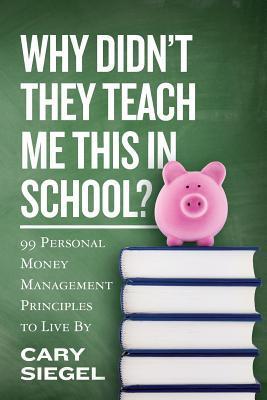
Why Didn't They Teach Us This In School? - Cary Siegel

Best for: absolute beginners who want the basics explained in plain English.

The title says it all. Most of us are left to work money out on our own, which is exactly why so many people struggle with it well into adulthood. Cary Siegel, a retired business executive, wrote this after realising his own kids were about to leave home with zero financial education, so he sat down and wrote out everything he wished someone had told him.

The book is structured as a series of short, punchy lessons rather than one long narrative, which makes it easy to dip in and out of. Each lesson is backed up with Siegel’s own experiences, so it never feels like a dry list of rules. If you want a book that covers the fundamentals (budgeting, saving, debt, the basics of investing) without wading through 300 pages of theory, this is the one to start with.

The Psychology of Money - Morgan Housel

Best for: understanding why you make the money decisions you do.

This is probably the most recommended money book of the last decade, and for good reason. Morgan Housel isn’t trying to teach you how to pick stocks or build a budget spreadsheet. Instead, he explores why smart people make daft financial decisions, and why your relationship with money has far more to do with your psychology and personal history than with maths.

Each chapter is a short, standalone story built around a single idea: things like the value of “enough”, why saving matters more than earning, and how luck plays a bigger role in financial outcomes than we like to admit. It’s an easy, fast read that changes how you think rather than what you do day to day. If you want to go deeper into the mechanics of actually growing your money once your mindset is sorted, our investing books that everyone should read picks up where this one leaves off.

Best ISA
Trading 212
4.6
Minimum Deposit £1

Trading 212 provides access to over 10,000 stocks, funds, ETFs and investment trusts.

They offer commission-free trading* and their auto investing feature is excellent.

OUR OFFER - To get free fractional shares worth up to 100 EUR/GBP, you can open an account with Trading 212 using promo code 'GAINS'. Terms apply

*Other fees may apply. See terms and fees

**When investing, your capital is at risk. If you enable interest, Trading 212 will hold your cash in qualifying money market funds and banks. Otherwise, your cash will be held only in banks. Interest applies on cash in an investment account. Terms apply.

Pros:
  • Commission free trading*
  • Earn interest on uninvested cash**
  • Fantastic mobile app
  • Award winning ISA
Cons:
  • No personal pension
Capital at risk when you invest. Other fees may apply. See terms and fees

Rich Dad Poor Dad - Robert Kiyosaki

Best for: readers who want to rethink what an “asset” actually is.

Rich Dad Poor Dad has been one of the best-known finance books for over 20 years, and it still gets recommended constantly for a reason. Kiyosaki tells the story of his own upbringing, contrasting the financial teachings of his own father (educated, but always short of money) with those of a friend’s father, the “rich dad” of the title, who built genuine wealth.

The core lesson is simple but sticky: assets put money in your pocket, liabilities take it out, and most people confuse the two their whole lives. It pushes you to think differently about income, ownership and financial independence rather than handing you a step-by-step plan. Pair it with our list of financial freedom books if this one lights a fire under you.

The Richest Man in Babylon - George S. Clason

Best for: anyone who learns better from stories than from spreadsheets.

First published in 1926, this is the granddaddy of the “pay yourself first” principle that half the personal finance industry still runs on. Clason wraps his money lessons in a series of parables set in ancient Babylon, following characters like Arkad, a poor scribe who becomes the city’s richest man by following a handful of simple rules around saving, investing and avoiding debt.

The format won’t be for everyone. It reads more like a collection of fables than a modern how-to guide, and some of the language feels dated. But the core ideas (save at least a tenth of what you earn, put your money to work, seek advice from people who know what they’re doing) have aged remarkably well. If you want the origin story for a lot of what’s now considered common sense in personal finance, this is worth the couple of hours it takes to read.

The Automatic Millionaire - David Bach

Best for: people who want to build wealth without relying on willpower.

The title alone is enough to make you want to pick this book up. Bach builds the whole thing around a real couple living on a combined income of $55,000 a year who still manage to hit their financial goals and retire at 55, purely by automating everything so they never had to rely on discipline or motivation.

The UK version of this principle is easy to set up yourself: put a standing order into a stocks and shares ISA or top up your workplace pension the day you get paid, before you’ve had the chance to spend it. Bach’s central argument is that automatic systems beat good intentions every time, and once you’ve read this, setting up your own version takes about ten minutes.

The Total Money Makeover - Dave Ramsey

Best for: anyone who needs a clear, no-nonsense plan to get out of debt.

If you want to take control of your finances, you need to know how to manage debt first, and that’s exactly where The Total Money Makeover comes in. Ramsey walks you through his “baby steps” system for clearing debt and building savings, and the advice is blunt but genuinely effective if you actually follow it.

It’s written for a US readership, so you’ll need to swap out references to 401(k)s for workplace pensions and adjust a few of the numbers, but the “debt snowball” method (paying off your smallest debt first for the psychological win, then rolling that payment into the next one) works just as well on a UK credit card as it does on an American one. For me it’s one of the best personal finance books for beginners out there, especially if debt is your main problem right now.

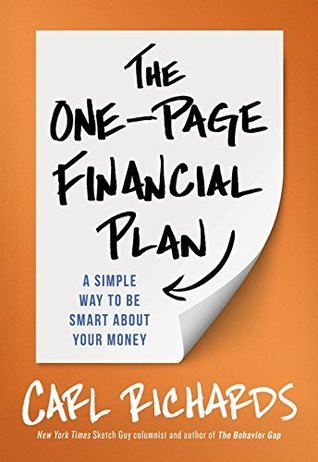
The One Page Financial Plan - Carl Richards

Best for: anyone who feels overwhelmed and just wants clarity.

The One Page Financial Plan is the book for you if your finances feel like a fog you can’t quite see through, whether that’s immediate money worries or just not knowing where to start with investing your savings. Carl Richards, a financial planner known for his simple sketches, strips the whole subject back to basics.

Rather than drowning you in spreadsheets and jargon, the book pushes you towards writing down what actually matters to you and building your finances around that, on a single page. It’s less about technical detail and more about working out your priorities so the technical decisions become obvious afterwards. A good pick if you’ve read other finance books and still feel stuck on where to actually begin.

Broke Millennial - Erin Lowry

Best for: twenty-somethings figuring out money for the first time.

Broke Millennial does exactly what it says on the tin: it’s aimed at people in their early twenties who are just starting to deal with real financial responsibility, often for the first time. Lowry writes in a conversational, funny style that never feels dry or like a lecture.

The book spends a lot of time on the emotional and social side of money, things like how to talk about money with your partner, how to split bills with friends without it getting awkward, and how to deal with financial anxiety, alongside the practical basics of budgeting and credit. If other finance books have felt a bit stiff or aimed at an older reader, this is the one that meets you where you actually are.

I Will Teach You to Be Rich - Ramit Sethi

Best for: people who want a system, not a lecture on cutting back.

The big lesson in I Will Teach You to Be Rich is that being wealthy isn’t really about how little you spend. Sethi guides you towards a place where you stop feeling guilty about spending altogether, on the condition that your finances are properly set up in the background to handle saving and investing automatically.

It’s written for a US audience, so the specific accounts and providers he mentions won’t map directly onto the UK, but the underlying system (automate your savings and investing first, then spend guilt-free on what you actually care about) transfers over without much adjustment. It’s a good next step once you’ve got the basics down and want a proper system rather than another list of tips.

Best ISA
Trading 212
4.6
Minimum Deposit £1

Trading 212 provides access to over 10,000 stocks, funds, ETFs and investment trusts.

They offer commission-free trading* and their auto investing feature is excellent.

OUR OFFER - To get free fractional shares worth up to 100 EUR/GBP, you can open an account with Trading 212 using promo code 'GAINS'. Terms apply

*Other fees may apply. See terms and fees

**When investing, your capital is at risk. If you enable interest, Trading 212 will hold your cash in qualifying money market funds and banks. Otherwise, your cash will be held only in banks. Interest applies on cash in an investment account. Terms apply.

Pros:
  • Commission free trading*
  • Earn interest on uninvested cash**
  • Fantastic mobile app
  • Award winning ISA
Cons:
  • No personal pension
Capital at risk when you invest. Other fees may apply. See terms and fees

Clever Girl Finance - Bola Sokunbi

Best for: women who want a confidence-first approach to money.

There’s little escaping the fact that the gender pay gap is still very real, and that women often have to work harder and longer to reach the same financial position as men. Clever Girl Finance was written to close that gap in knowledge and confidence, giving female readers a practical, encouraging guide to taking control of their finances.

Sokunbi covers the full range: budgeting, saving, debt, investing and building wealth, but the tone is what sets it apart. It’s written to build you up rather than make you feel behind, which matters when so much financial content assumes you already know the basics. A strong pick if previous finance books have felt like they weren’t written with you in mind.

Your Money or Your Life - Vicki Robin

Best for: anyone who wants to rethink their entire relationship with work and money.

Your Money or Your Life is genuinely easy to follow and put into practice, built around a nine-step plan that changes how you think about money at a fairly fundamental level. Rather than just teaching you to budget, it asks you to work out how much of your actual life (your hours, your energy) you’re trading for the things you buy.

This is the book that the FIRE movement is widely credited with springing from, and if you follow the steps you’ll come away with a clear plan for managing money, clearing debt and building wealth with real intention. It’s less about hacks and more about a genuine mindset shift, so give it the time it deserves.

Money: A User's Guide - Laura Whateley

Best for: UK readers who want ISAs, pensions, renting and student loans explained properly.

If you only buy one book from this list and you’re based in the UK, make it this one. Laura Whateley is a Times journalist, and Money: A User’s Guide is written specifically for a British audience, which is rare in this space. It walks you through mastering your finances with UK products and UK rules front and centre: ISAs, workplace pensions, renting versus buying, student loans and the credit score system we actually use.

Where the US classics on this list need translating, this one just works. Some lessons will help you improve your credit score, cut your household bills or make sense of your pension for the first time. I particularly rate the audio version, which is an easy listen on the morning commute. Every other book here teaches you the principles; this is the one that tells you exactly which account to open.

Personal finance book FAQs

What is the best personal finance book ever written?

There’s no single agreed winner, but The Psychology of Money and Rich Dad Poor Dad are consistently the two most recommended. Which one is “best” really depends on your goal: Housel’s book is about your mindset, Kiyosaki’s is about how you think about assets. Pick based on what you’re actually trying to fix.

What is the best finance book for beginners?

Why Didn’t They Teach Us This In School? or Broke Millennial are the strongest starting points for absolute beginners, thanks to their plain-English style and short, digestible lessons. UK readers should start with Money: A User’s Guide by Laura Whateley, since it covers ISAs and pensions directly rather than needing translation from US terms.

Which personal finance book is most highly rated?

The Psychology of Money is one of the highest-rated money books on Amazon and has stayed near the top of finance bestseller lists for years. Its short, story-driven chapters and universal lessons on money behaviour make it one of the most consistently well-reviewed books in the genre.

What personal finance books cover UK topics like ISAs and pensions?

Money: A User’s Guide by Laura Whateley is the clearest UK-specific pick, covering ISAs, workplace pensions, renting and student loans in detail. Most of the other classics on this list are written for a US audience, but their core principles (saving, automation, mindset) transfer to the UK without much trouble.

Final Thoughts

Reading about personal finance will never compete with a good thriller, but the knowledge in these books can genuinely set you up for the rest of your life. You don’t need to read all twelve. Pick the one that matches where you are right now, whether that’s getting out of debt, sorting your ISA, or just understanding why you spend the way you do, and start there.

Reading is step one. Actually doing something with what you’ve learned, opening the ISA, setting up the standing order, having the awkward money conversation, is step two, and it’s the one that actually moves the needle. Let us know if you’ve got a favourite that didn’t make the list, we’re always after more recommendations.

Share this article with friends

Facebook
Twitter
LinkedIn
Email
WhatsApp
X

Disclaimer: Content on this page is for informational purposes and does not constitute financial advice. Always do your own research before making a financially related decision.

Scroll to Top