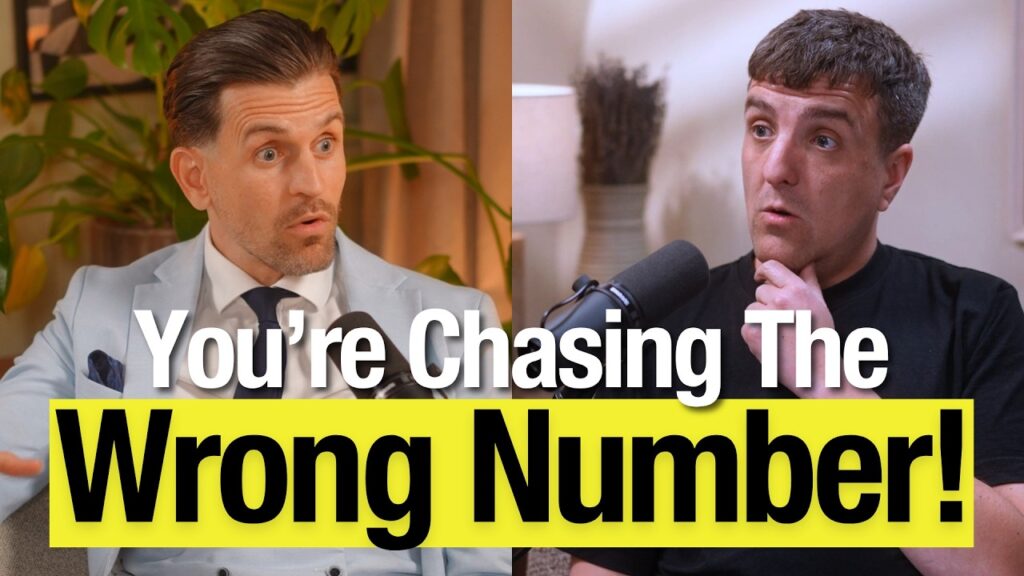

This week’s guest is Rachel Harris, co-founder of StriveX and the voice behind accountant_she, who joins the podcast to talk workplace culture, toxic bosses and why the best candidates should be interviewing their employer just as hard as their employer is interviewing them.
Rachel isn’t your traditional accountant.
She’s built StriveX from a one-woman band with 50 clients into a firm with over 700 clients and a growing waiting list of people wanting to work there, and she’s done it by treating “don’t be a dick” as a genuine core value rather than a poster on the wall.
If you’ve ever sat opposite a stiff, old-school accountant and wondered whether there was another way, Rachel is proof there is.
This episode is less about spreadsheets and more about people: the toxic workplaces Rachel experienced early on, the red flags to watch for when you’re job hunting, why she gets candidates to play card games in interviews, and how “monk mode” helps her run five businesses without losing her mind.
Whatever stage you’re at in your career, there’s something here worth taking with you.
———
Gains App is LIVE!
An AI-powered budgeting and cashback app designed to help you make more of your money.
Download here: https://gainsapp.onelink.me/8IhT/oiaimr1z
———
Get a FREE FRACTIONAL SHARE worth up £100 when you deposit £1 with Trading 212
https://www.trading212.com/join/MGP
If you don’t receive the free fractional share, head to the menu and put the word ‘MGP’ into the promo code section.
(Capital at risk when you invest)
Key takeaways
- Rachel started her career on an apprenticeship wage of £3.24 an hour, working nine to five and then in a bar most evenings because she couldn’t afford the bus.
- StriveX’s number one core value is “don’t be a dick”, applied equally to co-founders, staff and clients, and Rachel says clients who don’t fit that value get let go.
- Rachel’s advice to anyone job hunting: you’re not just being interviewed, you should be interviewing your prospective employer too.
- StriveX runs group interviews using card games like Monopoly Deal or Exploding Kittens, because Rachel believes competitive games reveal how people really behave.
- “Monk mode”, Rachel’s term for two hours of deep focus work each morning, is how she clears roughly 120 to 150 emails a day before anyone else logs on.
Timestamps
- [0:49] Rachel Harris Introduces StriveX and Accountant She
- [4:17] Rachel’s Apprenticeship on £3.24 an Hour
- [10:12] Toxic Workplaces and Breaking the Cycle
- [13:25] How COVID Changed What Employees Expect
- [18:41] Why You Can’t Sell a Job But You Can Sell a Business
- [21:32] Workplace Red Flags: Interviewing Your Employer
- [24:01] Office Culture as a Red Flag
- [25:07] Why StriveX Uses Card Games in Interviews
- [29:42] What Workplace Culture Really Means
- [45:05] What Is Monk Mode and How It Works
From a £3.24-an-hour apprenticeship to co-founding StriveX
Rachel didn’t go to university. With a lot going on at home, she took an apprenticeship instead, earning £3.24 an hour while her friends were away at university.
She worked nine to five, went to night school, and then worked in a bar in the evenings because she couldn’t afford the bus to her day job.
She grew up in what she calls a stereotypically British household where money simply wasn’t discussed: she never knew what her parents earned or what their mortgage looked like.
That gap became the thing she built her career around.
Rachel says one of the best parts of working in finance is being around people who are comfortable having uncomfortable financial conversations.
She’s tried to build that openness into StriveX’s own culture: the team gets paid 10% above market rate, free financial and mortgage advice, one-to-one personal development sessions, and an all-inclusive staff holiday to Mallorca every year.
If you’re figuring out where your own pay actually stacks up against your outgoings, our take-home pay calculator is a quick way to see what you’re really working with each month.
Turning a toxic workplace experience into "don't be a dick"
Asked directly whether a bad experience shaped her approach, Rachel didn’t dodge it. She’s had toxic workplaces in her past, the same as most people, but her view is that you don’t have to pass that on.
“If you’ve had a bad experience, whether it’s a bad boss or a bad workplace or a clicky group of girls, you don’t have to take that and pass it on,” she said. “It stops here.”
Being profoundly deaf shaped what she needed from an employer too: flexible and hybrid working, and a genuinely inclusive, supportive environment.
Rather than wait for that to exist somewhere else, she built it herself. StriveX’s number one core value is deliberately blunt: don’t be a dick.
It applies in board meetings between Rachel and her husband and business partner James, to the whole team, and to clients, some of whom the firm has chosen to let go when the relationship stopped feeling right.
Why you should be interviewing your employer, not the other way round
When the conversation turned to employees rather than founders, Rachel’s advice was simple: “You are never being interviewed, you should be interviewing them.”
She told listeners to trust their gut in a job search, because it’s rarely wrong, and to treat the interview process itself as a two-way vibe check rather than something done to them.
She also flagged how quickly a business can spot when a client or a candidate isn’t the right fit, and applies the same logic to her own career decisions using what she calls a “North Star”: a clear enough sense of direction that it becomes easy to say yes or no to opportunities.
Her related tip for anyone thinking long-term about their own income is that you can’t sell a job or pass it to your children, but you can build and eventually sell a business.
For people weighing up whether to build extra income alongside a job, our roundup of the top ways to earn a side income is a useful place to start.
Reading the red flags: office culture, card games and vibe checks
Rachel gave several concrete signals to watch for. The office itself is one: if a company talks online about quality and purpose but the physical workspace feels neglected, that mismatch between “Instagram versus reality” is a red flag in itself.
How much effort goes into the space, she argues, tends to mirror how much effort will go into you.
StriveX’s own interview process is built around watching how people behave rather than what they say.
Candidates are brought in for a group interview and handed a deck of cards, usually Monopoly Deal or Exploding Kittens, because Rachel believes competitive games strip away the rehearsed answers and show someone’s true colours.
Candidates are then left alone with a current team member who had a similar route into the role, specifically so they can ask the awkward questions they might not feel comfortable raising with the decision maker directly, things like how flexible the flexible working policy really is.
What workplace culture actually means
Asked what “culture” really means, Rachel’s answer was direct: it’s the conversations that happen in the workplace when she isn’t in the room. Core values written on a wall mean nothing, she said, if nobody actually lives them.
She described interviewing a candidate with a difficult personal situation, pairing them with a team member who understood, and returning to find both of them in tears because the team member had told the candidate that StriveX was a place you could come to heal, inside or outside of work.
That, Rachel said, is when she knows she’s done her job.
Monk mode, the daily schedule and building five businesses at once
Rachel is well known online for posting her daily schedule, which regularly runs from 5am to early evening.
She’s candid that it isn’t sustainable forever and describes this period as a sprint rather than a marathon, but she’s equally clear that productivity is a form of self-care for her rather than something to feel guilty about.
The engine behind it is what she calls “monk mode”: roughly two hours of deep, uninterrupted focus each morning, from around 6am to 8am, before anyone else logs on.
She uses that window to triage 120 to 150 emails a day into quick ticks, tasks and projects, clearing the quick wins fast so the rest of the day can go on the things that actually grow the business.
Outside of StriveX and accountant_she, that now includes a portfolio of rental properties with James, a consultancy arm, and new mortgage and audit businesses.
If you’re weighing up your own next money move, our free money personality quiz is a quick way to see what approach might suit you best.
This transcript is auto-generated and lightly edited for readability, it may contain errors.
[0:00] Sammie Ellard-King: Hello and welcome to another episode of the Money Gains podcast. This is your host, Sammie Ellard-King, and today my guest is Rachel Harris, who is the founder of Accountant She and accounting firm StriveX. Now, don’t let that be a stumbling block for you. Rachel’s approach to business is absolutely incredible. She’s a female business owner, and what she’s doing in the workplace right now, which you’ll see on her social channels and as we go through this conversation, is inspiring, it’s an empowering conversation. I absolutely loved this episode from the start to the finish. There are so many great nuggets in here for you. But for now, if you are listening on YouTube, please do whack that subscribe button. And if you are listening on Spotify or Apple, give us a follow, tell a friend, it really does help the show. But for now, let’s get started on the Money Gains podcast.
[0:49] Sammie Ellard-King: The Money Gains Podcast, Financial Guide, Ocre. Let’s make some 247 podcast. So, Rachel, welcome to the Money Gains Podcast. How are you? You well? Very well. Thank you so much for having me. Yeah, I’m really excited. I um I’ve been following you for a while, and if anyone does follow Rachel, it is always a bundle of joy. Um, your channel is awesome, accountant underscore she for anyone that wants to go check it out. But if you wouldn’t mind letting the audience know a little bit about you, I would absolutely love to, yeah, of course. So, hi everybody, my name is Rachel. I am um most importantly, I am an accountant, but don’t turn off just because I’ve said that. I if I just run through what would come up if you Googled me, I feel like that is the best place to start. So I am a disruptor in the accounting industry, and so I am disrupting what it means to be an accountant, what it feels like to have an accountant, and actually what it looks like to be an exceptional employer of accountants. So I’m the founder of one of the UK’s fastest scaling accountancy practices in the country. So we have scaled from a one-man band with 50 clients just under three years ago, to we are currently at 702 clients and we’ve just had our 18th job offer accepted. I am a mentor, I do lots and lots of high-level strategy and consultancy work. So I get to work with businesses that have just come off or are about to go onto shows like Dragon’s Den. Because of the uh online community that I’ve built, I’ve got a community of over 30,000 across the platforms. Because of that, actually, we are the go-to accountant of choice for some of the coolest people uh in the country. So we’ve got people who’ve just come off shows like Love Island, people who’ve just won shows like Bake Off, all the way through to our local village beekeeper and literally everything in between. I am the founder of Accountant She, which is the online safe place that I really needed when I became an accountant. And so through there I create long and short form content that’s completely free and accessible. I’m a director and trustee of AAT, which is the governing body for accountants in the UK. I’m a content creator. I launched the first ever corporate bursary scheme, which gives somebody who doesn’t have access to finance or funding the opportunity to study to become an accountant. And I feel like I missed one. I definitely missed one. Oh, and uh, as well as an accountant, I also have an MBA. So um do I love, absolutely love wider business. I feel like lots of accountants become accountants because they love business and they love helping people. That’s definitely where I found myself. So that felt a bit like word vomit. But hi, I’m Rachel.
[3:29] Sammie Ellard-King: One of the main things, like I’ll, you know, full disclosure, everybody, like uh Up The Gains is uh is a um accountant, well, StriveX client, which is your business. Um, when I was shopping around for an accountant, you know, the worst thing that I could possibly think of was, you know, the 56-year-old man sitting in a local office with you know the accountancy thing at the back. And I just couldn’t, I just couldn’t find one that understood like what we were trying to be in our journey. And what I found super refreshing when I came across your content was like you’re just you just break down, you’re almost like you’re almost like the friend that you need in the business. Yeah. Like that was so cool, and I I I really, really love that. So take take me back to the early days of uh of Rachel. Like what obviously, you know, you’ve got into accountancy, so most likely you were good with money growing up.
[4:17] Rachel Harris: Oh that um Yeah, so I um I didn’t go to university. I had a lot going on at home. I was always, always a straight A student. I was very lucky in that I never I always really enjoyed school. I felt like I didn’t struggle academics. I was one of those kids that like didn’t really revise or like work very hard until I got to like A levels and I got got a big shock. Um I always really loved school, I always loved maths. I was always the weird, like no member of my family is musical. And I was very, very naturally curious about music and fell in love with music and have since found out that the same part of your brain that loves maths also loves music and you can exercise one by exercising the other. Um yeah, I didn’t go to university. I had um a lot going on at home, and I I really felt like I couldn’t couldn’t leave um home. And so yeah, I took an took an apprenticeship where I was earning £3.24 an hour and was really, really miserable. Um, all of my mates were at university doing two for five pound Jaeger bombs, and I was like working nine to five, going to night school and then working in a bar in the evenings because I literally couldn’t afford the bus to work. Um, but yeah, I always say to people, one of the best bits about working in finance is actually just that pure exposure to people who are really comfortable having uncomfortable financial conversations because I grew up in a very stereotypically British family where no I never really understood how much my parents earned. My mum was a full-time mum and my dad uh was a welder. I never knew how much they earned, I never understood the mortgages that they had or their financial situation. And so one of the best bits about having a career in finance is that exposure, and that’s something that we have like very heavily implemented into our employee benefits package. So my goal in life was to build and be the employer that I needed when I was a young person. So not paying the apprenticeship minimum wage, paying 10% above the market rate for their role. We go on an all-inclusive holiday every year to Mallorca. Um, they all get completely free financial advice, completely free mortgage advice. They get one-to-one personal development sessions. And so, like being that very clear financial role model is really important to me externally and internally in our team. And we’re now at the point where our admin team, like the accountants are rubbing off on them too. So, like our internal team, all the way through to our digital marketing exec, she’s already built a spreadsheet to work out how long it’ll take to buy her first home. And so to like see that in action, when it’s been a dream of mine for a really long time, to and I feel like I do it online, but I can’t see the impact. And so to be able to do it in real life with now 18 team members is just amazing. And that’s something that it doesn’t matter, you know, where their career takes them or where the business takes us, that’s something that they will carry with them for the rest of their lives. And so, as someone who didn’t grow up with huge amounts of financial education and having seen the impact it had on my life, it’s just hugely, hugely, whether it’s through content creation or being a great employer, just really have that strong intrinsic need to pass it on to other people.
[7:24] Sammie Ellard-King: I absolutely love that. Do you feel like then when you went into your first role, was it quite eye-opening for you about the lack of support and the lack of, you know, well, yeah, the lack of support, I suppose, is probably. Oh my gosh, like I I do think you like, and you don’t know what you don’t know as well. And I I think having your first job, period, is overwhelming, and you think, oh god, am I am I supposed to know all this? And then all of a sudden you’ve got a job in finance where you’ve not been raised, or like you those conversations have not, they don’t come naturally to you. You think they’re really uncomfortable conversations. Um, hugely eye-opening, but also actually for me, hugely empowering. I think I was raised in a very, you know, you work really hard, but life’s quite hard. Like that was sort of the upbringing that I had. And actually, in my experience, business isn’t like that. Business for me has always been pound for pound, like I have a 400% growth rate within my business. So for every, you know, pound I put in or hour I put in, I know I get 400% of that back. I was raised that life is a struggle and like there’s the man and then there’s us. And actually, my experience in business has been the flip of that. And it’s actually if you have great values and you make sure that every single person that you take on as a client or you work with or you employ has the same values, and you are being a great person and you’re acting with like compassion and kindness, that will only ever come back to you. And so I I had such a positive experience of an introduction into the finance industry and even more so becoming self-employed because I think it’s so easy. I am also the most optimistic person in the history of the world ever. And like, if you if you punched me in the face, I’d apologise for getting in your way. Like me and James, our car broke down on Friday night, and the AA bloke turned up, and we were like, I literally was like, I’m just so grateful the car broke down on a Friday night when I’ve got no plans. It could have broken down when I was on the way to the airport, and I’m just so happy.
[10:12] Sammie Ellard-King: Do you think there was a moment like because of the levels that you’re going to with your business? You know, I honestly don’t know anyone that takes it as as seriously and and right and it is admirable. So you know, firstly, hats off to you. I think it’s absolutely incredible what you’re doing with your team. Um, do you think something was there something bad that happened to you that shot this into your system? Because you because you have gone so far down the wellness route. Do you mean like financially? No, like, you know, was there like a bad experience at work or something that has like made you go back to never happening to me? Oh yeah, so we got some trauma. Um well I I would actually say I so many people have like work like toxic workplace experiences, and I I really and my experience of life has always been, and I feel like this does come through in everything that I do. If you’ve had a bad experience, whether it’s a bad boss or a bad workplace or a clicky, you know, group of girls, you don’t have to take that and pass it on. We all have choices. Um, and actually, very often we can either choose to just sit with it and and pass it on, or actually use that and say, it stops, it stops here. I don’t want a workplace where this happens. I do want a workplace where we all really trust and respect each other. And I’m not gonna call it family because we’re not family, but we do all really love and care about each other and like each other and respect each other. Um I feel yeah, I I’ve I definitely have had toxic workplaces, but I don’t think I’ve had any more or less toxic workplaces than than anybody else. But I really do feel like, and I actually really think it might be generational, and I really hope that our generation we’re in the same generation, our generation actually probably will breed an entirely different working environment. And like for me, I’m profoundly deaf, and so for me, flexible working, hybrid working, a really positive, inclusive, supportive, understanding workplace was really important to me because actually I needed, I needed it, I needed the workplace to be like that, and so I just wanted to build it myself. But having flexible hybrid, all of that stuff actually, it’s hugely positively impacted my experience as a business owner because I think sometimes people forget that business owners have to work there too. It’s not like me up here in an office where the door’s shut. We all have to work together, and I I I do feel and I hope it is generational. And in our industry, I don’t mind being the first. So the bursary scheme was the first ever corporate bursary scheme. I was the youngest ever um director and trustee of AAT, but I do these things not to be the first, but to hope I won’t be the last, and by talking about it and sharing it and being like, yeah, it’s bloody hard, and yeah, I could make more profit, but it wouldn’t feel good. That’s not profit that I want to make, is really important, and I really do think our generation will drive change in that way.
[13:25] Sammie Ellard-King: Do you feel like um I feel personally I saw a huge shift when COVID came about, and we had a lot of this time at home, and there was some fantastic, you know, there were some really big media stories about these businesses that went the extra mile for their employees, and you could immediately see the ones that did and the ones that didn’t. Yeah. Um, and when we came back, there seemed to be this lot of mentality of like, you know, what are you doing for me? Yes, I work for you, but what are you doing for me? And did you see that too? And is that kind of 100%? So we I actually only became self-employed in 2020, so I’m definitely a COVID baby business. But even with that, I um I definitely I really think that so in it in accounting, there is a talent shortage. Every single accounting practice in the country cannot hire. Doesn’t matter if you’re top four, one man band, nobody can hire. We have an employee waiting list with 92 people waiting to join our firm. Recruitment is one part of the business that because of what we do online and because of the brand that we’ve built, and that transparency of people being able to pick a job title or pick a colleague before they start and watch a 15-minute long day in the life YouTube video about what their day looks like, what their responsibilities are like, what sort of clients they’re gonna have. People see us doing it, and it’s not just me on social media. Actually, like there is full-blown TikTok productions with 15 members of staff who are all they get it, want it, they’re competent to do it because of generating that. And it’s not all fluffy TikTok, like it is all intentional social media marketing. We have an employee waiting list of 92 people, ranging from one-man bands all the way through to top four. So our most recent hire was a top four Deloitte consultant, uh, and she’s just joined us. So we’re now attracting staff from some of the biggest but also most toxic places in the country. And like to be doing it in that way, we literally have an employee who was self-employed as an accountant and gave up her portfolio to come and work for us because it is hard, like it’s really hard to do it and to do it well, and to do it in the way that you want to do it. And I I think for me, I don’t know if it’s because I’m a bit younger, but like for me, it’s so vividly. Yeah, like it’s so obvious, and we’re not doing anything groundbreaking, we’re just being nice. So our number one core value is don’t be a dick. And that applies in board meetings with me and James, but it also applies to the team, and actually, most importantly, it applies to clients. So every single staff member, whether it is the administrator who’s onboarding you all the way through to me or James, who are having you know high-level consultancy strategy sessions with people. If you are a client who, when I see your name on my phone, I get a horrible feeling in my tummy, we disengage because actually our core values go up and down our supply chain, and actually they should go up and down yours. And if you are the right client and you’re the right person, that should be the biggest green flag ever to you that we hold you accountable to the same standards that we hold ourselves. But actually, if you are a dick and you see that that’s our core value and that you’re accountable to it too, you’ll probably go somewhere else. And so for me as an employee, I never felt more important than customers. And customers are important, we wouldn’t be here without customers, but we also wouldn’t be able to do anything without the team. And actually, because of what we’ve built, absolutely incredible team members are harder to find than new clients. So I I think for me it is that we are not doing anything groundbreaking, we’re just trying to be employers that employees want to work for.
[17:22] Sammie Ellard-King: Uh but I I personally think you are, because you’re setting a standard now that’s actually going to transcend not just accountancy but across multiple sectors. And for me, what you guys are doing and how transparent you are, not only about your own day but your entire team’s workflow, you know, it’s it’s for someone myself who’s not interested in accountancy at all. Um I follow you and find so much value in the things that you say, and I put those into practice into my own businesses and um, you know, now seeing what is possible, and actually what it comes back to is this um this treating it, you know, we’re treating humans like humans in the workplace, like you’re we’re treating them as they feel like they would want to be treated. And what happens? They work way harder, they they get better results, you can attract better talent than you ever did. Look at your waiting list as an example of that, and and and suddenly your business will thrive, and actually, that little bit of extra effort and that bit of budget that you could have been siphoned off and bought yourself a nicer fancy car with is actually gonna end up paying off later down the line for you, isn’t it? Like that’s the way I’m looking at this.
[18:41] Rachel Harris: 100%, and and I feel like if there was one bit of advice I could give anyone who I don’t know, maybe is hiring for the first time or has a decision where they’re not sure if that client is right, or okay, two bits of advice. First, my first bit of advice would be you can’t sell a job and you can’t pass a job down to your children, but you can pass a business down to your children and you can sell a business. And so even on the days where it doesn’t feel like you’re making profit, building something sustainable that feels right and that will still be serving you in 10, 15, 20 years’ time is more important than you know, extracting an extra grand in dividends this month, or that’s the stuff that will never you can’t pass a job down to children, but you can pass a business. And then the second is a North Star. So I have two screens in front of me. One of them is my vision board, and it’s my background. And whenever I get off a call, doesn’t matter, doesn’t matter who it’s with. I was with Jake Humphreys last week from um the former. I was with Jake Humphreys last week. I was speaking on the same stage as him, and I literally said to him, like, can I tell you about my vision board? So every single person that I meet, I I I pick the one thing on that board that I think they could help me with, and I say, like, do you think you could help me? And I try and collect as many no’s as physically possible, because for every single no, there’ll probably be three yeses, and all of these incredible things happen, and it’s not being outspoken, it’s not being greedy. I just think so often we’re not taught the world is a really good and positive place, and it even if somebody can’t help you, they might be able to pass you on to someone who can. Um, Jake Humphreys does now follow me on Instagram, so it went very well, is all I’ve got to say.
[20:31] Sammie Ellard-King: I mean, that’s life made. Have a North Star, like have and it’ll change, and it’s okay that it changes. Um have a North Star, like have something that helps you decide what to say yes to and what to say no to. Sammie, you must be exactly the same as me. Your inbox, your DMs must be full of people saying, Will you come on my podcast or will you do this or will you come and present to this thing, or my friend would like to talk to you. It can feel so overwhelming. And you could probably fill your diary with things that aren’t right for you and aren’t like taking you one step closer to your North Star. But actually, if you have clarity on what that is, what it looks like, what it feels like, and that’s the thing that you could pass down to your children, it makes it so much easier to say yes or no. And actually, there’s somewhere in between. There’s probably, yeah, and I’ll do it for free. No, thank you very much. And somewhere in between is it doesn’t quite meet my North Star, but I think some cash had probably helped me to get there. And so actually, the answer is yes, but here’s my fees. And so, North Star, and you can’t pass a job down to your children.
[21:32] Sammie Ellard-King: So let’s flip this on this head because some people listening to this won’t be business owners, and you know, that’s absolutely fine, and and will never have a goal to be a business owner. They’re very happy with their job and maybe there are a couple of side hustles that they’re running. So, what would you say to the employee which is going out there or perhaps has had a toxic uh working recent it could have been recent, it could have been in the past, or they could be hunt on the hunt for a new new role. What would you say these days is the things to look out for? Good question. Um you are never being interviewed, you should be interviewing them. Would be my top tip. Um Trust Your Gut again, life banner, trust your gut, it’s never wrong. It is literally never wrong. And if you think it is, just wait. It’ll come back. Something will come back. So trust your gut, interview them, ask to we do lots of group interviews at work. Um, I believe you don’t get a normal, you don’t get someone’s normal behaviour in an interview. Me, me and James are husband and wife. Like people it’s quite intimidating being sat opposite us. Most people have followed us on the internet for quite a few years. Before we interview them, it’s weird, it’s forced. Um, and like even that interview process should be a vibe check. So we first one is always with me and James, and you know, from your perspective, be mindful of who the decision maker is and at what point they come in. And I really think like we would have to get pretty big for both the for James and I not to be a part of those initial conversations, and sometimes it’s just one of us, but that initial vibe check is really, really important. So be aware of when a decision maker gets brought in. And I think sometimes that you can correlate quite a lot of that down to culture, because actually that’s the point that they are bringing culture into the conversation, and for us, that’s the first conversation, not the last. Interesting. Um also, yeah, so group interviews. So we we do group interviews, we get them into the office, and and again, we’re completely hybrid, but it’s really important not only is the interview process a vibe-check, but also so is the office space. Like it’s always been really important to us that even if we’re hybrid and people are only coming in once a week, that we have an office space that reflects our standards and that it is really lovely to work in, and we do have a great coffee machine, and that everybody’s wearing clothes that they feel comfortable in, but are also professional at the same time.
[24:01] Sammie Ellard-King: Um I saw your recent post about that. That made me laugh. But again, like it’s so important to have office space that matches like if I’m on the internet talking about quality and like not making profit over purpose, and then you come to my office and there’s like lights knocked out, and it just doesn’t feel like it’s just not it it’s like Instagram versus reality. That is a red flag in itself, and so office space, like how much effort and attention they’re putting into that is probably similar to how much effort and attention they’ll put into you. Um, and then also, yeah, the way that they interview you. So once me and James have had an initial conversation, we get you to come in. We get you to come in to do two things. The first is a group interview because not because we want to like psychoanalyse the conversations that you’re having with the team, but we just want to see how you behave in a normal work situation. So we throw a deck of cards on the table. Uh, it’s usually either Monopoly Deal or Exploding Kittens, my two favourites ever. Um, throw a deck of cards on the table. Yeah, yeah, yeah. So we literally get them to play a game together. Um again, it’s really cool.
[25:07] Sammie Ellard-King: So it’s wicked. Yeah, like if people have never played the game before, um, actually it means that an existing team member has to explain to them the rules. Um, again, that’s quite a normal conversation. Very often you do play card games with people you don’t know, whether it’s a friend of a friend or someone at a party. So they’re teaching them the game. But then also I have this theory that when people are very competitive, like when people are playing games, their true, their true colours come out, like in the very best way possible. Like I’m a very competitive person. And in an interview, I’d probably be really, really nervous and a bit like, oh yeah, no, I’m not competitive at all. And then I’d play Exploding Kittens and I’d be like, defuse the bomb. So it just makes people behave more like them true selves, and like that’s that’s what I want to judge. That’s what I want to assess, because that’s the person that I’m gonna get at the end of it. And so do judge the interview process in the same way because again, we want we really care about that stuff, and you should find someone who cares about it too. So that’s the first reason we get them to come in as a group interview to just see how they behave. Again, we’re not psychologists, we just want to see who you are, not in a weird, forced Zoom call with me and James asking you technical questions. We do do a technical skills test, and then we work with the applicant to understand which member of our team or which members of our team have the most similar route into this role as they do. So some people have come from industry moving into practice, some people need very flexible working arrangements because of their home situations. Um, if there’s parents in the same department, we’ll always introduce them to parents in the same department. And so we’ll allocate them and try and buddy them up with somebody who has a very similar route into our role and our workplace as them. And then we leave the bloody room to let them ask that person questions that they might not feel comfortable asking me and James. Like as a female single parent, I might not feel comfortable saying to the decision maker, how flexible is your flexible working policies? Because I would worry that I might be discriminated against, or that that would be a red flag, or I would be penalised for that in some way. But if I’m trying to allocate these people based on like fit and personality and background or route into finance or family life, actually they can say, are they really like what they’re like on the internet? That is the most common question that is asked is like, am I gonna turn up on day one and like Rachel have like the biggest bitch face I’ve ever seen in the world?
[27:36] Sammie Ellard-King: Yeah, correctly, yeah. Yeah, yeah. So like we just want to like almost squeeze the organic stuff out at the very beginning and let people feel really comfortable um asking those questions and actually letting them know that we don’t even have to hear them, but you asking them at this point is very important, not for us but for you, because some people have waited on the waiting list for like 12 months, and actually sometimes that’s quite a lot of pressure on us sometimes to make sure that that person is making the right decision, and so um leaving the room and letting them have those conversations is probably one of the most profound things we could do. That’s something that I’ve never been. I I never had that in an interview, and I don’t think I I don’t think I ever would, probably because I was working in quite toxic workplaces, but they are interviewing you, but never ever forget that you are interviewing them. If it doesn’t feel right, probably not such good advice.
[29:42] Sammie Ellard-King: This word gets banded around a lot. Um, so what does culture actually mean to you? Oh culture, I think, is the conversations that happen in the workplace when I’m not there. Because that’s the actual culture. I can I could read out my core values, I can make sure everyone in the business can read out the core values, but it’s all bollocks if no one’s actually doing it. Like I I could get it spray painted on the wall in very ascetic text that I’ve designed on Canva, but it doesn’t mean anything. It’s you know that conversation with an interviewee when I leave the room. I literally interview someone on Friday, and um, I literally I’m gonna cry again. There was someone with a very difficult personal situation, and so we allocated them with someone who had a very relatable situation and we left them in a room together. I came in 20 minutes later and they were both crying, and I was like, Oh god, I’ve allocated you to the wrong person. And the current member of staff said, sorry, we both started crying because I just said that Strivex is a place you come if you need to heal, like inside or outside of work. And I think if that conversation is happening when I’m not in the room, I’ve done my job.
[30:56] Sammie Ellard-King: I love that, Rachel. Honestly, that’s um yeah, it’s really um, it’s really honestly, I’ll say it again, it’s admirable, well done. Like, um yeah, I think um you’re making some serious headwaves, and I really do encourage people to go and follow you because it is a lot of fun. Um when this is um this is we uh we like to talk about finances on here, so I’m gonna ask you a couple of questions around your own personal finances. With the business obviously running, um, you know, you’re a business owner, and what’s your you know, do you invest and and how does that look for you at the moment? Good question. Yes, I do. So um, and it’s really interesting because whenever you look at people’s portfolios, I’m always looking at a return on investment. So again, do lots of very, very cool high-level angel investment venture capital work. I just had the privilege of building uh an FCA-regulated angel due diligence program. So like I love asking people questions about due diligence and that like Dragon’s Den vibe. Um, turning down the toxicity is definitely a bit of me. Um, and so James and I have a portfolio of rental properties, which I absolutely love. We actually own two on the same road. So again, we love monopoly deals. So I keep saying to James, if we get three, then we can get a hotel. Um, so we have a portfolio of rental properties, which again, just absolutely love. There are definitely more tax efficient and probably higher ROIs that we could get. But actually, doing it because you find it really interesting and you want to see how that part of the world works is completely acceptable. And I’m a huge advocate for that. Like we both get a lot of security out of investing in property, it is taxable income. We’re higher rate taxpayers, but actually, the security that comes with owning that capital, you can’t beat. Being self-employed is hard sometimes, and it can come with a lot of financial anxiety, and so owning properties for me is fantastic. So we’ve got a portfolio of rental properties, your cash flow, right?
[33:03] Sammie Ellard-King: Nice. 100%. Yeah, 100%. Um, and again, we are two accountants running a business, so like any income that we get from the rental properties because sits completely separate. We plan and safety personal tax every single month, and then once a year we’re like, ooh, with that money, let’s buy another one, let’s go again. And like we just come back to the mortgage advisors. Um, yeah, so then we’ve got the portfolio rental properties, and then I do so much work with other businesses. I kept saying to James, like, come on, come on. There’s all this SEIS, EIS, tax wrapper, amazing investments that I really believe in. And James is there, like, Rachel, we have a 400% growth rate. You find me an investment that can match that, I’ll give you some money. Until that day comes, I’d much rather take less profit, reinvest it back in, and continue growing the business. So I said at the beginning that our business had grown from 50 clients to 700 in three years. We now have five separate companies. So accountant she, which is my online brand, is a six-figure business in its own right. That’s just my me doing content creation, speaking events. I’ve got a YouTube coming out soon, which is how I how much money I make as a microfinancial influencer. Um, very juicy, would definitely recommend. Um, so accountant she is its own its own trademarked business that I have the joy of just creating long and short form content through there. We’ve got Strivex accountants, we’ve got Strivex the consultancy side of the business. Again, we’ve got consultants from Deloitte doing really high-level strategic consultancy work. We’ve just launched Strivex mortgages. So, again, as two self-employed people that get new mortgages every year because we’re buying rental properties. It was really bloody difficult and it was really stressful. And the mortgage advisors are asking people questions and they’re going to their accountant, it’s just really difficult. So, James and I bought the CeMAP textbooks and we took them on our honeymoon last year. And so we’re really stingy and we didn’t want to hire a mortgage advisor, we just thought we’d just do it ourselves. And so um, Strivex Mortgages has just launched, and then in September 2023, we’ve got Strivex.
[35:03] Sammie Ellard-King: I’ve just got sorry, I’ve just got visions of you sitting by the pool with the CMAP. I don’t need visions, I’ve got photos. At least of James on a honeymoon, like with like the CeMAP tax legislation, his little toes hanging out and with sunglasses on the top. It’s great. Um, I interrupted you in the last one. Um yeah, Strivex audit is launching at the end of this year. And Strivex audit for us is I’m putting my big girl pants on because it is very, very, very uncommon for a non-top 100 accountancy practice to have an audit license. There is a reason for that, and that’s because it’s really bloody difficult and it’s really bloody expensive. And so to get an auditor, uh, again, you’re looking at a huge salary. But for us, this is something we never I don’t plan on exiting, I don’t plan on selling. If you cut me open, this is what comes out. And so that like long game is for us. So Strivex audit is also also launching. We’ve got an amazing pipeline from top four firms who have overflow and they can’t meet the demand. We have an employee waiting list, and so actually, this is now working to our favour because we have more capacity than the top four firms, and so again, that’s where you see that age of investment. They’re getting investment, they’re growing, they’re scaling. I don’t want them to hit the audit threshold and have to go somewhere else. And so I also feel like there is huge demand for an auditor that doesn’t feel like an auditor. Um, in that most audits are like, you don’t want to be here, we don’t want to be here, let’s just do the audit. Whereas we’re there like, you’re having to spend quite a lot of money auditing your financial processes. So let’s work together to find a way that you can maximize the output as a business owner, treat this as a consultancy session, and let’s do it. Sorry, that was a really long way of saying about it.
[36:49] Sammie Ellard-King: Yeah, I know. So and just to like unpack that then. So your investments are you’ve obviously got the rental property, and that’s for you and James, and that’s like that makes a lot of sense for you two. But then actually, you’re focusing on improving your businesses to the point where your your income is just increasing exponentially because of all the new forms of avenues you’re bringing. And this is what’s really cool that I think. Um, sorry, I didn’t mean to interrupt you. I up until now, for the last three years, that growth that we’ve seen has been enormous in one place. Like I’ve sort of grown my personal brand at the same time, but again, don’t be disillusioned, that personal brand was bloody tumbleweed for like two out of the three years, and it’s only been in the last year that I’ve really started making good money from it. Um but really that growth all in one place, we’re now at the point where we’re bringing two businesses in this year, and that growth will continue exponentially, not times one, times five. And so, and as the businesses grow, that grows my personal brand. As my personal brand grows, that brings more clients in, that grows that grows the practice, and they’re all sort of like this massive ecosystem of financial services. We don’t have plans to slow down, and so for me, investing means hiring before I need to, hiring before the team needs to, so that actually nobody’s working under crippling amounts of pressure at any time. Um, and again, also investing in bringing other financial services in-house. So at the moment, that looks like accounting, mortgage advice, and audit, but in the future that’s going to be financial advice. Um, so getting independent financial advisors to come and come and launch Strivex financial advice, then doing Strivex HR, Strivex Legal, so like all of the professional services that surround small businesses. That’s the plan.
[38:37] Sammie Ellard-King: Wow, like that’s such a different way of looking at it to a lot of the guests that we have, and like that’s why I wanted to ask you that question because I felt like what you would say wouldn’t be, you know, you you’re not doing things in in the day-to-day by the norm in any way, shape or form, versus like what the other top accounting’s friend or any business really are uh that I’ve that I’ve seen. So I I knew that question would the answer to that question would be different. So it just goes to show like you don’t have to just have like a massive stock portfolio, you can double down into a business or into a rental property portfolio as well. And obviously the rental portfolio is is what comes off the back of your successful business. Yeah, 100%. And I I think something that helps me as a as a self-employed person decide what an investment is is having an internal charge out rate. So this isn’t my external charge out rate, it’s not me as a consultant. This is Rachel Harris as a person, as a wife, as a friend, as a sister, what is my internal charge out rate? So I’ve got a TikTok coming soon, which is things I outsource as the owner of multiple businesses in my personal life. So for me, if I can get someone to come and clean my house for £25 an hour, and that is lower than my internal charge out rate, aka I value time with loved ones, time for my mental headspace, going to the gym. I feel like by resting, I can maximize my income in other areas of my life, I will outsource it. And so having an internal charge out rate, like that is investing to me. That’s me investing my time or my money to generate more of one of the other things. So whether that’s right, I need a PA or my hair’s gonna fall out, you know? Like that’s making those decisions about when and where to get support in your life, having an internal charge out rate. And so my internal charge out rate is a lot lower than my external charge out rate. But if I can outsource something or if I can get help or employ someone for less than that internal amount, just do it.
[40:33] Sammie Ellard-King: So lastly, I’m gonna talk about your schedule because it is nuts, man. You made it, you made it today. Like what you post a daily schedule in your stories, and I think anyone that it is anyone, I think any even like the people that work extremely different, extremely hard, sorry, will look at that and go, Oh my god, how do you do it? Please tell me. Okay, cool. So so today, yeah, today’s daily schedule was monk mode started at five because I had a lot on last week and so my inbox was exploding. It’s now quarter to six in the evening, so we’re on hour 13. Um, I’ve got a member of staff coming over for dinner, so like it doesn’t stop. I think there’s a couple of bits. Someone actually once asked me on a podcast, do you worry about sharing your schedule online because of the potential toxicity that other people would would take from it? And I think that’s quite a good point. I do think that’s a good point. For me, the positives of doing it have always outweighed the negative in that people can’t say to me, Oh, you’re really lucky. And I’ll say, Oh, yeah, I am really lucky, but you know, it’s really funny, the harder I work, the luckier I get. Like, no one can say that to me because they see, they see the graft, and I think there is a very, you know, overnight success, Instagram, hustle culture, all of those things. And for me, if you took a daily schedule in isolation, you could argue that I am posting, talking and glamorizing about consistently doing 13 or 14 hour days. But the reality is that as a young woman who really, really wants a family one day, this is a sprint to me and not a marathon. I know it’s not sustainable forever, but actually, I want to build something now that I as a mum can live off for the rest of my life. And sprinkled in between the daily schedules are so much reality and so much like really open and honest storytelling that it makes the schedules come to life and that people really I don’t know, like buy into it in a way that’s like it is productivity, and to me, productivity is a form of self-care. Like, I’m not somebody who gets really overwhelmed and has to go and sleep to forget about how overwhelmed I am. I would literally rather work until 9 pm and enjoy one hour of watching Made in Chelsea and eat in my feelings than clocking off at five and not worrying about it. To me, doing the thing is more important than not doing it. I would caveat all of that by saying sustainability for me as a female business owner, and I say that because for me, regardless of my choices to come back to work, I will have to, I think, take some time off when I have children. For me as a female business owner, I need to build a business that can afford to replace me when I leave. And so the one thing I need to be careful of is not doing two full-time jobs at the same time. Because from working from 5 a.m. to 6 or 7 p.m., that’s two people’s full-time job. And I’m not sure if right now I could afford to replace, like, my role would be quite expensive to replace. I’m not sure I could afford two of me. And so it’s really important to bear in mind the profitability of your business if you exclude yourself and replace yourself. And that’s something that I’m always trying to think about. But people just bloody love the daily schedules. I’ve literally had people put meetings in my diary to just see, like, see if they’re real, see if they’ll appear in them. Like I’ve literally had people say, like, let me take you out for lunch. And then on the lunch, they’ll be like, Do you know why I did this? Like, literally to see, is it real? Is it the right day? Is it that day that you post it? Is it like, will they, will they tag me in their stories? It yeah, and it just for me, it was I describe myself as a very like type A, high functioning person. And for me, it gives me a sense of control that very often as a business owner, you just don’t feel like you have. Um yeah, and so I love a daily schedule, it’s how I run my life anyway, and I think sharing it online gives people great ideas. Sometimes they see me, you know, doing one-to-one personal development with my team or going on workations, or it gives people real life insight in a way that you don’t get in other places online.
[45:05] Sammie Ellard-King: Can I ask one very last question, which is what is monk mode for the people that don’t know? Oh, of course. Uh monk mode is literally just a made-up term, um, which has made it into some pretty cool magazines just because I keep bloody using the word. Um, but monk mode for me is from 5 a.m. to 8am, or sometimes 6am to 8am, depending on how enthusiastic I feel. So 6 to 8 every single day, uh head down, deep focus work. I know lots of people, employed and self-employed, who literally spend their life on an inbox email treadmill. And that was not me. Like as a business owner, I get between 120 and 150 emails a day after I’ve removed the spam. Most of them are quick ticks, they just need approvals, um, or they’re just really quick answers to things, or people trying to get into my diary. For me, I could literally, I could literally work from nine to five every day trying to clear my inbox. And it’ll probably never be cleared because I’m just constantly trying to clear it. And so for me, monk mode from six to eight, I categorize my inbox, uh, literally just using Outlook categories, uh, and I categorize them into quick ticks, tasks, and projects. And that is literally just quick ticks, take less than two minutes, tasks take a little bit longer, and projects are made up of bigger tasks. And then tasks and projects I slot into my daily schedule, which you see on the internet, and then quick ticks, I slam literally 120 of them in two hours. And so every single day I click my inbox of quick ticks, and the tasks and schedules are scheduled into my diary. And those tasks and projects are always adding value to the business. And so I know by the time anybody else logs on to work or message me, teams calling me, asking for stuff, I know from the minute everybody else joins work, my inbox is clear, and the only thing I’m doing that day is adding value or growing my business. When most people literally just spend the day trying to clear their inbox and close their laptop at the end of the day with less emails than they started with. That’s not how I run my business. And so every single day I know that every single thing I’m doing, adding value, growing, improving something.
[47:11] Sammie Ellard-King: Right, Joe, I absolutely love that. Thank you so much for uh really like absolute eye-opening. Um, I really do encourage anyone to go follow you. Um and if they do need an accountant, then they know where you are. Um, would you mind telling people you know all of the all the GC links? Of course, I’d absolutely love to. So I would love to see you wherever you consume content. So I create long and short form content on TikTok, Instagram, YouTube, and LinkedIn, and you can find me at accountant underscore she. Fab. Thanks so much, Rachel. Thank you.
Frequently asked questions
Rachel Harris is the co-founder of StriveX, a fast-growing UK digital accountancy practice, and the creator of the online brand accountant_she. She’s also a director and trustee of the AAT, the governing body for accountants in the UK.
Accountant_she is Rachel’s online brand, where she creates free long and short-form content on TikTok, Instagram, YouTube and LinkedIn about accountancy, business and workplace culture, aimed at making a traditionally dry subject accessible.
StriveX is a UK digital accountancy practice co-founded by Rachel Harris and her husband James. It has grown from around 50 clients to over 700 in three years and now includes separate arms for consultancy, mortgages and audit.
Monk mode is Rachel’s term for a dedicated window of deep focus work, typically two hours in the early morning, used to clear quick tasks and protect the rest of the day for higher-value work.
Rachel suggests treating the interview as two-way: ask about flexible working policies, pay attention to how much care has gone into the physical workplace, and try to speak candidly with existing team members rather than only the decision maker. This episode is for educational purposes only and isn’t personal financial advice. When you invest, your capital is at risk. This page contains affiliate links; if you click one and make a purchase we may earn a small commission at no extra cost to you.
———