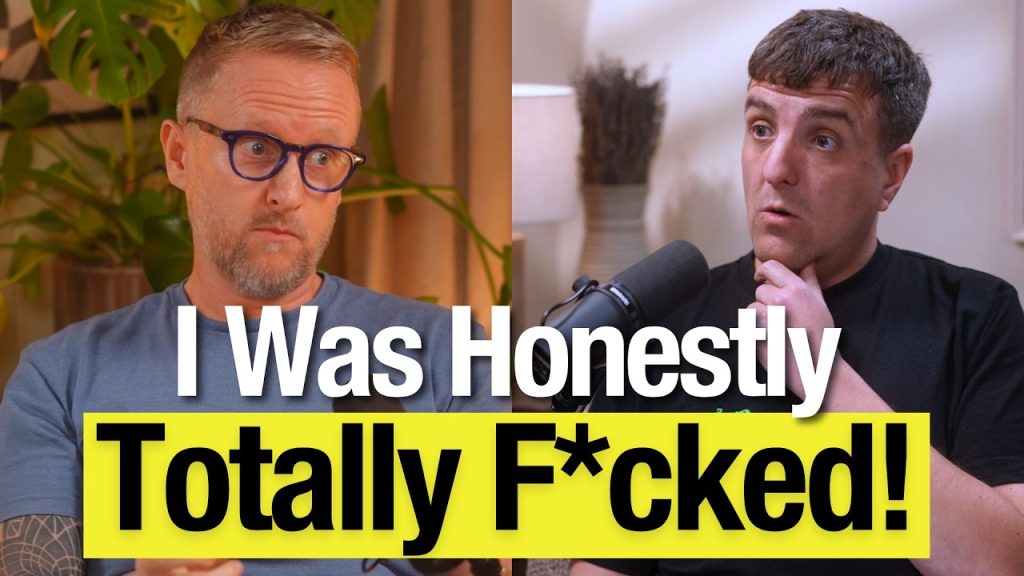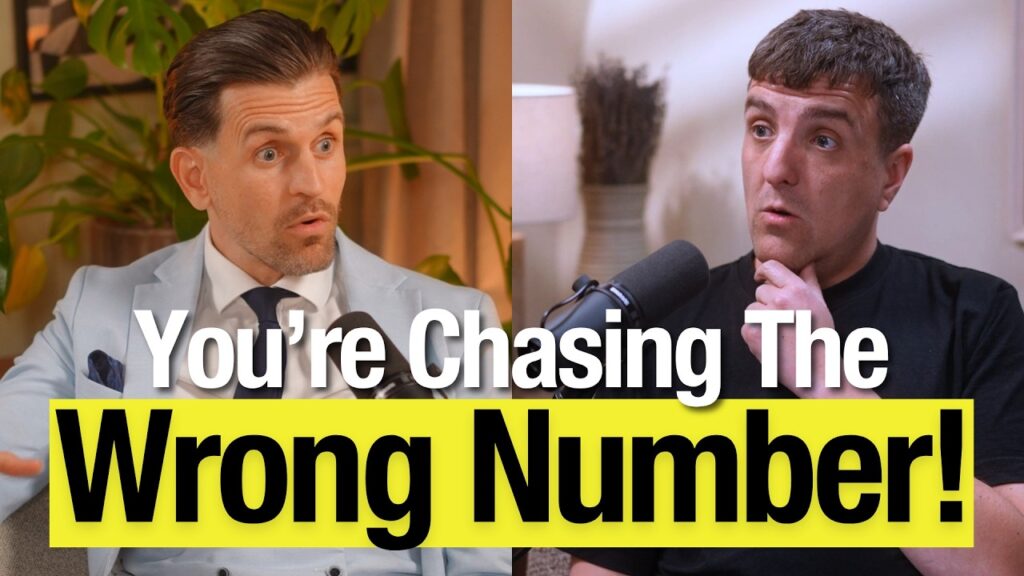
This week’s guest is Jason Mills, founder of The Affiliate School, who joins the podcast to explain how a portfolio of content websites took him from a side project run alongside a teaching job to reported earnings of around £40,000 a month at the time of recording.
Jason spent years as a drama and media studies teacher, working his way up into senior management before deciding it wasn’t for him.
Alongside teaching he built a fantasy football tips blog and podcast, which he later says was his first real lesson in how the internet lets you earn from an audience without doing much more work as it grows.
Seven years before this recording he left teaching to build content websites full time, and now runs a portfolio of nine sites (having sold a few others along the way) while teaching the model to others through The Affiliate School.
His numbers are striking, but they are his own self-reported figures for April and May at the time of this conversation, not an independent audit, and he is candid that building a profitable content site takes years of consistent work.
Most people who start one will not reach £40,000 a month.
What Jason offers instead is a genuinely useful, honest walkthrough of how affiliate marketing works, what it actually takes to get a site earning anything at all, and why he thinks it is still worth starting today.
———
Gains App is LIVE!
An AI-powered budgeting and cashback app designed to help you make more of your money.
Download here: https://gainsapp.onelink.me/8IhT/oiaimr1z
———
Get a FREE FRACTIONAL SHARE worth up £100 when you deposit £1 with Trading 212
https://www.trading212.com/join/MGP
If you don’t receive the free fractional share, head to the menu and put the word ‘MGP’ into the promo code section.
(Capital at risk when you invest)
Key takeaways
- Jason built his first online income from a fantasy football blog and podcast: around 200 members paying £2 a month, worth roughly £400 a month, which taught him that an audience can scale without much extra effort.
- He was in significant debt by his early thirties and struggled with a gambling habit that he says nearly damaged his family, before turning that competitive streak into affiliate marketing and SEO instead.
- Affiliate marketing means earning a commission when someone clicks a tracked link on your site and buys the product, usually within a set tracking window rather than only on the same visit.
- His current portfolio’s revenue for April and May, at the time of recording, was just over £40,000 a month, with running costs of around £4,000-£5,000 a month, figures he shares as his own claims rather than independently verified numbers.
- His advice for beginners: pick a topic you’re genuinely interested in, register a brandable domain, get it hosted on WordPress, and focus on writing useful content before worrying about how to monetise it.
Timestamps
- [2:06] From Drama Teacher to Full-Time Affiliate Marketer
- [4:05] The Fantasy Football Blog That Started It All
- [10:07] Jason’s Struggle With Debt and a Gambling Habit
- [19:50] What Is Affiliate Marketing? The Basics Explained
- [22:38] On-Page vs Off-Page SEO Explained
- [26:47] Why Choosing a Niche You Care About Matters
- [30:18] Inside a £40,000 a Month Content Site Portfolio
- [37:33] Burnout, Outsourcing and Scaling With a Team
- [41:02] How to Start Your Own Affiliate Website
- [44:41] His 11-Year-Old Daughter’s First Affiliate Sale
From drama teacher to full-time affiliate marketer
Jason’s first proper job was teaching drama and media studies. He worked his way up through middle and senior management before realising, in his own words, that “this wasn’t for me.”
The last two years of his teaching career were spent quietly building side income through writing, design work and freelance SEO for clients, alongside his own websites, work that eventually became a small freelance agency called Rise Online.
Seven years before this recording, with the support of his wife and family, he left teaching altogether to focus on content sites and, eventually, on running The Affiliate School to teach the model to others.
He and host Sammie originally met at an affiliate marketing gathering in York, which is where much of the shared context for this conversation comes from.
If you’re weighing up your own side income options while still employed, our guide to the top ways to earn a side income covers a wider range of routes than affiliate sites alone.
The fantasy football blog that started it all
Jason’s first taste of earning online had nothing to do with affiliate marketing directly. While teaching, he ran a free fantasy football tips blog and a companion podcast, recorded with colleagues around a microphone in the school’s drama office.
Members paid £2 a month for extra content, and at around 200 members that was roughly £400 a month in “side money.”
The lesson that stuck with him wasn’t the amount, it was that the same content could reach 2,000 or 20,000 people for barely any extra work.
“It’s just how many people are accessing your content,” he said, and that realisation is what pulled him toward building content sites properly.
Debt, gambling and a difficult relationship with money
Sammie asked directly how Jason’s relationship with money had developed through his teaching career, and his answer was blunt: “not good, not good at all.”
By around age 30 he was in significant debt, a pattern he traces back to being handed a credit card in his first week at university with no real financial education behind it.
He also opened up about a gambling habit that he says came close to seriously damaging his relationship with his wife and, by extension, his children.
He has not gambled since reaching that low point, and describes redirecting the same competitive, compulsive streak into SEO and affiliate marketing instead: “I want to be number one in Google, and it’s literally a game.”
If you’re trying to get a clearer picture of your own monthly numbers before tackling debt or building savings, our budgeting calculator is a straightforward place to start.
What affiliate marketing actually is, and how Jason makes it work
Asked to explain the basic concept, Jason described affiliate marketing simply: you promote a product via a tracked link, and when someone clicks through and buys, you earn a percentage commission, sometimes within 24 hours and sometimes over a much longer tracking window.
His own approach is built around content sites that answer specific searches, such as “best bodyboard for kids,” with genuinely useful comparisons rather than a hard sell, and he’s explicit that sites should always disclose an affiliate relationship to readers.
Getting a page to actually rank, he explained, comes down to on-page SEO (matching search intent, using proper headings, meta titles and descriptions, and original imagery) alongside off-page SEO, meaning backlinks from other sites.
Get both right against weaker competition and a page can start ranking without needing much else, though he was clear that more competitive terms usually do need backlinks too.
Inside a £40,000-a-month content site portfolio
By the time of this recording, Jason said his portfolio’s revenue had roughly doubled year-on-year and had “definitely quadrupled” over recent months, hitting just over £40,000 in both April and May.
He was careful to frame this as revenue rather than pure profit: running costs, mostly paying writers, sat at around £4,000-£5,000 a month, a little over 10% of revenue.
Out of nine current sites, he said four or five were profitable and two were “very, very profitable,” a reminder that the average across a portfolio hides a lot of variation between individual sites.
He described himself as the bottleneck in his own business, personally proofreading and formatting every article, until reading Rob Moore’s book Life Leverage prompted him to work out his effective hourly rate (around £260) and outsource editing, proofreading and even the day-to-day running of his freelance SEO agency, Rise Online, to someone else.
That followed a period he describes candidly as burnout: 4-5 hours’ sleep a night for six months while juggling teaching, client work and his own sites, at one point taking a client Zoom call from a bathroom on holiday because it was the only place with a Wi-Fi signal.
These are Jason’s own reported figures at the time of recording, not independently verified, and reaching that scale took him years of consistent, often unglamorous work across nine sites, several of which he says barely made anything.
How to start your own affiliate website
For anyone considering starting a site, Jason’s advice was practical rather than theoretical: register a brandable domain (it doesn’t need the exact keyword in it), get it hosted, ideally on WordPress, and start writing focused content on one clearly defined topic rather than spreading too wide.
Don’t worry about monetisation until you have traffic, because attention can always be turned into money later through affiliate links, adverts or sponsorships.
He illustrated how quickly this can work with his 11-year-old daughter’s own site. Started around three months before this recording, with only six or seven pages, one article reached page one of Google on basic on-page optimisation alone.
She made £20 from her first three Amazon affiliate sales, after covering the £160 she’d spent on a freelance writer.
Asked whether AI tools like ChatGPT would change any of this, Jason’s view was that they change the process rather than the opportunity.
He uses a writer who leans on AI for repurposing content into social posts rather than the articles themselves, and remains wary of using it for the writing in his own niches because factual accuracy matters and, in his words, “AI still lies.”
His plan is to keep investing in video and genuine first-hand experience as a harder-to-replicate edge, rather than treat AI as a shortcut.
Before putting any real money behind a new side project, it’s worth knowing exactly what you’re working with each month, and our take-home pay calculator is a quick way to check.
This transcript is auto-generated and lightly edited for readability, it may contain errors.
[0:00] Sammie Ellard-King: Hello and welcome to another episode of the Money Gains Podcast. This is your host, Sammie Ellard-King, and today my guest is Jason from the affiliate school. Now, this episode is for you guys who are interested in making money online, and we chat all about affiliate marketing and blogging and how Jason has grown his portfolio of websites to be making over £50,000 a month. Yes, you heard that right, £50,000. It is absolutely incredible how anyone could just start a blog or a niche in anything that they can think of, something that they’re passionate about, and we discuss all how you can do it from scratch right here on this episode. But if you’re listening on YouTube, please do whack that subscribe button. And if you’re listening on Apple or Spotify, please do leave us a review. It really does help the show. But for now, let’s get started on the Money Gains Podcast.
[0:54] Sammie Ellard-King: The Money Gains Podcast. So, Jason, welcome to the Money Gains Podcast, man. How are you doing? You well? I’m good, thank you, Sammie. Uh a bit better than I was the last time I saw you anyway. For those we just had a major technical difficulty, Jason’s very kindly set us up on his stream. I don’t know what was going on in the world of the ether today, but you know, it’s not singing with the ether gods. But anyway, we’re here now. We’re back for a round two of the take. So hopefully it’s an even better podcast for you this time. Um, but yeah, Jason, just a bit of context for the listeners. Um, we met up in York at an affiliate gathering event uh where website builders they come together and they we all uh we all took uh very well, we all had quite a quite a bit to drink and and had some good fun learning a lot about um affiliate marketing, which is the main reason we’re here today. Um but yeah, I’d love for you to sort of give the listeners a little bit of a of a spiel about Jason today.
[2:06] Jason Mills: Yeah, sure thing. So uh yeah, like you said, I’m I’m into affiliate marketing and predominantly now I run a portfolio of affiliate websites, and then I’m over on YouTube with the affiliate school talking about that that kind of journey where I am, uh, giving tips on how other people can get involved in it. And it pretty much kind of went from a side hustle into what is now a full-time gig. Uh, kind of my background, my first ever job, proper job was teaching. So I was a drama teacher and a media studies teacher, went from kind of being a trainee teacher, obviously fully qualified, up the ranks, uh, middle management into senior management, and then realised that really this wasn’t for me. So uh the last two years of of working in education, I was pretty much trying to get out. So it was it was side hustles and taking on little side gigs like writing and design work and that sort of thing. And and then eventually, yeah, that’s seven years ago now, took the jump with the support of my wife and my family, and not looked back since really. Uh, and along the way, I I’ve done some client work, uh, which was kind of almost like setting up a remote or freelance agency for SEO, again, a bit of design, bit of web design, copywriting, pretty much any way that I could make make some money, really. So yeah, that’s and then that led me into affiliate. Uh, yeah. And I think it kind of first got into it through when I was when I was teaching, I started uh I was always big into fantasy football, fantasy soccer for anyone in the US. And yeah, that that was where I kind of learned the skills of web design and WordPress and what hosting was and what SEO was and how to generate traffic, and then more importantly, how to monetise that traffic as well. So that was that’s kind of in a nutshell how I got to where I am now.
[4:05] Sammie Ellard-King: I love it, I love it. Uh, the story about the fantasy football one is super cool. I’ve heard it on another podcast. So do you want to tell us a little bit about that? I’ll tell you a little bit, yeah. Um, so yeah, the fantasy football blog, it was literally a blog, so I’d just give tips each week. I was pretty rubbish at it, so I don’t know why I was doing this, but I’d I’d literally write game week tips like who to captain, who to pick, who to transfer out. And then we also did a uh a fancy football podcast to run alongside it. So we we I built up a membership to the to the website, and the podcast was free. The all the content on the site was free, but then the members got access to a little bit more. So the podcast, uh, it was a fancy football tips podcast. There was me, uh, a PE, a couple of PE teachers, there was a maths guy, um, and and and like literally all my mates who were teachers at this school, every every week we’d just swap in like another another person, and we’d all be sat literally around this microphone here. We’d I’d take this microphone in with a laptop and we’d sit around in the drama office at the end of the day recording this podcast uh and like looking behind us to make sure the head teacher wasn’t walking in. Like, but it was great, it was it was good fun, and actually, I think we probably could have done a lot more with that. Like, if that was now, I would do so much more with that. But it was a good stepping stone into really into understanding that you can make money online, and the you and also the fact that it doesn’t take really that much more effort to make a lot more money than it does like it’s just how many people are accessing your content. So we had about 200 members, they’re only paying two quid a month, but that’s 400 quid a month for me. Side money coming in, it kind of justified me spending all that time writing and doing the podcast. But if that was 2,000 people watching it or 20,000 people that were members, it wouldn’t be any more work. It’s just that there are more eyeballs and there’s just more people subbing in and paying in. So that was kind of my first understanding of how you can really scale online and and and make good money.
[6:18] Sammie Ellard-King: Was that your first pound that you made online doing that? Yeah, it was, yeah. Yeah, yeah, I think it was, yeah, it was. And you know what you always say, don’t you, like that the first pound that you earn or the first dollar is the hardest one, and then after that it just becomes so much easier, but also it’s just the understanding that you can make it. Becomes addictive as well, like super addictive. That’s exactly how I see it. I see everything I do now on a day-to-day basis, it’s like a game. So we’re on Twitter in a similar space with uh with affiliate marketing, and someone started a leaderboard, a race to a certain figure, and like in terms of monthly earnings, and I was just straight away I was on it. I don’t really like, we might talk about this later, I don’t really like talking about money and how much money you earn. So I was probably not that good person to have on this podcast, but that’s that but that’s purely because I think it’s almost like a psychological thing, like we’re told when we’re kids, or or like in certain upbringings, you’re kind of you know, made to think that money is evil or you know, money doesn’t grow on trees, whatever, all these cliches. So I don’t really like talking about, but in terms of turning into a game, it’s so easy to do with online earning, it really is. And so like I was straight in on that. I was like, Yeah, I want to win, and not even not even because I want to be earning the most, just because I want to win, because I’m a bloody competitive guy, yeah, yeah.
[7:41] Sammie Ellard-King: I love it, man. So this journey for you, obviously, you’re teaching drama. Did you when did you sort of first come across this world? What was it that drew you in? Was it just accidental with this fantasy podcast? Yeah, I mean, I I remember I’m 43 this year, so I I remember like dial up and the first time I saw broadband, and you know, I was like, oh my god, that’s like lightning fast, and it gets like half a megasecond. Um so I I I I remember first I actually registered a website, I think it was I was about 20, maybe 19 or 20. So I would have been like this would have been like 99, 2000, something like that. And I remember registering a domain name and I actually set up a website, and I remember having the concept of affiliate marketing, because I saw these affiliate schemes, but I had no idea what I was doing. I literally it was called Forbidden World or Forbidden Planet or something like that. And all I did was I I literally just created a home page and just added some affiliate links to it. That there was no content, there was nothing. That was probably the first time that I came across the concept, but I didn’t really understand it. And then I never really went back to it after that until literally until looking at the the fancy football blog. And I don’t even know why I started that really. I it was just it was just a passion, it was something I was interested in, uh, it was something I was doing, I was researching anyway, and I thought, let’s put something out there, and and that was it, yeah. That that that that’s where the the kind of real learning started, and yeah, but there was a massive gap in between. I mean, if if I could go back to when I was 19 or 20 now and just have a word with myself and say, Yeah, it’s gonna be a massive opportunity in the next 20 years, I mean, it’s harder now than it’s ever been. In some ways, it’s easier because there’s so much more access. We’ve we’ve all got access, we we can all do this. But in terms of like getting stuff on Google and getting building traffic, there was so much opportunity in that time span that I just feel like I wasted. But um, yeah, like so. If there’s anyone out there that’s sitting there thinking I want to start a side hustle or I want to do something, my advice would just be do it. Just do it. Yeah, to know it, just you can learn it as you go, you don’t need to be an expert in it, because that’s how you learn, isn’t it? Um, 100%. 100%.
[10:07] Sammie Ellard-King: And what and when you’re a teacher, obviously you’ve worked your way up. How would you how is your kind of how is your kind of relationship with money throughout that period? That’s a really interesting question. Um not good. Not good at all. In fact, I would say at the age of 30, so I’d been teaching probably five or six years by this point. My relationship with money was probably the worst it had ever been. I was in debt, I was in big time debt, um, and I didn’t have a good relationship with money. And and I don’t know how that kind of came about really. I think I saw you talking on a on one of your other podcasts about when you go to uni, you get given a credit card. And it was the first thing that happened to me when I the first day I went I got to uni, there was there was bar there was a Barclay card stand, and they said, right, there’s a free hundred uh thousand quid on a on a credit card. And I was like, got it, yeah, when I spend it. And it just starts that cycle. And I think I when I was at school, there was no real education in terms of how to budget, how to spend, how to save, how to use a credit card effectively. So I didn’t know it. Um and then by the time you do know it, you’re already in that vicious cycle. So yeah, like it’s just tough, isn’t it? I mean I think the other thing was I I was considered to be quite a good teacher. So then in in the school that I was in, if you were a good teacher, you then got promoted, and then they’d offer you like what to me at the time was like a they call them TLRs, it’s a teaching and learning responsibility. So I then took on a head of year role where it was an extra nine grand a year, which to me at the time was like, whoa, this is like an extra six, seven hundred quid a month, but it was a hell of a lot more work, a hell of a lot more pressure. And I’m sure there are many, many jobs where people face this, you know, in in corporate as as well, where you’re kind of given these big bonuses, but there’s a hell of a lot of work, and alongside that comes a hell of a lot of pressure. But then you live within your means, don’t you? So, or you live beyond your means, and that’s the worst thing because suddenly you could think, oh yeah, I’m earning this and I can spend that. Yeah, so my relationship my relationship with money wasn’t good, and also on the back of that, going back to what I talked about being competitive and um and and turning things into a game, getting things involved in things like gambling. Like I had a bad relationship with gambling. I don’t gamble at all now. I got to the point where literally I’ve never said this out, like the people in my family that don’t even know this. I got to the point where I it it was it like literally nearly destroyed my family, like my immediate family, as in like my relationship with my wife, and then obviously the knock-on effect that would have with the kids. So it kind of got to the point where I had to do something, and I think more than anything, that is what has spurred me on to to be and I’ve got quite a compulsive personality, uh, a bit of an addictive personality. I tried to put that in a positive, apply that in a positive way. So yeah, I literally just turned this as soon as I got involved in affiliate, an SEO, like I want to be number one. I want to be number one in Google, and it’s literally a game, and that’s my focus. So yeah, it’s been a weird old journey, but uh yeah, like now it’s I’ve come out the other side and I gambling, don’t even think about it. Um yeah, but that that’s a that’s a journey that I wouldn’t. I mean, I don’t know, like maybe I had to go through that journey to understand what where I’m at now. And I’d rather rather have gone through that when I was earning less than when I was earn, you know, like you see footballers and stuff that lose uh millions on gap in get you know, stuff like that. So yeah.
[14:15] Sammie Ellard-King: Well, you just got to look at Jermaine Pennant recently, 1.2 million in the bank now is bankrupt. It’s it yeah, it’s it’s easily done. Uh like I think where what I take from that, and what I’m taking from talking to all of these different people, some of these people you know doing extremely, extremely well, like yourself, and um they’ve all had these different relationships with money growing up, and often it’s because we fall into this trap of the system which is set up to enslave us one into debt, and two into this kind of you go to work, you go home, you have family, you have the kids, you get the car, you get the the you know, you get the house, you do the extension. What what what what next? What why do you need to follow that? And as you know, this is why it’s so important to have these types of conversations with yourself and other people in the industry to show the people that it’s wildly possible to do something that you’re extremely passionate about and that you love. And not only do you can you love doing what you do, but you can also make a hell of a lot of money doing it, and so that’s why I wanted to ask that question because I think it gives a lot of context to what we’re about to talk about, too. Um, which uh you know I’ve I feel like people need to understand where people have come from to understand where people get to. Um, so thank you for sharing that. I really appreciate it, and and great to see that you know you you you you you’ve uh you’ve knocked that one on the head, because yeah, it can be can be a tough one, man.
[15:43] Jason Mills: Massively, yeah, yeah. So let’s talk about it. So I think I the other thing I’d say on that, like if if there’s anyone out there that is suffering with that, like it’s such an easy thing to fall into because I I consider myself to have quite a strong mentality, but things like that can just suck you in. It’s like it’s frightening. It’s frightening.
[16:47] Sammie Ellard-King: Yeah, look, I’ve done it. Um I sat there at my desk at the age of 24 and spun a roulette wheel with my last hundred quid. Yeah. Um, and it it landed, and immediately that moment it landed, I was pouring with sweat. I was actually sitting on the toilet in my work, uh playing roulette, like because I was bored of my job and how things were going at the time for me. Um, I’d just come back to London and I was working a sales job, and I really didn’t like uh hey, a little cats in there. Bless her. But you know, absolutely that moment can happen to anyone. And luckily, that moment I deleted the app and actually I’ve never gone back to that type of gambling. I’ll still have a little 20 quid here and there on the football if I’m going or if I’m watching a game with my mates in the pub because that’s just a bit of fun rather than it being a you know, and if it wins, great. If it doesn’t, it wasn’t the end of the world for me in any way, shape, or form. And I don’t let it get past that point now. Um it’s just one of those things, man. It can take over anyone. So, yeah, absolutely. Anyone struggling with gambling, you know, definitely seek help and definitely try and find your, you know, speak to your family, open up about it. That’s one of the first things, admitting that you do have a problem.
[18:02] Jason Mills: That’s the key thing. I I don’t want to talk to turn this into like a gambling uh episode, but I think anything with money we was so guarded around money, like we brought up to not talk about it, not share about it. And it’s it’s one of those things that we just keep inside and it’s a hidden, it’s a hidden thing. Like, because you don’t talk about it, you just no one sees it. Like that, you know, if you if you’re ill in a physical way, people see it. If you’re you know uh if if you’re I don’t know, you’re addicted to drinking alcohol, you know, people see because it has a physical effect, but money, money problems people don’t eat, you don’t see it necessarily until it’s too late. So a hundred percent. Talk, talk, talk, talk. That’s the key. 80% of stress-related illnesses in the UK are money related or money driven. Um, so that just goes to show exactly what kind of and this is why conversations like this are extremely important in my podcasts like this one and many others as well in the industry to talk about these things and just get people having the chat. You know, I do things now with my partner where we we sit down and we we’re open about money in ways that I never thought I’d ever be, because I was I was that guy, I shut my debt off, I shut my issues off, and then eventually came pouring out with it all. And now we’re quite open and honest and share all of our financial details with each other, all the gory-iness, you know, the the occasional splurge here or there, or you know, I accidentally spent 100 quid last night and down the park. But it’s it’s these types of conversations that now make it, you know, that’s not an issue in our relationship at all. It doesn’t become a problem because we’re open and honest with each other. Um, and it’s just about communication and being open and being reflective about who you are as a person can can change a lot for people.
[19:50] Jason Mills: Absolutely. Yeah, we’re we’re exactly the same, it’s just open now. Everything’s open and it’s the best way to be. 100%, man. So let’s get into the juiciness of affiliate marketing. For someone who doesn’t understand what that is, what’s the basic term mean? So essentially, uh an affiliate, affiliate marketing is promoting a product that you’re going to be compensated for. So on a on a website, that is usually in the form of a link that someone clicks. That could be a link to on a button, it could be a link on an image, it could be a link in the text itself. Someone clicks through, that is tracked in some way, usually by a cookie or an IP address, uh, sometimes using a coupon code or something like that. And then when that person makes a purchase, you get a s a percentage commission from that sale. Um, and and usually it’s within it can be anything from within 24 hours right up to like a lifetime um tracking system. So even if someone doesn’t buy that thing straight away, if they buy it in a month or so, as long as they’ve not clicked on another affiliate link, you still get a commission for it. So that essentially is what it is. You see it on YouTube where the links are in the description and and things like that, and on social media. So that essentially is affiliate marketing.
[21:11] Sammie Ellard-King: So you just mentioned it there, it doesn’t have to be built on a website, you can use it on YouTube, social media, or anything. Emails, yeah, yeah, yeah. Uh and then they click through. Yeah, so the way I do it is is trying to promote products that people are actually looking for. So I run a lot of content-based websites whereby say someone’s looking for the best bodyboard surfing or best bodyboard for kids, then they’ll type that in on Google. Hopefully, they’ll land up on my, I don’t have a bodyboard, so outside by those just an example. Uh and then, yeah, hopefully my site comes up top or somewhere. They click the the read the the article, and then there’ll be recommendations on there and they’ll click through. You you do have to let them know that it is you are going to be compensated, so you’d have to put an affiliate disclaimer there to just let them know that when they do click the link, you are going to be compensated. Uh, but it doesn’t cost generally, it doesn’t cost the user any more if they click your link or not. And quite often you try and find the best deal for the for that person, or to um push them to the best product or the the most reputable retailer, because that’s going to give them a better experience. And and the that’s the way I’ve tended to approach it now is that I I try and give real value to the reader and get give them what they really want or what I think is probably best for them, and and and then that I find that converts much better.
[22:38] Sammie Ellard-King: So you’re essentially, if you’re going on, I want to buy you know the best suitcase for my holiday. And it needs to be X, Y, and Z. It needs to be sturdy. It needs to be this as this size to fit through. I don’t know, the check-in points or hand luggage. And you’re giving them all of the information. You’re saying, this one is good for this, this one is good for this. Don’t buy this if you’re trying to do this. You’re being really flat and honest with them. Yeah, absolutely. So you see these pages everywhere, don’t you? On Google, you type in these best of. Um, you know, the challenge is obviously whether is getting onto those lists. How do you go about that? As in getting into the top positions on Google. Exactly, yeah, yeah. Okay, that’s a that’s a whole other podcast. Um, when I when I talked about the the term SEO earlier, people might not know what that means. So it’s search engine optimization and it’s just a practice that that you put in place to give your content the best possible chance of of ranking well. So there’s the the the main kind of well, there’s two sides to it really, there’s on-page SEO and there’s off-page SEO. So the on-page SEO is everything that you do on your page, on your website itself. So there’s certain things you can do. Like number one is to probably know what you’re trying to rank for and hit that search intent. So make sure that you are answering the query for that main keyword. So you said if it’s best travel suitcases for uh, I don’t know, for Ryanair, or or you know, best carry-on cases for Ryanair, then you want to make sure that you actually answer that question and then go into the into you know more details on it. Um imagery, so it images to support actual actual real life, you know, unique images that you’ve taken are far better because it shows that you’ve got real experience. Uh and thing, yeah, like there’s there’s a certain checklist of things that you’ll go through. So you’ll use certain headings, you’ll use certain what’s called a meta title, a meta description, uh, you’ll use you’ll create a URL that’s search-friendly, the content itself will be search-friendly. And then the off-page SEO is uh is essentially what what we call backlinks from other websites that link to you. And if you get the two right, you get the perfect mix. And if you outperform the competitor, then you can you can uh position yourself quite well. Sometimes you don’t need the off-page SEO for competitive terms that I tend to go after, you you you do tend to need that. Uh, but essentially that that that’s how you get position, yeah.
[25:20] Sammie Ellard-King: And it’s a game, right? As you were saying, it’s a game, it’s a game. You’ve got to rank higher, you want to rank higher. It’s a beautiful game. It’s endless, you know. I absolutely love it. It’s really good fun once you start getting into it, um, and you see that person click that link and make that purchase, and you get that affiliate email come through, and you’re like, wow, someone just came onto a website that I built from scratch and they clicked my link and they made a purchase, and I just got paid 50 quid for that. Yeah, and then something goes off in your head, you’re like, What if a thousand people visited this page? What if 5,000 people visit this page? And suddenly you’re like, Wow, and if I get 10 people a month, that’s 500 quid, and if I get 100 people a month, that’s five grand, and then your brain just starts going, Whoa! And it’s becomes this really profitable thing. And going back to what you said before, you know, you could write about luggage, etc., you could do these things, and there are those websites that are dedicated for these specific things, but you can also write about something you’re passionate about and what you really love doing. Um, and that can then turn in, you know, pretty much anything you think of has got some form of affiliate partnership going for it somewhere. So if you’re really passionate about a project, you can start writing these bits of content and dropping your affiliate links in as you go, and you you can start picking up some good traction, especially if it’s a niche that’s completely untouched, right?
[26:47] Jason Mills: Absolutely. Uh I think the number one thing for me is to particularly for someone starting this fresh, is to go with something that you’re passionate about. It makes it so much easier. It doesn’t feel like hard work, you know the topic already. If you don’t know certain bits of the topic, you’re not going to mind researching it because you’re just enhancing your knowledge of this passion that you’ve already got. There’s there’s so many benefits to choosing something that you’ve got a passion or an interest in. And if you’ve got passion and interest and experience, then it just makes sense. If it’s not the most profitable niche in the world, if it’s I would still say go for it if it’s the first one that you’re doing because you’ll learn so much from it. I mean, now I’ve I’ve got to the point where I think I’ve got nine websites uh that I’ve currently got in the portfolio. I’ve sold a few, uh, so I’ve probably had about 12 or 13 in total. Out of those nine at the moment, four or five are pretty profitable. And and there’s the there are two that are very, very profitable. So it’s a bit of a numbers game, you know. The more you do, the you the more you speculate, you know, you have some hits, you have some misses. But yeah, to start with, just go for one because you put all your effort into that, you’ll learn so much, and you’ll give all your attention to it as well.
[28:04] Sammie Ellard-King: My first one was uh was a uh really badly done dog website, which didn’t do anything, and now I’m going back to right that wrong with a with a very focused bulldog side. Nice, nice. And uh I think we were talking about this, weren’t we, in York? And it’s like I, you know, the main thing for me is obviously Up The Gains, but now I love it. I’m just really enjoying starting these smaller projects, which I’m happy to like let them grow over a period of one or two years rather than it being something that oh my god, I’ve got to like drill down into this. I mean, my first site, apart from the fantasy football one, my first proper affiliate site was called My Fitness Watch. This was way before like Apple Watches and things like that. And I I didn’t really know what I was doing, I didn’t really I wasn’t really passionate about it. I was just churning out content. I made a few quid, not much, uh, but it wasn’t really the right topic for me. Uh, I then had a drone website and that made good money actually. For me at the time, I it was making on average 500 quid a month over the year. Uh and I ended up selling that site, but that then gave me some funds to put in to build new sites, and I learned so much from those first two sites that then when I started the sites that I’ve got now, it it, you know, I just knew what I knew what I was doing, basically. And I made sure I was interested in.
[29:29] Sammie Ellard-King: You’ve got to figure it out as you go. Like when you first build your first site, you know, people do actually think it’s really, really difficult. But what I would say is that YouTube is your best friend, you know, channels like the affiliate school, cheeky plug. Um, but then there are thousands of others where I’ve I I pretty much learned everything I needed to know. I didn’t go and take these expensive courses that you end up getting sold, but you don’t need to do that. Like, you can just go and learn everything you need to do and go and fail, go and make loads of mistakes with it. Especially if you’re writing about something you enjoy, it just like you should just really love putting the words on the page. And if that sounds like something you can do, and then let’s talk about. I know you didn’t want to touch on this, but it is a money podcast. Would you mind giving us a even a ballpark figure of sort of what the portfolio and the possibilities that people are having there? You know, I know we’re part of this massive community.
[30:18] Jason Mills: Yeah, of course. So, yeah, um it’s it’s to be honest, for me personally, it’s still weird talking about this because it over the last it really since October, November, it’s it’s probably like it’s definitely doubled from this time last year, it’s almost quadrupled. So the last two months have been record months for me. Uh so we’re in June, so it was May, it was April and May. So I’ve just hit over 40,000 GBP for uh April and for May. So in dollars, it’s it’s just over $50,000 a month uh that the portfolio’s at. And it’s just it’s just insane. It’s like insane numbers. It’s it’s I mean, I thought I was doing well at like 10k a month, and then I remember saying to my wife that year, like, you know, you always do at the end of like get into new year and you want to set targets and things like that. And I said to her, I’m going for a 20k month this year, and then I think I hit that by August, and then I thought nothing else of it. I thought, right, 20k a month, brilliant, we’ve done it, I’m really over the moon. And then I had a month where it got 37, and I was like, Oh my god, this is nuts. So now obviously the next aim it’s like, where do you go from there? When and what I realised is there’s no ceiling, there is no ceiling at all. Um I’m pretty pleased that I’ve managed to do it to get to that point really without too much external help. So I have I have writers that I work with. The costs, so that’s revenue, those are revenue figures. The costs each month are about four or five K a month. So the costs are around probably just over 10% of what the the earnings are, which is pretty good. Profit margins, I’m quite happy with that. 90% is not bad, right? That covers the on-page and the off-page SEO. But I’ve been kind of the bottleneck in this whole process because I’m I’m a bit of a control freak as well. So I’ve the a lot of the particularly my better sites, the the or my my my top earning sites, the the writer send the stuff to me. I then go in, proofread it, edit it, format it. It just takes ages. And I’ve I’ve I’ve had this thing that where I feel I have to do this, this has to be me. It’s ridiculous. Why does it have to be me? So I’ve literally like last week I read a book by Rob Moore. I don’t know if you know Rob Moore. Um, no. He’s decent, he’s worth worth a follow. Uh it’s called Life Leverage, and he just talked about how you should leverage other, you know, leverage things that you’ve you have access to to give you more time, to be more strategic, to earn more money. So, and one of those things is to outsource stuff or to get other people to do stuff that you’re doing, um, so that you can then be more creative. Like, I’ve got loads of things I want to do, I want to start more sites, I want to create more video content, I want to do more podcasts like this. But then when I’m doing those things, I I know I’ve got to publish this, I’ve got to publish that. So literally this week, I’ve I’ve just in fact, just this morning, I’ve interviewed a lady and hired her to do all of my editing, all of my uploading, all of my proofreading, and she’s super passionate about it as well. So like I’m really excited about that. That’s just given me 10 hours back of the week. Um, and then and and for way less than what my one of the things it said to do in this book was to work out what your what your hourly wage is. So I worked out my hourly wage conservatively, it was about 260 quid an hour. So essentially, if I can pay someone to do something for less than that, then why am I doing it? Like I came home from holiday last week, got straight in the garden, gardening. I don’t really like gardening. I like sitting in the garden and enjoying it. But why on earth am I at 260 quid an hour gardening when I can pay a gardener 20 quid an hour to do it or 30 quid an hour to do it? So I so that I’ve literally I’ve come back this week and I’ve just outsourced everything. I’ve now got a gardener, I’ve got a writer, and then for the agency that was my freelance client work, uh which is called Rise Online, um, I’ve literally just yesterday hired someone to replace me in that as well. So that’s a full-time permanent job. So he’s but the the what we’re gonna do there is we’re gonna grow the agency. So that’ll be client, it’ll be uh sorry, it’ll be SEO, it’ll be PPC, pay-per-click, probably a bit of social media, maybe a bit of content writing, that sort of stuff. But he’s gonna be in charge of that. Because I was thinking, because it wasn’t really worth my time working with continuing that, but I also feel morally obligated to the clients that I was working with. So I thought it just clicked. So I was away and it just clicked. I thought, I’ll just get someone else to do it. I’ll still be involved, I’m still there strategically, I’m still there to support. But that’s so that’s another probably seven, eight hours a week I’ve just gained. So this week, yes, my my costs have slightly increased, but my potential to grow is so much more now. And I’ve just gained 18 hours in my week to do these sorts of things that are going to grow, you know, me as a personal brand, uh just uh pursue other projects within the two businesses, uh, do more of what I enjoy more of what I enjoy doing. And and and also help other people, really enjoy what I do with the affiliate school. Uh, it’s not I don’t really do it for a financial reason, but I love the engagement, and it does throw up opportunities. So yeah, that’s uh it just makes sense. And this book that I read by Rob Moore, Life Leverage, it just I started reading bits of it and it just just every a lot, everything just started to click. I was thinking, why on earth did I not do this six months ago? But you don’t know what you don’t know, but now I do know it, and I I feel reinvigorated. I’m like 18 hours a week back, what can I I can do so much with that time. Uh and hopefully, yeah, I can build more content sites because ultimately it’s just a scale thing, then I was the bottom, I was the bottleneck in there.
[37:33] Sammie Ellard-King: It’s an amazing journey, though. I mean, if you’d have looked back six years ago when you first wrote that first blog uh on the fantasy football blog to doing you know £40,000 in one month. If you’re if I’d have said that to you then, you’d have told me to piss off, I would imagine. And it’s like illegally, you know, or you’d laughed at me, and but it just goes to show the possibility of you know, you started to build these things, you transitioned out of full-time work into it full-time. You had luckily had the support of a good family and a good nucleus at home to allow you to be able to really focus down and leverage down. You know, I’ve just done the same thing, had that very clear conversation with my partner, uh, scaled back, took on a couple of clients as consultancy, which will pay the bills and allow me to double down and Up The Gains and really start to push that forward because you know that’s starting to make some really good revenue on the affiliate side of stuff. And I’m like, well, it what happens if I put 20 more hours into this a week? Or I can stop doing 18-hour days to supplement two businesses, which is never healthy, right? Um you’ve been there, so being there, being there.
[38:40] Jason Mills: I literally I’ve been on when I was teaching and I’d started to take on clients. I remember being on holiday in Norfolk, and I sat the only place that had Wi-Fi. There was no Wi-Fi in the building. I was hooking onto someone else’s BT Wi-Fi finding, and the only place I could do it was in the bathroom. So I remember sat on the I was sat on the toilet on this kind of Zoom call. I had to like tilt the camera so it didn’t look like I was in the bathroom. And I was securing a sponsorship for our podcast, and it was about 500-600 quid a month, but it was like it was crucial at the time. And I remember and I was sat there getting it, literally closed the laptop, and I’m in the bathroom going, Yeah! It’s like it’s it’s nuts, and then at the same time, like you say, sat there at 2 a.m. working away on your side hustle, and then you you go to bed and you know you’ve got to be up at six because you’ve got to go to work, and that and doing that for six months and not going to bed at the same time as your wife, and things like that. Like, that’s only sustainable for a certain amount of time. Yeah, 100%. You can’t you can’t do 18 hour days forever.
[39:51] Sammie Ellard-King: I’ve just come out of the back of that. You know, I it hit me hard. I had burnout, real, real burnout. You know, I uh you know, I ended up having to have an operation, and and like my brain was completely shot to bits. I didn’t realise what was going on because my brain, I was so focused, laser focused, that I didn’t really realise what was going on around me, and it can be easily done. And you know, I was happy to get up every morning at five o’clock in bed by half twelve, one. So four, four and a half hours sleep um five nights a week, and then do it, and then working all day on Saturday, maybe being forced to come out on a Sunday for a bit of lunch, and then I’d be straight back in again. But I did it for six months, and that’s what I’ve built, and I’ve now built myself a way out. Um, and that’s and it and and it just goes to show that it’s possible. So for someone looking to start, and if they today, I thought this wicked idea, I’ve had a look on on Google, there’s not really that much competition, or there might be some competition, you’re up for it. I want to I want to compete. What’s the first real like point of call for them? And how long does that sort of take, that process take before you would say you’re making a little bit of cash?
[41:02] Jason Mills: Well, the first thing you want to do is go to YouTube and type in the affiliate school and hit subscribe. And then and then um it’s get get the domain registered, like come up with a brandable domain. Don’t think that you need to put exact match keywords in there or anything like that. So it doesn’t even really need to have the the main word in the domain that it’s it’s to do with. Like look at look at your site, Up The Gains. There’s it doesn’t say money, it doesn’t say budgeting or anything like that. But when you when you look at it once you understand the brand, it makes sense. It’s a perfect brandable domain name, uh, and a and a perfect brand to then look at in in different ways. So that that’s the first step I would say is yeah, go in, have a look. But are people are there people other people that are interested in these, or is it too niche? There aren’t many things that are too niche. There aren’t many things out there that it is only you that are into. Like, and and if if if that is the case, you definitely don’t want to be creating a website on it. So so yeah, register the domain, make sure there are people interested in it, and then you need to get it hosted. So uh you you just go to like I don’t know, SiteGround or WPX, or there’s there’s loads of hosting companies. Um get it hosted, get it set up. If you don’t know how to do that, like you said, you can go to YouTube and there are plenty of tutorials on how to set it up. Personally, I use WordPress, and most of the most of the people that are gonna set up these types of sites, and most of the resources around it are gonna be WordPress based. So I would suggest you use WordPress as your CMS platform, your content manager platform. Don’t build a Squarespace or something like that.
[42:53] Sammie Ellard-King: Please don’t do that. It’s it’s it’s not SEO friendly if you do, but also there’s nowhere near as many resources on it. So WordPress is going to be a lot more flexible. It’s it’s it’s a very solid platform. I think it’s used by some 76% of websites in the world. So you’re safe with it, and there’s so many resources. And and then just start writing content. Don’t write content that’s gonna like duplicate itself. So come up with a definite kind of topic or uh we call them like topical clusters. So, you know, if it’s uh like you like you said, um you’ve got a bulldog website. So if it was a website that was about dogs, or if say it was a website that was about pets, then you might want to choose one certain animal to start with. Or and if it’s a website about dogs, you might want to start about one particular breed, first of all. Um obviously, if you’ve got a website about bulldogs, then you’re already super focused to an extent. Uh so you you you’re pretty safe on what you’re gonna cover. So don’t go too broad, is the next piece of advice. Um and just get writing and just yeah, get your passion onto the paper or onto uh the computer and get it out there. That’s that’s my advice. Just focus on that to begin with. I would also say don’t even worry about how you’re gonna monetise it to begin with. Don’t worry about how it’s gonna make money. Start getting traffic. If you’ve got attention, then you can monetise attention. That’s all that you need. So unless you’ve got attention, there’s no point worrying about how you’re gonna make money with it. Uh, like you said, for most, for pretty much everything, there’s always gonna be an affiliate program. And if there’s not, then you can put adverts or you can get sponsorship deals and things like that. There’s always a way, if you’ve got attention, someone’s gonna want a slice of that attention, and that’s how you monetise it.
[44:41] Sammie Ellard-King: And let’s say, for example, I’ve got time to write, you know, I’m really, really hard job, I’ve probably got time to write two blogs a week. Um, how long do you think that would take me before I’m seeing some sort of revenue? I know it’s very much uh it depends, and that’s the favourite word in marketing and SEO and in the whole wide world. But if you were to, if there’s someone like was to get started today and that’s what I’m gonna do, and they’re willing to learn alongside that, how long is it sort of gonna take me? It will depend, but what I will tell you, what I will say is three months you can speak, you can be making money. And I say that from very recent experience, not by me, by my 11-year-old daughter, who wow, this is interesting. Started a website. Uh I’m even gonna tell you no, I’m not gonna tell you the niche because I don’t want to give her extra competition. Um it’s a it’s a sport and it’s a growing, it’s a it’s a sport that’s growing in popularity. It’s not like a main mainstream, but it’s it’s relatively mainstream. And she plays it, loves it, and she keeps saying, Oh, what are you doing? So we’re Talking about how I make money and things like that, she’s showing a bit more interest. I want to do that. So she started, she’s written it’s only got about six or seven pages. And it like I said, it’s about two or three months old. She’s written four of those pages. Two of them I’ve had a writer write, and that the the those two pages that the writer wrote are um like a best of type keywords, so it’s a a collection of different things that people might search for. Um this month I realised, sorry, last month in May, I realised that it one of the that one of those articles was was um was on page one for the main on page one. It’s got no backlinks, uh it’s just got basic on-page optimization. It’s like I say it’s only got seven or eight pages, so it’s and it’s very new. It’s on page one, and there was traffic. There was there was about, I think, what was it, something like 25 hits a day or something it was getting. Um so I so I said, right, we’ve got to get we’ve got to get it monetised now. So we put affiliate links on uh just for Amazon because there were nowhere else really that we could promote, which was a shame. Um we might be able to do something if we do a direct deal with someone, but um with Amazon, so it’s not the perfect connection, but it does sell the product. And it she had three sales last month, but which was pretty much just in the second half month, she made £20. £20. That’s amazing. So that she’s got costs that she’s got to cover first because she needs to understand that there’s there were there were costs because I used a writer, so now she’s like, Don’t use the writer, I’m writing everything because she doesn’t want to pay the costs, so she’s got about £160 quid in cost to pay back first, so she’s now got £140 to pay back, and then she’s gonna be making money. But for her, at age 11, she’s gonna be 12 in a couple of weeks, age 12, making 40 quid a month, maybe cool, and and she can grow that. Like if she could be making 200 quid a month, she’ll be like the the richest 12-year-old in her school, like in terms of full income. So it’s doable, and that’s new, and she’s not put that much time into it because she’s got other commitments. I’ve not put any time into it really at all, and yeah, so it’s like I say three months, it’s and not a bad dad to have when it does need monetizing to come to them for.
[48:19] Sammie Ellard-King: Oh, I love that story. So your 11-year-old is making money online, guys. So if you if you know if that’s not telling you that it’s possible even in 2023, um, I have to ask this question because everybody’s talking about it right now. I’m sure you know exactly what I’m about to ask. But everything is changing rapidly at the moment with the rise of AI and ChatGPT. Um, if do you feel like things are still gonna be the same for people moving forwards? And is it worth still people starting sites in this day and age? I think 100% is definitely worth starting. Um, well, pretty like this. I I’ve started a new a new site in the last month. Um, and the whole point of me bringing on this editor-proof reader person is to allow me to build more. Uh, yes, it will change things. I’ve personally not really adopted much AI into my workflow yet. Um I know the a new writer that I’ve just brought on, he uses AI, he uses ChatGPT not for the writing, but what he does is he create, he’ll he’ll do the he’ll do the written piece, and then he uses ChatGPT to then create social media posts, email content around that content that he’s written. So you’ve got expert writer that’s written stuff from his own experience, that’s really, really important. And that’s something that AI struggles to do currently because it hasn’t got its own personal experience. Yes, you can fake it to an extent, and he’s only gonna get better, so there’s definitely gonna change things, but I think we can use AI in those types of ways. For me personally, the the niches that I’m in, I’ve got to be so careful that the stuff is factually correct, and AI still lies, it still tells fibs. So if it’s if it’s not telling the truth, I can’t trust it. Yes, of course, I can go in and edit. Am I gonna start AI sites? Yes, 100%. I am. I’ve seen too many examples of people that are creating sites that are making really good traffic, really good money, um, and it will only get better. Will they crack down from a legislative point of view? Probably. You know, we’re probably gonna see. And we we’re already seeing talk at a government level about watchdogs for AI and and this sort of thing. So it’s gonna change, but I’m not too concerned. Google, I think the biggest concern that most people have is how people are gonna access our content. So Google bringing in AI into search with what they’ve just announced as SGE, search generative experience. There’s a lot of unknowns around that at the moment. Uh, there’s lots of people that have got very varied opinions on it. I’m not massively concerned at this point, and I certainly wouldn’t let it stop someone from starting. Um, and it wouldn’t let me, it wouldn’t stop me starting. Uh, I’ve I’ve I’ve been in this game long enough to know that every year there’s some there’s another reason not to start. SEO is dead, is what they say. Every year SEO is dead. Not die. Well, just adapt. You will need to adapt. In this game, you need to adapt. But there are so many platforms as well. If you’re sitting there and you’re not you’re not a writer, YouTube, TikTok, Instagram reels, whatever, like there’s there’s so many, you know, there’s there’s so many different ways in which we can communicate. Like I said, it’s attention. Whether that attention is on a written page, whether it’s on a video, whatever platform it is, it doesn’t matter. If you’ve got attention, you can monetise it. So you play to your own strengths with that. And AI certainly isn’t at the point yet where it can replicate real human video, not in a truly authentic way. So that is a real edge against it, and that’s something that I that’s why I’m investing a lot more in video as well.
[52:12] Sammie Ellard-King: I completely agree. That’s where we’re flipping, you know, things like the podcast, things like the YouTube channel now are massively important for me because it’s it’s giving me that diversification. I’m not now relying on one traffic source for the rest of my life. And you know, people have got away with that for too long. I feel like now there’s uh a certain people within the industry, the affiliate industry that are camera shy or podcast shy, or don’t want to come out behind the camera. And I feel like these are the guys that might struggle moving forward. So, you know, I would definitely factor that in to your long-term thinking. If you’re starting to think about a site, you know, build the site, but also have a plan for it. You know, you it doesn’t have to be you behind the camera, you can pay someone else to do it. You can have a face to your brand that doesn’t have to be you if you’re an introvert and you don’t want to get behind the camera. That’s absolutely fine. But just just just do definitely think about how things are going to change and be adaptive, as it’s gonna be very quick and very fast. Um, so yeah, I would always plan that out. But that’s amazing. So, Jason, honestly, thank you so much. I’ve loved this. Uh from a purely, purely personal point of view as well. Uh it’s been great chatting to you as always. Um, you know, there’s so many golden nuggets in there for people. Really, the massive takeaway from this, uh, you know, uh that I’m seeing here is is whatever your side hustle idea is, whether that be affiliate marketing or whatever, just get started. Today is the day. Um, so get out there and do it. Um, and if you are interested in affiliate marketing, building blogs or content websites, and check out great channels like the affiliate school too. Um, but yeah, um, where else can people find you, Jason, if they want to come say hi?
[53:53] Jason Mills: The other place that I mainly hang out now is Twitter, which is at niche Jason. So at niche Jason. That’s it, really. Yeah. We’ll whack out all of those links in the show notes below if anyone wants to check those out. Um yeah, Jason, thank you so much again. Yeah, thank you, Sammie. I’ve really enjoyed being on, really enjoyed that chat. So uh thank you. Awesome. Take care, man. Cheers.
Frequently asked questions
Jason Mills is the founder of The Affiliate School and a former drama and media studies teacher. He now runs a portfolio of content websites and teaches affiliate marketing to others through his YouTube channel and courses.
Jason reported revenue of just over £40,000 for both April and May at the time of recording, with running costs of around £4,000-£5,000 a month.
These are his own self-reported figures, not independently verified, and most people building content sites will not reach that level of income.
Affiliate marketing means earning a commission when someone clicks a tracked link you’ve shared, usually on a website, and then buys the product. Commissions typically apply within a set tracking window, not only on the same visit.
Jason said it’s possible to start seeing sales within around three months of consistent, focused content, using his 11-year-old daughter’s site as a recent example, though building it into a meaningful, reliable income typically takes much longer.
Jason recommends WordPress as the content management system, citing its flexibility and the volume of tutorials and resources available, over page builders like Squarespace which he says are less SEO-friendly. This episode is for educational purposes only and isn’t personal financial advice. When you invest, your capital is at risk. This page contains affiliate links; if you click one and make a purchase we may earn a small commission at no extra cost to you. Jason’s income and cost figures are his own claims, accurate to him at the time of recording, and have not been independently verified; building a profitable affiliate or content site typically takes sustained effort over years and most people will not reach the figures discussed in this episode.
———