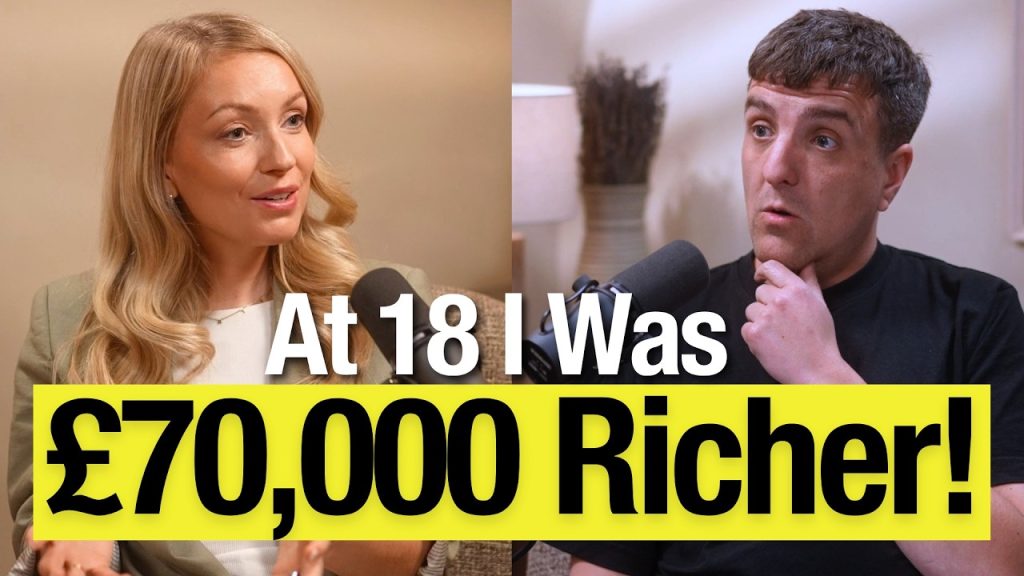

This week’s guest is Dr Nikki, known as The Female Money Doctor, an NHS GP of over 12 years and a women’s health specialist who now also works as a money coach.
She joins the podcast to talk about the link between money and mental health, the eight money personality types, and how she moved from treating patients to helping them fix their finances too.
Dr Nikki spent years watching money problems and health problems feed into each other in her surgery, long before she ever called herself a money coach. A patient who couldn’t afford six weeks off work after breaking an ankle.
A colleague too stressed to take time off, but too worried about money to actually do it.
She started to see money not as a side issue, but as a genuine wellness problem, and that observation eventually became her award-winning blog and coaching practice, The Female Money Doctor.
In this episode she talks through the eight money personality types she trained in, why understanding your own type (and its “shadow side”) can change how you handle money day to day, and the steps she uses to move people from financial instability to what she calls money freedom.
It’s a conversation about money psychology as much as money mechanics, and a useful listen for anyone who feels like their finances are affecting how they feel more broadly.
———
Gains App is LIVE!
An AI-powered budgeting and cashback app designed to help you make more of your money.
Download here: https://gainsapp.onelink.me/8IhT/oiaimr1z
———
Get a FREE SHARE worth up £100 when you deposit £1 with Trading 212
https://www.trading212.com/join/MGP
If you don’t receive the free fractional share – head to the menu and put the word ‘MGP’ into the promo code section.
(Capital at risk when you invest)
This episode is for educational purposes only and should not be considered financial advice. When you invest, your capital is at risk. Past performance is not a guarantee of future success. This page contains affiliate links; if you click one and make a purchase we may earn a small commission at no extra cost to you.
———
Key takeaways
- Dr Nikki saw money problems and health problems feeding into each other repeatedly in her NHS surgery, from patients who couldn’t afford time off to recover from injury, to colleagues too stressed to take a break because they couldn’t afford it either.
- There are eight money personality types in the framework Dr Nikki trained in, and most people have two or three that dominate their financial behaviour at any one time.
- Every money personality has a “light side” and a “shadow side”: for Dr Nikki, her maverick type shows up as overspending and taking too many risks on the shadow side, but the same type drives her to invest on the light side.
- Reframing “I can’t afford it” as “how can I afford it” is a small mindset shift Dr Nikki uses to stop people closing down conversations about money before they’ve even started.
- Dr Nikki’s “steps to wealth” model moves people from unstable, to stable, to money freedom, to financial independence, and she says the unstable-to-stable stage (sorting your budget, debt and credit score) should come before anything more complicated like investing.
Timestamps
- [1:10] Meet Dr Nikki, The Female Money Doctor
- [3:15] Growing Up With an “Easy Come, Easy Go” Money Mindset
- [7:53] From NHS GP to Money Coach: Dr Nikki’s Turning Point
- [9:55] How Poor Money Management Affects Mental and Physical Health
- [12:27] Reframing “I Can’t Afford It”
- [19:37] The Eight Money Personality Types Explained
- [21:38] Light Side vs Shadow Side of Your Money Personality
- [35:31] The “How Healthy Are Your Finances” Quiz
- [42:44] The Steps to Wealth: From Unstable to Money Freedom
- [49:24] How to Bring In Extra Income When Money Is Tight
From an NHS GP to The Female Money Doctor
Dr Nikki’s own relationship with money started out, in her words, as “easy come, easy go”: if money came in, it went straight back out again.
That didn’t really change until she turned 30, living and working as a doctor in London, and realised her savings were dwindling while her job was stressing her out.
That was the moment she started reading about personal finance and listening to podcasts, mostly American ones, because she couldn’t find a UK role model beyond Martin Lewis.
The real turning point came during her training to become a GP.
Over an 18-month window she started noticing money problems everywhere: in patients who panicked at the thought of unpaid time off after an injury, and in colleagues taking on more and more hours because they felt they had no choice.
“Money is actually a health problem,” she said. “It’s a wellness issue.”
That realisation is what pushed her to start writing about her own experiences with money, first as a way of processing them, and later as something other people started reading and asking for help with.
From there, people around her started suggesting she use her clinical background to coach others directly, and her practice grew from that suggestion into the blog and coaching business she runs today, alongside her ongoing NHS work.
Why money problems are a health problem
Dr Nikki is clear that this conversation is about her professional observations as a GP and money coach, not medical advice.
If money worries are affecting your mental health, it’s worth speaking to your GP or another qualified professional, alongside anything you do on the financial side.
What she saw repeatedly in practice was a two-way street: people whose mental health struggles led to money problems (overspending, unopened bills, avoidance), and people whose money problems then made their mental health worse.
She gave the example of a nurse who dreamed of opening a horse riding school but shut the idea down the moment money came up, ending the conversation before it had really started.
Getting a clear picture of where your own money actually goes is often the first step out of that spiral, and our guide to auditing your spending is a good place to begin if you’re not sure where to look first.
The eight money personality types
The framework Dr Nikki trained in, developed by US coach Kendall Summerhawk, sets out eight money personality types. Everyone has access to all eight, she explained, but two or three tend to dominate at any given time.
Her own top type is the maverick, someone who chases money and takes risks, alongside strong traces of the ruler (ambitious, work-driven, poor at switching off) and, more recently, the accumulator (careful, good at saving).
Working out your dominant type isn’t about boxing yourself in. Dr Nikki uses it with her coaching clients to explain patterns they’ve never quite understood in themselves, like why they avoid opening bills, or why they clash with a partner over spending.
She runs a free quiz on her own site for this. If you’d rather start with a UK-specific look at your money habits and behaviours, our money personality quiz covers similar ground.
Light side, shadow side: changing your money behaviour
Every type has two faces. The maverick’s shadow side is overspending and reckless risk-taking; its light side is the confidence to invest.
The accumulator’s shadow side is being so scared of spending that money sits untouched and unused, even when it should be working harder.
Dr Nikki’s coaching approach isn’t to change someone’s whole personality, but to help them “borrow” a complementary type when they’re stuck: leaning on a bit of romantic-type spontaneity to actually book a holiday, for instance, if your dominant type is a ruler who never takes a break.
The steps to wealth: from unstable to money freedom
Dr Nikki maps financial progress across four stages: unstable, stable, money freedom and financial independence. Unstable means debt you can’t service and money going out as fast as it comes in, with no real plan behind it.
Stable means your budget, debt and credit score are under control. Money freedom is the point where money stops being a source of stress, even if you’re still working. Financial independence is not needing to work at all.
Her advice is not to skip straight to the exciting stuff. Getting from unstable to stable should come first, and quickly if possible, through basic money management rather than complicated investing.
A solid buffer matters here too: our piece on how much should be in your emergency fund is a useful next step once your budget is under control, and if debt is part of the picture, our guide to getting out of debt covers where to start.
Finding extra income and a sustainable balance
For people who genuinely don’t have enough coming in, Dr Nikki’s advice shifts from budgeting to earning.
She’s seen clients turn side projects, from virtual assistant work to Etsy stores, into proper income streams, including one client who moved from a casual “little bit of extra money” ambition into a full career as a virtual assistant earning £30,000 to £40,000 a year.
She also points to free government resources for building new skills, such as basic admin training, for people who feel they don’t have anything to offer yet.
Her one caveat: pick something you can sustain, not a quick win chasing “overnight riches” content online, since she’s sceptical of influencers who share income figures without explaining how many years it actually took them to get there.
She also warned against tipping too far the other way.
Sammie shared his own experience of two years in aggressive debt-payoff mode before realising he’d sacrificed too much of his time and social life, and building in a “fun and development fund” once his debt was cleared.
Dr Nikki agreed that comparing your journey to someone else’s, especially people without kids, a mortgage or a single income to work with, rarely helps. The goal, in her words, is money freedom without sacrificing your lifestyle entirely to get there.
This transcript is auto-generated and lightly edited for readability, it may contain errors.
[0:00] Sammie Ellard-King: Hello, welcome to another episode of the Money Gains Podcast. This is your host, Sammie Ellard-King, and today my guest is Dr. Nikki from the Female Money Doctor. Now, Nikki has over 12 years’ experience as an NHS GP and a woman’s health specialist, and she’s experienced firsthand the impact of poor money management skills on both the mental and the physical health of her patients. Nikki runs an award-winning blog, and we dive deep into some of the psyche around how you manage money and who you possibly are as a person, and you have a different money type as well. It’s really, really interesting. So if you’re listening on YouTube or podcasts, please do hit the subscribe button, hit that follow. It really does help the show. So for now, let’s get started on the Money Gains Podcast.
[1:10] Sammie Ellard-King: How are you? Okay? Hi, I’m so excited to be here. Honestly, it’s it’s great. Thanks for inviting me. Oh yeah, I’m I’m really looking forward to our chat today. We were just chatting offline, and uh yeah, there’s lots for me that I really want to get stuck into. Um but whereabouts are you in the world for the listeners at the moment? So I’m based in Milton Keynes, um, in a little village called Simpson, um, which for well is not my original place, so I I actually came from grew up in London, but moved out here about God, six, seven years ago now. So yeah, I love it. Roundabout city, isn’t it, Milton Keynes? Yeah, there are welling. Everywhere. No, it’s it is Milton Keynes. There are welling, there are roundabouts absolutely everywhere. Um, but do you know what? It actually makes life easier. There’s nothing worse than sitting in traffic lights for ages. At least with a roundabout, you can kind of just keep your journey flowing, pretty much. Um, so yeah, it took a bit of getting used to, but yeah, it’s good.
[2:12] Sammie Ellard-King: For those who are like, what on earth are they talking about? When you go to Milton Keynes, they don’t really have traffic lights, it’s literally roundabouts everywhere, and it’s it it is when you first get there, you’re like, Whoa, but uh yeah, it’s it’s it’s it’s it’s it’s it’s it’s it’s interesting to say the least. It’s all grid system, so it’s like um in America with all the different avenues and horizontal and all sorts of stuff, and I I still get lost because everything looks the same to me. Um unless I’ve got like a landmark I can fix on, I’m like, no, don’t know what I’m doing. So my other half thinks it’s hilarious. I have to have my sat nav on every time. Oh bless, yeah. No, I I I can I feel you, but I mean we could talk about roundabouts all day, but I suppose that’s not why we’re here today. But um, so I like to sort of get to know our guests a little bit as well and try and find out why they’ve become who they’ve become in the financial industry. Um, so when you were growing up, what was your relationship like with money as a kid?
[3:15] Dr Nikki: Oh, it was easy come, easy go. Um my mum always used to say to me, that money is burning a hole in your pocket. So and it still is still the same now, if I’m honest, but I have so I have to put like boundaries and um give every every bit of money that comes in a job to do because otherwise it will just sit in my account and I’ll just spend it. So yeah, I mean I I loved getting money, um, I also loved spending it, essentially. So that was that was kind of it, just as fast as I got it, the fastest I would just get rid of it. I wasn’t the I wasn’t a saver as a child at all. Yeah. And where do you think you learned, you know, when did it click for you? When was that kind of aha moment and you went, Oh, I better start thinking about the future and saving and putting money away?
[4:02] Dr Nikki: Um when I turned 30. Yeah, it was. I was living in London, I was studying as a doctor, um, got my first job in London, living it up with my friends, going out. Um, I’d go out three, four times a week, maybe. Um, and in London it’s expensive, so you could easily drop £100 in a night out. It’s probably more now, but at the time it was you go anywhere from the south to the north of London, and suddenly all your cab fares go up, everything. So yeah, I was just as bad as all the way through my 20s as I was as a kid, and then when I hit 30, it kind of I got to a point where I realised that all my money was just dwindling away. I had no savings, I had this job that was stressing me out, and I thought, what’s the point of all of this? And it was at that point that I realised I needed to make some changes, so yeah, it took me a while for it to click, but when it did, it was ah, right, now I need to do something different.
[5:05] Sammie Ellard-King: So you mentioned you were studying as a doctor. Doctors are notorious for living it up. I um I live with a doctor at university and they um they hit hard, man. They are or like they are party animals. You’d think that they’d be the health conscious ones, but they they’re out drinking till 3-4 a.m. most nights of the week at university. It was insane. It’s work work hard, play hard. You’re so stressed and busy all the time that you need some outlet. And actually, I mean at uni, we I don’t know, I never understand why someone says, Oh, yeah, university was the best days of your life. For me, it really wasn’t. I was studying five times a week. Um, I was then working a weekend job as well. So when you had time to, you know, go out and have fun, that’s what you did. Um, and also I think there’s this myth that if you’re a doctor, you’re earning really well. And yes, there is the potential to earn really well later on down the line, but when you’re first starting out, you’re not earning any better than somebody that works in a shop or or whatever. You know, you’ve you’ve still got to be very conscious of your money and what you do, but your behaviour is different compared to what your money is like. Because you think, oh, because I’m a doctor, I’ll be fine. I’ll just need to keep working and I can earn more money, I can do locum shifts, I can do this, I can do that, it’d be fine. So I don’t have to budget, but that’s totally not true at all. So I’m finding that it’s it seems to be like professional people in general, I think, have this idea that they have to be a certain way, look a certain way, have have certain things. Like a lot of doctors I know put their kids through private school. Do they have to? No, but they do it because that’s what their friends do, and that’s what it’s kind of expected. Like, oh, you’ve got money, so therefore your kids are going to go to a better quality of school. Whether they’re better quality or not is a different story altogether, but you know, that’s the kind of attitude that I think we have as a profession in general.
[7:04] Sammie Ellard-King: Live hard, play hard, as you said, is like this kind of mantra that you mentioned there of keeping up with the Jones is you need the latest things, you have to put your kids through private school, you have to drive the latest Mercedes that comes out, etc., to be a part of the cool clan, and that clan could be doctors, lawyers, you know, anyone really across the professional board. Um, you see it in so many different walks of life. I’ve been guilty of of it growing up in my 20s and early 30s, you know, it’s it’s it’s just installed into us as society as a whole. Um, obviously, you studied as a doctor. So where did the transition into more of this female money doctor happen and and what was the catalyst there?
[7:53] Dr Nikki: So I mentioned that I had that aha moment when I was 30. Um that was really where it came down to. So I started reading books about finance, I started listening to podcasts about finance, a lot of them were American. I didn’t really come across anyone in the UK. Martin Lewis obviously was massive, he still is massive. Um, but I didn’t have any, I didn’t really have any kind of UK role model. So a lot of my education was all from people like Dave Ramsey, for example. And then when I went, I went back into working. So I quit my job before I’d I went off travelling for a bit, quit the job I was doing at the time, didn’t want to go back to it again when I finished my trip and went into a different training programme instead to become a GP. So I was a hospital doctor, then transitioned into GP. And in that sort of 18-month window, I started to notice money problems in my colleagues, money problems in my patients, and then suddenly I couldn’t unsee it. It was just like, wow, the this is causing a lot of problems for people, you know, a lot of um issues with say things like they’d break their ankle, and you’d say, Right, you need six weeks off, you know, in a cast, you can’t do whatever, or in a boat or something, you won’t be able to go to work or drive. And the panic on people’s faces because they realise they can’t afford to do that, you know, or mental health. You’re too stressed, you need time off. I can’t afford it. Well, you’re going to continue to be stressed and ill, then aren’t you? It’s and or if someone has got a mental health problem, it then leads to money issues because they’re overspending or they’re not looking at their bills and not opening their letters. It kind of goes in a vicious cycle. So I realise that money is actually a health problem. It’s actually a it’s a wellness issue, it’s a health problem. So I started to write about my own personal experiences with the idea of helping others, and then from there, people sort of suggested, oh, why don’t you become a money coach? You could use your skills as a GP to do that, and it’s kind of mushroomed from there, really.
[9:55] Sammie Ellard-King: I love that journey. That’s really cool. So you mentioned obviously that transition from the GP into money doctor, and that was really driven by your patients and your colleagues. Yeah. What would you say is the m like the biggest thing that you saw across all of them? What was the kind of the you know, the the the I can’t even think of the word now, but what was the kind of thing that you saw across every single patient you thought, wow, that’s something I can really nail into? It’s the the concept of I can’t afford that, or I don’t know where my money goes. And actually the two are the same side, you know, the two sides of the same coin. If you don’t know where your money goes and you don’t have a budget to set your money to, then of course it’s just gonna go to whatever shouts the loudest, and usually it’s bills. And I read a book that gave this concept of pay yourself first from Robert Kiyosaki, which is Rich Dad Poor Dad, and I can never get my head around it. I’m thinking, how can you pay yourself first when you’ve got all these bills to pay? Well, actually, it’s because of the way that set my budget up or lack of budget. So that was what I was seeing amongst all of them. So if it was a patient that couldn’t afford to take time off work, they were self-employed, they hadn’t budgeted for time off work, they hadn’t budgeted for health problems, they hadn’t budgeted for um insurance if they, you know, critical illness cover or anything like that. There was there was that side of it. And my colleagues, it was, I have to do more hours, I have to work more, getting themselves really burnt out because they were having to work all the time. Um I remember speaking to one nurse who said, Oh, I’d love, I’d love to quit med nursing and go and open up my own um horse riding school. That’s what she wanted to do. I was like, that sounds amazing. Why don’t you go and do it? Oh, I can’t afford it. End of conversation, it just shuts things down. So that’s that’s kind of the stuff that I see a lot. And for me, it’s about showing people actually you can afford it. It’s just you need to start looking at things in a different way. And and if you don’t have the money coming in, find other ways to bring money in, you know, educate yourself, bring your skills up. There’s loads of free stuff out that you can use to you know become you know an administrator or go and work in HR or do something completely different that means that you’re bringing in money. So um, yeah, that’s that’s kind of the crux of it, really.
[12:27] Sammie Ellard-King: And that uh one one thing you said there I think was really important was like how people immediately shut themselves off, like they don’t I can’t afford that, so I’m not going to chase that dream at all in any way, shape, or form forever. And people go throughout the rest of their life with that dream that they don’t chase. And I I just find that so heartbreaking that people don’t believe in themselves enough to go and make that happen. Um, and I suppose so where where do you then come in into this situation? You know, someone, if I turned around to you today, Nikki, and said, Hey, you know, I can’t afford it, what’s your first step with someone and how do you sort of try and change that mindset? Well, I suppose the person has to want to change their mindset in the first place. If they say I can’t afford it, and then that’s the end of conversation, don’t want to have a conversation about it, then you you can’t help somebody in that situation. But if you’ve got somebody that says, Oh, I can’t afford it, but they’re open to the idea of exploring it, well, how can you afford it? Is a better question to ask yourself rather than I can’t afford it. So going back to looking at your budget, there’s an exercise that I get people to do in my membership that basically gets you to prioritize your outgoings into red, amber, and green, and you have to decide anything that’s green you can get rid of. Anything that’s amber, you can temporarily get rid of, you know, just to make sure that you can reach a goal or whatever it is you need to do. And anything’s red you need to optimise, but you can’t do much about it. It’s just you know, it’s there, you’ve got to pay the bills. So actually, when some when people do that exercise, I mean, one lady recently found a thousand pounds across an annual saving, and that’s just through doing that one exercise, and which is more than paid for a membership like months and months over and over and over again. And it’s that sort of stuff that makes you realise actually I can afford to go on holiday, or I’m spending £100 a month on coffee, so I can actually put that money towards saving up for a holiday. You know, it’s I I know people get really upset with the gurus online that say things like, Oh, you know, stop eating avocado on toast and stop me drinking your coffees and everything. Yes, that’s not going to give you like the big goal. You’re not gonna get like you’re not gonna buy a house with that goal, right? You’re not like cutting all those things out. But if you do want to go on a regular holiday, what’s stopping you from cutting those things out in order to be able to afford to do that? Um, my other half arranges like golf trips with people with friends, just just friends. No, he doesn’t do anything um through a business or anything like that. But he is always amazed at how people say things like, Oh yeah, I’m really up for that. And he’ll say, Right, okay, let’s set up a payment plan. So you pay £50 to me every single month, I’ll put it into a savings account, and then you’ll have the money at the end of the year, and then we can go in the new year. Oh no, I can’t do that. And it’s like, well, why can’t you do that? Have you looked at your budget? Can you see what’s going on with it? It’s almost like a nope, can’t do it. So, what I get people to do is think, well, how can you do it? Let’s rearrange your budget first of all. And then after that, it’s if you really literally are down to the bone and you have nothing to save whatsoever, then you’re gonna have to look at bringing more in. So, how much do you need to bring in? £50 a month, £100 a month? What could you do to bring that kind of money in? Um, one lady took that advice, started up as a virtual assistant, and now earned something like 30-40 grand a year just as a virtual assistant. And she’s now completely changed her career path and everything because she set herself up as a professional in that area. And you and that only started off was as a oh, I need like a little bit of extra money so that I can start saving up for my house deposit. I mean, you know, it just takes a little bit of ideas, some ingenuity, and actually to spend the time on it, and then you can make a difference.
[16:20] Sammie Ellard-King: It’s that ultimate alternating the kind of neurons in your brain that are set into side of these bad habits, and it’s that kind of like quick catalyst of like, right, let’s go back to zero and let’s start again and look at this literally and look at this over a period of time. What can we do to make those differences? So you mentioned there about some of the sort of extra income bits that people can do. What what what are you finding with some of your members that are the most popular? Well, it depends really on the people’s time. So obviously, working in a professional job, you can do extra work by taking on extra shifts, you can do consulting, you know, there’s there’s things you can do around in in your your area that you can sort of start looking into. But a lot of people um want to be more creative. So people opening Etsy stores, and um one woman was doing uh like wristband designs. I forget the name of the company now, but she got herself involved in that and now designs wristbands that people can buy. And um, as I mentioned, the virtual assistant. So it’s so it’s it has to come down to your personality. What do you like to do? What do you think you could sustain? Because there’s no point in doing one thing for a couple of months and then getting bored with it. It has to be something you can sustain for a long period of time because all of this rubbish online about oh, you can make six figures overnight is just perpetuating this idea that if you start a business tomorrow, you’ll be a millionaire in a week, you know? It’s like no, it doesn’t work like that, you know. You have to work at it, and actually sometimes it takes a lot longer than you expect it to. And I just find it really unhelpful with people that that have that kind of um what’s the word I’m looking for? But they when you know when people are putting stuff out online of oh, I’ve earned this much this month through my blog. Okay, well, how did you do that? Tell people how you’ve done that, how many years it’s taken you to get to the point where you’re earning five grand from your blog. You know? So stuff like that.
[18:25] Sammie Ellard-King: Yeah. Yeah. What’s the journey? How did you get there? What’s the process? You see it all the time. You know, that it’s that it’s that oh look at me culture. Um I I’m not a big fan of myself, you know. I like to keep my my personal life as my personal life and my business is my business, but um, I certainly won’t be releasing income reports, I’ll tell you that. Um cool. So doesn’t it? Gets people to click on it. Oh yeah. Oh my god. Yeah, yeah, it’s clickbait, isn’t it? You know, your audience skyrockets. I get why they do it. Look, there’s a process, and that’s why these people have a lot of followers. But how long are those people going to follow them before they start to see through the cracks of them as a person? I don’t know. So um, yeah, that’s that would be my personal opinion on it, but you know, everybody’s different. So so I was we talked briefly offline about this, uh and I love this, and I really want to unpack this. So you mentioned money personality types. What are they and and and you know, how do we how do we sort of who you know, how do we understand who we are as a you know, what’s our money personality type?
[19:37] Dr Nikki: So this is something I I learned from a woman called Kendall Summerhawk over in, I think she’s in California, she’s in America anyway. And I loved it so much I wanted to train to become a coach in it. And essentially there are eight different money personality types, and we’ve all got them. All of us have the capability to have all of the different personality types, but there are three in particular at any one point that will have the biggest impact on you. So when I first did the quiz for myself to find out what my personality type was, it really opened my eyes to the kind of easy come, easy go spending that I was doing. And it was because of that one particular personality type, and it’s always the same one. Every time I’ve done the quiz, it’s always come out the same. Um, but some of the others slightly changed. So the more money work I did, the the more I became more of the accumulator type, which is somebody who likes to save, likes to find savings in coupons and is very careful about their spending. My my overall top one is the maverick, and that’s the one that likes to chase money, that likes to go from thing to thing, taking risks all the time in order to make get rich quick happen. Um, so I’ve got this kind of push and pull between my personality types, but I now I understand it, I can sort of sit back and say, Okay, hang on a second, I’m sabotaging myself here because I’m spending money that I don’t have. Or oh god, the credit cards come out again, what am I doing? And it sort of almost gives me that moment of stop, you can’t afford this right now. Maybe later on down the line you can, but let’s let’s think about this. So the when I started doing that myself, I then used it in my coaching and found that it was a lot easier for people to start understanding why they might be having fights with their kids or fights with their partner or why they’re not paying attention to their money at all because there’s certain personality types that just will not look at money. Um, so yeah, it’s just it’s fascinating, absolutely fascinating stuff.
[21:38] Sammie Ellard-King: It is fascinating, and it it does open your eyes when you do these types of questionnaires, and it it you know it kind of says you’re like this, and you might have been in denial about a lot of it, and actually you can then start to try and identify certain little bits of things that you’re like, right, actually, that is me. I’m gonna improve on these things and and move forward. So once you’ve identified someone’s personality type, what happens next? So there are two sides to every personality. There’s the light side and the shadow side. The shadow side is where you are acting out your personality type without thinking about it. So for me, the maverick, overspending, taking too many risks, and getting myself into debt. That was basically the what I was in. The light side of the maverick is taking risks so I can invest. That’s the the light side of my personality type. So the idea is to use what you’ve got, enhance the the good side of it. So with the accumulator, for example, they’re very good at saving, so enhance the saving side of it, enhance that caution, but you also need to lean on one of the others in order to get your money unstuck. Because what accumulators in their shadow side, they find it hard to spend money. Every describe someone as being tight-fisted. It’s that kind of element where they’re so scared of spending that they won’t do it. Or they know they’ve got to invest, but they won’t do it because they’re too scared to trust other people with their money. So what I get people to do is then say, right, well, what would be a complementary personality type that would help you to unstuck, you know, become unstuck with this? Uh right, the maverick, fine. So we’re gonna do some exercises that are gonna enhance that maverick side of you, even if it’s temporarily, it’s just to get you to that point of okay, I’m gonna start my investments, or okay, I’m gonna start spending money on myself for fun, things like that.
[24:32] Sammie Ellard-King: Oh, okay. So I love that. So you’re you identify they’re a certain type of person, and then you perhaps you bring in some exercises to showcase a different money personality that gets them thinking in a different way. Is it is that right? Exactly, exactly. So it’s not going to change someone’s complete personality, but it just enables you to see that actually you’re doing it like this. Why don’t you borrow the essence of the accumulator for a while, or why don’t you borrow the essence of the ruler? So a ruler personality type is somebody who is very um like work conscious, they they’re ambitious, they they work all the time. They’re their light side is that they are willing to do what it takes in order to achieve the outcome. Whereas the shadow side of their personality is that they don’t take breaks, they don’t stop, they don’t give themselves compliments, they don’t give themselves time to even breathe once they’ve reached a goal, it’s like next month or so. Um, which unfortunately is one of my top three as well.
[25:35] Sammie Ellard-King: So what I’ve had to learn I’m definitely the ruler, definitely. A lot of people that are entrepreneurs or high up in their careers, they will have that ruler-driven energy. So, actually, what you can then do is use one called the romantic. So the romantic is somebody who will just spend money on themselves because they want to. It makes their life feel good, they want to have fun, they don’t want to be told no, terrible with their budget because they’ve got no boundaries whatsoever. They just go, yeah, I’ll just spend money on whatever I want. But could teach the ruler a thing or two and say, right, okay, well, actually, we are going to book that holiday. I’m gonna use a bit of my romantic energy to get in the mood to book a holiday, and we’re gonna have some downtime. What can I do to get myself in that position, right? Well, I can pre-batch things, I can make sure it’s all set up in my calendar, can tell people where I’m going, I can book the flights. So there’s things you can do to sort of like hem yourself in so you have to go and do it. Um, so yeah, so it’s thing things like that basically. Yeah.
[26:33] Sammie Ellard-King: That’s so interesting. I I love this. So you’re you’re kind of opening people’s minds to other possibilities. You’re not just this person, and that’s who you need to be. You can train yourself to be a completely different person, with money that being like not a different day-to-day person, that’s that’s a lot harder, but with money you can do these things. So, do you follow is it individual plans, or do you kind of follow a mantra that’s been sort of put in place as part of the program? Uh in so what you mean as an individual person? What do you mean? Yeah, so like once you’ve identified somebody, do you then sort of go through that uh a plan with them individually, or is it done sort of you know, you’re then a ruler, and then so this is what you need to do, or is is each person different?
[27:24] Dr Nikki: So the the way that I get people to do it in my my course that I’ve set up is they they do the personality quiz, they find out what their top three are, well they find out kind of their whole breakdown of their score, and then they find out what the top three are of those, and I get them to draw it into um like a little diagram so they can see which direction are they mostly sitting in. So are they sitting more in the spending side, or are they sitting more in the sort of helping others, or is it more in the um sort of keeping hold of your money and being very good with your money, or is it um sort of being um completely away from money, you know, don’t want to do anything about it at all, and you can visually then see which way you’re pointing, and then what I get people to do from that is all self-self-study. So the idea is that you you take your top one, you watch the strengths and the challenges videos that I’ve set up for those people, um, see what sort of things resonate, and then decide, right, what’s my next step? Do I need to do less of this, more of this? And then you go and watch the videos that will enhance whatever it is you need to do. So it’s it can be as individualistic as someone wants it to be, basically, but it’s all self-directed.
[28:36] Sammie Ellard-King: Okay, I love that. So, how does someone go and get this initial quiz? Is it on the on the website? Uh yeah, so it’s the female money doctor.com forward slash SMA dash quiz. SMA dash quiz. And then that will take me through um to do yeah, to do that quiz. So I had a I had a c I’ve got a couple of different ones on there. So the the the main personality one is that one that I’ve just mentioned. So yeah. I’m only asking for purely selfish reasons because I really want to go and try this. So I’m desperate to find out because in my head, I you you mentioned the ruler, and I was like, that definitely feels like me, and then you said some stuff about the romantic, and I was like, oh my god, no, I’m definitely more that. So I I really want to go and sort of see where I where I end up here.
[29:28] Dr Nikki: Yeah, and that’s that’s what I mean about all eight of them are accessible, you know. So you might recognise yourself in every single one of them, but there’s only going to be a few that are really that are really running the show. Um, and if you if you’re someone that does the quiz and you think actually none of this resonates with me, it might be that it’s because you haven’t acknowledged that that’s what’s happening. So for example, some people when they get the accumulator and I talk about them being sort of tight-fisted, not wanting to spend money, it really upsets them. So they’re like, I don’t want to be like that, I want to be like this person, I don’t think I’m like that at all. Well, actually, you are. Your your personality is that you are, it’s just that perhaps your circumstances are not great at the moment. Perhaps you’ve, you know, like with bills, some some accumulators are getting really upset at the moment because they can’t do all the things that they normally would do because their bills have gone up. So they might sort of reject the idea that they’re an accumulator because they feel like they’re being bad with money because they can’t save what they’re trying to save. But actually, you are still an accumulator, it’s just your circumstances have made it harder for you to save money because you know you’re on Mat Leave or the cost of living crisis has gone up, whatever it is. So, yeah, it’s it’s fascinating when you start to really get into it. So it’d be good to know what you get when you do the quiz.
[30:43] Sammie Ellard-King: Oh no, definitely I will update you. I I’m I’m very excited to find out for sure. So what you mentioned that, and that was actually going to be my next question was what happens when people change? So, you know, there’s something major in their life happens. You mentioned, you know, maternity is a big, big one. Um, you know, that could be they grow up quite considerably in salary, or you know, someone um near and dear to them passes away and they’re forced to change their lifestyle. What happens in those situations and and what do you kind of see? Yeah, so with women in particular, when they start having kids, you start to see this kind of nurturer thing come out. So the nurturer personality type is someone who likes to make sure everybody else around them is okay. So it might be okay with money, so if they need something, they’ll spend the money on it, or it might be if they’re in business, they don’t like asking for money or invoicing people, or they’ll discount all the time and just find it really difficult to ask for money. And all of these things put them in financial difficulty. So if that starts to creep in, it’s realising that it’s happening and starting to put boundaries in place that it’s happening. So, in the case of invoicing, um it’s I tend to get payments from people up front rather than invoice because I don’t like relying on other people for invoices, it still drives me potty that we’re still relying on invoices in anything that we do. Um, so yeah, that’s how I work because I know that it upsets me, and if I might not chase that invoice if I allow it to go on and on and on. So actually, um, it’s it’s doing things like that. If you’re a mum and you want to spend money on your kid, we’ll set yourself up a pot of money every single month, and once that money’s gone, it’s gone. And that’s a way of kind of putting a boundary around the money, still being able to spend on it, but putting the boundary around it, and realising that if you’re an a person that’s got older children and you’re giving away a lot of money to them all the time, it’s that that’s not actually helping that child, it’s not helping that grown-up child to stand on their own two feet. So it’s it’s about self-awareness, self-recognization that that’s what’s going on and doing something about it. Um, but yeah, when people change with things like um, you know, the a big influx of money, you have to really be aware of your money personality type at that point. So you get a big influx of money and then there’s a maverick, spend it all. And in which case is that actually serving you or not? What do you need to do in order to put some boundaries in place so that you don’t end up spending it all? Um, do you need to get yourself a financial advisor, for example, to help you with that? Um, so that kind of crosses into like the other quiz that I’ve put together, which is all around where you are on what’s called the steps to wealth. So if you’re a Maverick that knows that you have no emergency fund because the idea of having an emergency fund bores you to tears, but you come into money, well, actually, that’s your first step on the steps to wealth in order to keep yourself from being unstable to stable, because that’s one of the maverick’s big biggest problems, right? And then beyond that, it’s well, what insurances have you got in place? And then need to start investing to grow that money. So there’s lots of little things on the pathway that you need to learn in order to build a sustainable pot of money that will feed you for the rest of your life. So it’s it’s a combination of the money personality stuff, which is great for your mindset and realising what you do, but once you understand that, it’s then putting the practical steps in place to stop yourself from sabotaging.
[35:31] Sammie Ellard-King: Yeah, you can know who you are, but if you’re not taking action about it, then you know you’re back to square one again. Exactly. Exactly that. So yeah, and it’s very easy to do because I’ve, you know, as a maverick, I completely attest to that. So it’s you just have to be aware of that and start putting things in place. So yeah. And we’ve we’ve um we’ve got a special today as well, the one-minute quiz, which is the how healthy are your finances, right? Do you want to talk a little bit about this? So that’s that’s what I was mentioning about the steps to wealth. So there are four four kind of um milestone points, if you like. So if somebody’s unstable, their money situation is not great. You know, they might have debt that they can’t service or debt that they’re just about managing to service. Um, the money that’s coming in is going straight out again, it’s not it’s not being tailored or put in a direction that will help you with your savings or your investments or anything like that. It’s kind of a bit all over the place. So from when somebody learns that they’re at that point, it’s what do you need to learn next in order to get to your stable platform, which is your the next point and the milestone. And that’s what the quiz helps you to do. It gets you to work out well, which which bits do you need to work on next? And then I give people like loads of like little resources and things to help them with that. So that unstable to stable bit of the platform will be around money management. So looking at your budget, starting to pay off your debt, looking at your credit score, like all these little things are all exactly what you need to understand in order to reach the next milestone. Because what happens is people might be at the unstable point and they want to go straight up to the I want to be financially independent, which is the the issue I had when I first started doing this. And what I didn’t quite understand was that you need to have a decent cushion of money underneath you, like a decent emergency fund. Because if something goes wrong, you’re gonna have to sell assets, you’re gonna have to do other things in order to get yourself out of that problem. And it’s a it’s a lesson that I’ve had to learn the hard way a lot of times. And actually, when I when I finally put this together, I was like, oh, that’s the reason why this is going on. So you have you have to sit and the basics and go, right, what’s my budget doing? What’s my credit score doing? What’s my debt doing? And get that bit done first before you’re starting to think about you know complicated investments, property, and all that kind of stuff. So it’s that’s what the quiz helps you to do. It helps you to see, right, which which part of that process am I on? Do I need to work on my money management? Is it about protecting my money? Do I have to start investing my money, or is it a money mindset I need to work on? And it kind of reveals all of that for you. So there we go.
[38:15] Sammie Ellard-King: I wish this was around back when I was uh uh in my 20s, like gallivanting around, getting myself into deep, deep, deep debt because you know, I I I had to learn the hard way, and there was no like beautiful, nice quiz online. And and I I’m really similar to you, you know, that there was just Americans and Martin Lewis. That was it. You know, there wasn’t anyone like yourselves with this quiz where you can come on and really understand who you are and look work on yourselves because it doesn’t it’s not overnight, like people forget that budgeting aspect, yes, okay, it is boring, but it is the fundamental basis of creating wealth. If you don’t know how to budget, even the most wealthy have the most it they even just have a basic budget and they know it inside out, and that’s how they’ve got wealthy, um, because they manage their money well, and if that’s where you start, and the the fun investing and and making money and investing in property and you know having a bit of a go on crypto, etc., comes later. That should be done after you’ve nailed that aspect of it. So learning that is really, really fundamental to wealth growth, and that’s what I love about what you’re doing. You’re taking people right from step one, and if you’ve got that nailed, great, we’ll join on step two, and let’s get started from here. It’s not just you have to start at step one, you could start on any point and and join the journey. What’s the end? What’s the end goal for people, do you think?
[39:46] Dr Nikki: So I think there’s a couple of different end goals. So one of them is money freedom. So money freedom for me is where you feel great with money. So you know that you’ve got your insurances in place, you know you’ve got, you know, you’ve got a nice little savings pot, you feel comfortable. If something was to go wrong, you know you could pretty much deal with it. You might not be able to stop working at that point, but you money doesn’t stress you out anymore. That’s that’s kind of that’s one point that I think people get to. And other people want to get too financial independence, so they want to get to a point where they don’t have to rely on a job anymore, their assets are paying the bills, they could quit tomorrow if they wanted to. That’s I think for some people that’s that’s another level altogether. We all get there at some point when we get to retirement, we have a form of financial independence, but it’s just what that looks like for you. So at the moment, if you’re just relying on your state pension, your form of financial independence won’t hit you until you get to your late 60s, and even then you’re gonna be on what, eight grand a year or something ridiculous. So it’s probably gonna go off a bit as it’s yeah, it’s crazy. It’s not a lot of money, right? So, and then you get the other extreme, like the ultimate fire people, financial independence retire early. They want to retire in their like 30s and 40s, so they are like throwing 50% of their money in there, you know, they’re living off one square of toilet paper, they are buying baked beans and eating that, that’s all they’re having. And they are their ultimate goal is to have a pot of money that means that when they hit their 30s, they can just go, Bye bye work, I’m not doing this, I’m gonna go and I don’t know, sail off into the sunset in my camper van or whatever it is you want to do. So it’s everyone’s somewhere on that spectrum. I mean, personally, I don’t want to be able to do that.
[41:27] Sammie Ellard-King: What do you do honestly after that? I don’t want to be honest, to be honest. But you know, some people that’s what they do. Yeah, so that’s that’s kind of the end. It’s wild, like yeah, go on. It’s definitely not like something for me. I like I have to keep myself busy. I think I’d go wild, you know. I definitely want to have that money freedom, and that is definitely what I’m working towards. And I’ve set that that goal, but I know once that comes that I’ll just start getting involved in projects that I feel I add value to rather than sitting on a beach with a pina colada or driving around the Alps in a camper van. That for me is cool. I’d love to do it as a trip, but I’d like to come home and crack on with whatever is inspiring me. And like uh that’s what I don’t understand about that side of it. What what do you what do you do? And yeah, but the one of the things you said there, which I love, was um how people work towards that money freedom and that stress that it takes off once you get to that level. Typically, with this kind of steps, what are you saying in in terms of length of time? I know it will differ for each person, but typically what do you sort of see?
[42:44] Dr Nikki: Oh, yeah, so that’s that is kind of how long’s a piece of straying. It depends on when someone’s starting on the journey. Um, but if you’re you can get from unstable to stable relatively quickly if you recognise what money’s coming in, recognise where the gaps are and start plugging it and getting your bud your budget sorted out. I kind of you don’t have to necessarily be completely debt-free at that point, but certainly by the time you get to money freedom, you have to be debt-free. You know, you can’t not be stressed, you have you’ll be stressed about money all the time until you know that you’re debt-free. Mortgage, again, a little bit different. If you’re comfortable paying your mortgage and it’s not a problem, you know that it’s just ticking over nicely, again, that might mean that you’re money free at that point. But if you add getting my mortgage paid off, that might be 30 years, 35 years before you get to that point. Um, and then financial independence might come soon after. So it it just depends on kind of what your own personal definition of that looks like. But I’d say get unstable to stable needs to be really quickly, you know, a couple of years, five years, something like that. Get that bit nailed, budget’s comfortable, your budget, your debt’s being paid off, you’re getting your insurances in place, you’re you’re doing all right. And then when you get to f the freedom point, you might still have to work, but you might be comfortable doing that for 20 years. But if you’re someone that wants early fire, then obviously you have to do it earlier. So, yeah, so we’re looking at beat baby. Yeah, exactly. If you really want to do that, I don’t know why. But if you really want to do it, fine. So five years plus another 20, maybe another 20 after that. So if you want to do it how the traditional way of doing it is, you’re looking at maybe your 60s by the time you can sort of kick back and retire. If you hate the idea of that, then you can squeeze your timeline down much, much quicker, but just accept that you are gonna have to do more sacrifices. So, my whole thing is about not sacrificing your lifestyle because I hate the idea of doing that. But if you really wanted to, you could, you know. So it’s it’s comfortable in the next 40 years or so, but if you want to bring it down sooner than that, because you’re starting in your 40s, you’re gonna have to ramp it up and do something much, much more radical.
[45:00] Sammie Ellard-King: It’s finding a balance, though, I feel like with this, and that’s something that I’ve been juggling. You know, I went from going extremely hard when I had sort of £24,000 worth of debt on credit cards and overdrafts, and went like extremely hard 24 months, and then carried it on for a bit, and then realised actually, this is some of the my, you know, I mean it’s basically my prime years, and I’m sacrificing everything around me, and I was like, hang on, let me let go a little bit. I’m gonna slow this process down because I was like uh uh uh you know, two, three years I was in that fire mode. Get rid of all my debt, go for it, eat less, go out less, see less people, and actually it really had a big effect on me. I hit sort of 20 mid 2070. 28. And uh, you know, I was like, wow, like uh, you know, I haven’t done anything for two years, I’ve been away on holiday, you know, my friends are off doing festivals, I’ve not been going. And suddenly I was like, right, like, let’s start enjoying yourself a little bit more, but still keep a lid on it and still try to start to work towards things and be a bit more conscious about um about where you’re spending your money. And I did a budget and put in a I never had this before, but I put in a 15% fun and development fund, and that really was like my play money. And actually it started to and actually I was better at it, I made better investment decisions, I was better with my money, um, you know, and things really started to click from that point on. I was a better person, and that and and it is it’s so interesting to see the people’s different mindsets, you know, whatever suits you, and I feel like that’s really important. If you get if people get that, that’s fine. There’s no wrong and there’s no right, but understanding is is yeah, no, completely understanding it all.
[46:55] Dr Nikki: That’s it, and and I think it’s important not to look at what other people are doing as well, because it’s all very well and good having people that are like ultimate fire, they want to retire by the time they get to their 40s. Great. They might not have kids, um, they might be working in an industry where they earn huge amounts of money, they might have a partner that’s that’s happily willing to um give up spending all of their money and they pull it together. So the partner’s money is going on getting them out of debt or getting them you know um onto the insurance, uh insurance investments and property and all that kind of stuff. So great, if you’ve got two people’s income and you’re only having to live off one, fantastic. If you don’t want to move into a particular area, if you’re quite happy living in a small property, if you don’t want to have a car, like okay, great. But if you’ve got kids and you’ve got a dog and you’ve got a car and you’ve got a house to maintain, and uh yeah, you know, it’s not gonna you’re not gonna retire in your 40s, let’s let’s put it that way, unless you suddenly win the lottery.
[47:59] Sammie Ellard-King: No, absolutely, you you know the people but some people won’t, and some people will be having kids later or or have had kids and suddenly they go after school or they go after university and pressure’s lifted on them a little bit, they’ve got a bit more time, and suddenly, you know, there’s it it it will go up and down, you know, like this, and this is called life. And if people are ready for that and they’re on that journey, then it’ll be uh you know be a fun one rather than one that that is hassling you. And money plays a huge factor in in in making that journey uh an enjoyable one for me. Yeah, yeah, exactly. I think it’s it certainly helps to make life tick along more easily when you’ve got wiggle room, you’ve got money to be able to do things with. The the stress comes when you’re really you literally aren’t earning enough. And unfortunately there are a lot of people in that position, and uh no amount of you need to budget more is gonna help because if you haven’t got enough to begin with, budgeting is a bit like it’s just pointless. So really when the stuff that we’re talking about is for people that actually do have the money to be able to play around to to do these things with, and if that’s not you, then maybe you need to look at what else you can do in order to maximize what’s happening for you. So what what can you actually do to bring in more money?
[49:24] Sammie Ellard-King: And if that is that person, what what would you suggest that they do a first step? Well, I suppose it depends on what access they’ve got and available and resources to them. So somebody that’s still got a car, for example, you could potentially learn to become an Uber driver, or you could uh do deliveries for different restaurants or whatever, delivery, you know, there’s there’s different things you could do from that point of view, but you might not want to do that, you might not be able to do that. So you might have to work from home, in which case, could you do something working from home? Could you type up stuff for people? Could you edit videos? Are you good with tech, emails? You know, what what sort of skills have you got to bring to the table? And if you’re literally looking at all of this and going, I want none of these skills, there are free things you can do on there’s um a couple of government websites that you can access that give you skills for free. So things like becoming administrator. So if you if you don’t have admin skills, then you could potentially get yourself a job working for a company to do that. So start with what you’ve got, what do you like doing, and then kind of work from there. And if you do have to change something or you know go back to school, then do it in the cheapest possible way that you can. And often there are three things you can do.
[50:42] Sammie Ellard-King: Yeah, I love this. Um Nikki, it’s been an absolute pleasure talking to you today. And now I I’ve really enjoyed this, and I am definitely getting myself straight onto that quiz right after this. So, where can people find you? What’s the best place to come say hi and and and get in touch? Um, well, I’ve got a couple of different places. So the first is my website, the female moneydoctor.com. So there’s resources on there and things, you know, blogs and different things on there you can have a look at. Um, there’s my women’s uh Facebook group, so women working towards money freedom. So you’re more than welcome to come and join me in there. And I’ve also got a podcast, um, which is the Money Medicine Clinic podcast. So I have to think about them because I’ve I always say the wrong thing. The Money Medicine Clinic Podcast. They’re like 10-minute, 15-minute like snippets of things, um, because that’s all the time you get as a GP to to kind of try and work out what’s going on with somebody. So um, yeah, just created this this podcast. There’s like 128 episodes on there or something. So they could what someone’s called them as binge, they’re bingeable. So there we go.
[51:53] Sammie Ellard-King: And you’ve got the daily prescription on your website, which I loved. I thought that was really in keeping and a great idea. Yeah, it’s uh so basically I send out emails, I try to do them every day, and either do something inspiring or you know, a story, or it might be something that I’ve done or not done, or something I’ve read about, or I’ve you know, I might have a magazine open and there’s an article in there that I’m like, oh right, everyone needs to know about this. Um I shared a TikTok video um a little while ago because it was just a really it was funny, but it was a really interesting um take on the advertising that women get versus the advertising that men get. So advertising that women get is all about um, oh yeah, you don’t look the right way. You you know, you look like you need to be taking some vitamins and oh, and your kids are dirty and you need to wash their clothes, and it’s all it was just basically it’s one poor woman just having everything thrown at her. She’s like, Okay, I’ll take the vitamins and I’ll diet and I’ll exercise and I’ll look after my kids, and I’ll she was all over the place, and then she said, Oh, I feel so much better now, and she’d sort of sit down, collapsed on the sofa. And whereas the man who’s standing there literally just shaving, and he’s like, Great, got my razor, got my beer, I’m good. That’s that’s literally it. And while it’s meant to be funny, like actually that’s so true, and it’s because women actually have a lot of buying power and they don’t realise it, and it’s be and that all of this advertising is aimed at women because you we’re the ones that are looking after the budget most of the time. Men might be the ones bringing in more, but we’re the ones controlling it in the household, so yeah, so it’s just things like that that are on the email, basically, just little things that I come across that thing, oh that’s really funny, I’ll share that.
[53:36] Sammie Ellard-King: 100%. I I um I can relate to that. You know, I would be absolutely nowhere without my better half. She is certainly keeps the pair strings under uh under wraps and uh and makes the better money decisions out of the pair of us. So um, yeah, completely see where you’re coming from there. Yeah, so you know, it’s I know we’re we’re tiring people with the same brush here, but you know, it’s after all, I think comedy reflects what happens in real life, doesn’t it? So, you know, it’s tongue in cheek with a bit of with a bit of truth in it. Oh, for sure. Nikki, it’s been a real pleasure. Thank you so much for coming on, and um yeah, I really do encourage people to go on, do the quiz, get onto that membership, work out what your money personality type is, and start making a real difference in life. Um, but thank you very much. It’s been a real pleasure.
[54:28] Dr Nikki: Thank you for having me. It’s been great talking to you.
Frequently asked questions
Dr Nikki is an NHS GP of over 12 years and a women’s health specialist who also works as a money coach. She runs an award-winning blog, The Female Money Doctor, and a podcast called the Money Medicine Clinic.
Dr Nikki says money and health are closely linked: financial stress can worsen mental and physical health, while poor mental health can lead to avoidance behaviours like unopened bills or overspending, creating a cycle.
This is her professional observation, not medical advice; if you’re struggling, speak to your GP or a qualified professional.
The framework Dr Nikki trained in, developed by coach Kendall Summerhawk, identifies eight money personality types, including the maverick, the accumulator, the ruler, the romantic and the nurturer. Most people have two or three dominant types that shape their financial habits.
Dr Nikki’s model has four stages: unstable, stable, money freedom and financial independence. She recommends focusing on budgeting, debt and credit score first, before moving on to investing or bigger financial goals.
Dr Nikki suggests starting with skills you already have, whether that’s driving, admin, writing or editing, and using free government resources to build new ones if needed. She recommends picking something sustainable rather than chasing quick wins. This episode is for educational purposes only and is not personal or medical advice. Dr Nikki’s comments reflect her professional experience as a GP and money coach; if money worries are affecting your mental health, please speak to your GP or a qualified professional. When you invest, your capital is at risk. Past performance is not a guarantee of future success. This page contains affiliate links; if you click one and make a purchase we may earn a small commission at no extra cost to you.
———