Snoop is a free budgeting app that pulls all your bank accounts and credit cards into one place, tracks your bills and subscriptions, and flags cheaper deals. Yes, it’s safe to connect your bank: it uses open banking, never sees your bank login, and is registered with the FCA. The free version covers most people. Snoop Plus, at £5.99 a month or £47.99 a year (checked 10 November 2026), mainly adds custom categories, alerts and pay-cycle tracking.
I used Snoop for six months and rated it 4.4 out of 5, scoring best for beginners and user experience and worst on customer feedback. It also offers an easy access savings account paying 4.00% AER, held with Vanquis Bank and covered by the FSCS (the UK’s compensation scheme if a bank fails) up to £120,000. What it doesn’t do is ISAs or investing.
Best free budgeting app for bills

Snoop Money
Free budgeting app that tracks every account and finds savings
- Free open-banking budgeting across all accounts
- Bill and subscription tracking
- Personalised money-saving deals
- Savings withdrawals after 11am are actioned the next working day
- FSCS £120,000 limit is shared with any money you hold at Vanquis
- No ISAs or investing
- Some features need Snoop Plus (£5.99 a month or £47.99 a year)
- Cost: Free
- cost
- Free
- fee
- Snoop Plus £5.99/mo or £47.99/yr
Affiliate link.
Snoop app review: my verdict at a glance
| Snoop (checked 10 November 2026) | |
|---|---|
| My rating | 4.4 out of 5 |
| Best for | Seeing all your accounts in one place, tracking bills and subscriptions, and finding cheaper deals |
| Cost | Free; Snoop Plus £5.99 a month or £47.99 a year |
| Savings account | Easy Access Savings Account, 4.00% AER variable, from £1 |
| Investing | None: no ISAs, pensions or investments |
| Protection | Savings: FSCS up to £120,000 (held with Vanquis Bank). Budgeting: open banking, FCA registered |
| Not available | Joint savings accounts, ISAs, investing, a current account or card |
| App ratings | App Store 4.6 from 7,300+ ratings; Trustpilot 3.4 from just 123 reviews |
If you want a budgeting app that’s visual, easy to use and actually saves you money on bills, I think you’ll be hard pressed to find a better free one than Snoop.
Who Snoop suits (and who it doesn’t)
Snoop suits you if
- You bank with several providers and want to see every account and credit card in one app.
- You lose track of subscriptions, contract renewals and price rises on your bills.
- You like having budgets set for you, rather than building a spreadsheet.
- You want somewhere simple to keep savings next to your spending.
Look elsewhere if
- You want to invest or use an ISA in the same app (Snoop has neither).
- You manage money as a couple: there’s no joint mode, and the savings account is sole only.
- You bank with Atom or Marcus, which Snoop can’t connect to yet.
- You need your savings within minutes: Snoop withdrawals can take until the next working day.
New to investing?
Get my free Checklist: the steps I would follow to open and fill an ISA without the classic mistakes. Plus one email a week, unsubscribe any time.
Snoop app features
Snoop uses open banking (the regulated way for apps to read your bank data with your permission) to pull in your transactions and then sorts them for you. The main free features:
- All your accounts in one place: daily balance updates across your banks and credit cards.
- Spending analysis: spending sorted into categories and by shop, compared with last month.
- Budgets: set a monthly budget and category budgets yourself, or let Snoop suggest them.
- Bills and subscriptions: tracks regular payments, reminds you of upcoming bills and contract renewals, and spots price hikes.
- Snoops: daily money-saving suggestions, vouchers and partner deals based on where you actually spend.
- Credit score: check it free in the app, with pointers on what affects it.
- Savings account: open an easy access account inside the app.
Spotting subscriptions is where Snoop earns its keep for most people. Our guide to cutting subscription costs pairs well with it.
Snoop savings account
The Snoop Easy Access Savings Account (Issue 4) pays 4.00% AER (3.92% gross, variable) on balances from £1 up to £120,000, checked 10 November 2026. AER is what you’d earn over a year including interest on interest, so £5,000 would earn about £200 in a year if the rate didn’t change. Interest is worked out daily and Snoop must give you at least 14 days’ notice before cutting the rate.
It’s run by a partner, Bondsmith, which holds your money on trust at Vanquis Bank. To open it you need to be 18 or over, a UK tax resident only and not a US citizen. You pay in from one current account you’ve connected to Snoop, and withdrawals go back to that same account. 4.00% matches the 4.00% base rate, which is fair for easy access with no bonus to run out. For a rainy day pot, see how much should be in your emergency fund, or compare rates in our best savings accounts guide.
Snoop free vs Snoop Plus
| Snoop (free) | Snoop Plus | |
|---|---|---|
| Cost | Free | £5.99 a month or £47.99 a year |
| All accounts in one app, daily balances | Yes | Yes |
| Spending analysis and weekly report | Yes | Yes |
| Monthly and category budgets | Yes | Yes |
| Bill, subscription and renewal tracking | Yes | Yes |
| Savings account and credit score | Yes | Yes |
| Track spending payday to payday | No | Yes |
| Unlimited custom categories | No | Yes |
| Spending alerts and refund alerts | No | Yes |
| Net worth, manual accounts, custom reports, CSV export | No | Yes |
Is Snoop Plus worth it?
£47.99 a year works out at £4 a month, compared with £71.88 if you pay monthly, so the yearly option saves about £24 (my arithmetic). Plus is most useful if you’re paid weekly, fortnightly or on a different day each month, because the free version tracks calendar months while Plus can follow your pay cycle. Personally, I think the free version has more than enough for most people to get started, and I’m not sure the unlimited categories and alerts are worth £5.99 a month for me. You can cancel Plus at any time.
 Read nextSJP Review 2026: Is St James’s Place Worth It?
Is Snoop safe? FCA registration and FSCS protection
Yes. Snoop is run by Usnoop Limited, which is registered with the Financial Conduct Authority under the Payment Services Regulations 2017 (FCA number 911638). In six months of using it I had no security issues. This is how it protects you:
- It never sees your bank login. You connect each account through your own bank’s screens using open banking, so Snoop doesn’t see or store your passwords.
- Budgeting is read-only. For tracking, Snoop reads your balances and transactions. Money only moves when you choose to pay into or withdraw from the Snoop savings account.
- Locked-down app. Login uses your device, phone number and a 5-digit code or fingerprint and face ID, with two-factor authentication. Data is encrypted and systems are monitored around the clock.
- Savings are FSCS protected. Money in the savings account is held at Vanquis Bank, so the FSCS covers up to £120,000 per person. That limit includes any other money you hold with Vanquis.
Snoop isn’t a bank and has no current account or card. If you stop using it, deleting the app on its own doesn’t remove its access: cancel the connection in Snoop or through your bank, then ask Snoop to delete your data. You can check any provider with the FSCS protection checker.
Is Snoop legit? Who owns it?
Yes. Snoop was co-founded by former Virgin Money bosses Jane-Anne Gadhia and John Natalizia, who now runs it as CEO, and launched in April 2020. Since July 2023 it has been owned by Vanquis Banking Group, a London-listed banking group, which reported 344,000 active Snoop users in May 2026. Snoop makes money when suppliers pay it for switches you make through the app (like a comparison site), from anonymised spending trends, and from Snoop Plus.
How to set up Snoop and which banks it connects to
The app is free on iPhone and Android. It took me 2 minutes to sign up and connect my Halifax and Monzo accounts, and I also added my MBNA credit card. You then get a net worth figure and can look back a long way at your spending.
Snoop connects to the major UK banks and card providers that support open banking, including Barclays, NatWest, Lloyds, HSBC, Santander, Nationwide, Monzo, Starling, Revolut, Amex and the New Day store cards. Atom Bank and Marcus aren’t supported yet because they don’t offer open banking.
The one niggle I found is that money I moved between my own accounts showed up as payments, so you need to recategorise those transfers to keep your figures accurate.
Household bills: how much Snoop saved me
This was the stand-out feature for me. After analysing my accounts for around 10 minutes, Snoop suggested up to £624 of savings from switching. Not every offer suited me, about 10% were genuinely valuable at the time, but that’s 10% more than I’d have found without it. The best was a current account switch to First Direct, where I got £175 for switching and a £30 Amazon voucher.
Since using it I’ve renegotiated my Sky TV and internet bills and saved over £300 towards Christmas presents. All in, it put about £500 back in my pocket over a few months, which I can’t say about any other budgeting app I’ve tried. Switch offers change all the time, so check the current deal and its terms before you move.
How long do Snoop savings withdrawals take?
| When you ask | When it’s actioned |
|---|---|
| Before 11am on a working day | The same working day |
| After 11am on a working day | The next working day |
| Weekend or bank holiday | The next working day |
The same cut-off applies to deposits. Interest that’s been worked out but not yet added can’t be withdrawn until it’s credited. Slow withdrawals are the most common complaint about Snoop, so this account is better for savings you won’t need in a hurry.
Not sure where to start?
Pick your goal (debt free, start investing, side income, saving for something big) and get a free money plan you can level up on. Takes about two minutes.
Get your free money planSnoop reviews: what customers say
Snoop’s headline Trustpilot score is 3.4 out of 5, but from only 123 reviews (44% five star, 24% one star), with just 17 left in the past year. That is Snoop’s own claimed profile; the sample is just very small. Bigger samples are much more positive: 4.6 out of 5 from over 7,300 ratings on the UK App Store, and 4.79 from 11,131 reviews on Smart Money People (all checked 10 November 2026).
The praise is consistent: easy to set up, genuinely helpful for budgeting across several banks, and a decent savings rate. The complaints are mostly about slow savings deposits and withdrawals, some banks not connecting, and occasional missing or mis-sorted transactions. That matches my experience: the budgeting is great, and customer feedback was its lowest-scoring pillar.
Snoop vs Gains vs Plum vs Chip vs Emma
How Snoop lines up against the apps people most often compare it with (each provider’s own pages, checked 10 November 2026):
| Snoop | Plum | Chip | |
|---|---|---|---|
| Main job | Budgeting and bills | Automatic saving and investing | Automatic saving and investing |
| Free plan | Yes | Yes | Yes |
| Paid plan | £5.99 a month or £47.99 a year | £3.99 to £14.99 a month | ChipX £5.99 every 28 days |
| Sees all your bank accounts | Yes | Connects several banks and cards | One linked bank account |
| Savings | Easy access, 4.00% AER | Cash ISA 4.71% AER for 12 months, easy access 3.15% to 3.90% | Smart Cash ISA 4.72% AER for 12 months |
| ISAs and investing | No | Yes | Yes |
| Trustpilot | 3.4 (123 reviews) | 4.0 | 4.4 |
Snoop vs Gains
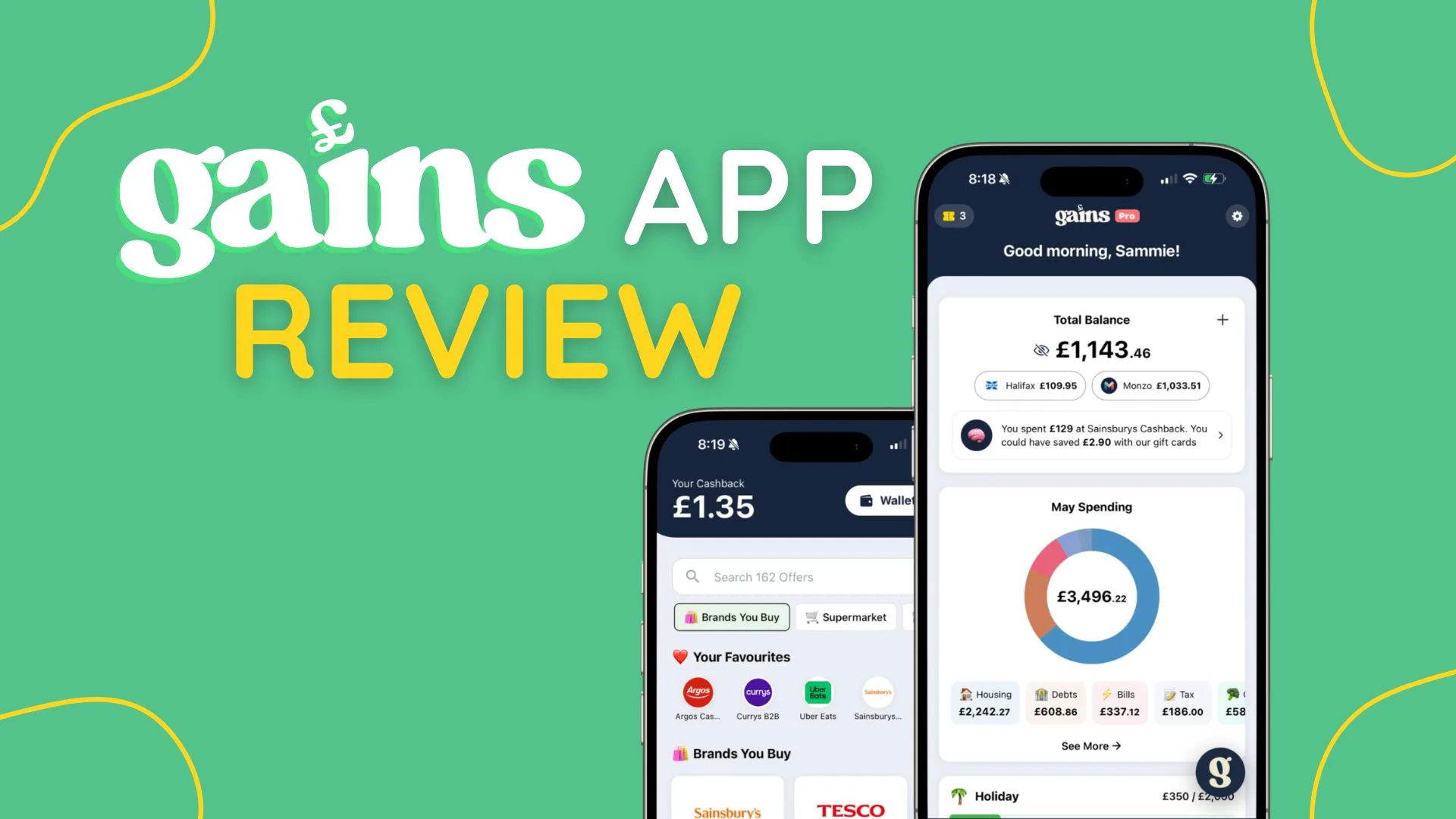
The Gains App is my own app, so take this with that in mind. It’s newer, with AI budgeting tools and cashback rewards on your everyday spending, but no built-in savings account. If you want to make money back as well as track it, Gains is a strong option. You can hear why I built my own budgeting app, including the apps I tried first.
Snoop vs Plum
Snoop has better budgeting tools and the household bills feature, but Plum wins on options for saving and investing your money. Read my full Plum app review.
Snoop vs Chip
Chip is more of a savings app than a budgeting app, so for budgeting I’d pick Snoop over Chip. They’d work well as a pair, with Chip’s savings and investing alongside Snoop’s tracking. See my Chip review.
Snoop vs Emma
Emma offers a wider set of budgeting tools than Snoop, but not the same vouchers, deals and bill features that make Snoop so attractive. I personally think Emma is a fantastic option too.
How I tested Snoop
I used Snoop for six months: connecting my current accounts and a credit card, setting budgets, working through the household bills offers and switching my current account. I scored it with our six pillar method, which rates suitability for beginners, useful features, user experience, customer service, price and fees, and customer feedback. Snoop scored 4.4 out of 5 overall.
Every price, rate and feature on this page was re-checked on Snoop’s own website on 10 November 2026, along with the FSCS rules and review sites. If you sign up through our links we may earn a commission. That never changes the score.
Final verdict: is Snoop worth it?
For anyone who wants to get a grip on spending across several banks and stop overpaying for bills, yes, and the free version is enough for most people. It’s slick, quick to set up and, in my case, more than paid for itself through switching. Snoop Plus is only worth it if you need pay-cycle tracking or lots of custom categories and alerts.
If I could add anything, it would be the option to invest directly in Snoop, which apps like Chip and Plum let you do, plus faster savings withdrawals. For a simple household budget, our 10 tips for a simple household budget is a good next step.
FAQs
Is the Snoop app safe?
Yes. Snoop (Usnoop Limited) is registered with the FCA, number 911638, connects through open banking so it never sees your bank login, and uses two-factor authentication and encryption.
Is Snoop free?
Yes. The main app is free. Snoop Plus costs £5.99 a month or £47.99 a year and adds pay-cycle tracking, custom categories, alerts, net worth and exports.
Can Snoop move money from my bank account?
For budgeting, Snoop only reads your balances and transactions. Money only moves when you choose to pay into or withdraw from the Snoop savings account, and only to and from the current account you nominate.
Is my money in Snoop FSCS protected?
Yes, money in the Snoop savings account is held at Vanquis Bank and protected by the FSCS up to £120,000 per person, including any other money you hold with Vanquis.
How long do Snoop withdrawals take?
Requests made before 11am on a working day are actioned the same day. After 11am, or at weekends, they’re actioned the next working day.
Who owns Snoop?
Vanquis Banking Group, a London-listed banking group, has owned Snoop since July 2023.
What happens to my data if I stop using Snoop?
Deleting the app doesn’t cancel its access on its own. Remove the connection in Snoop or through your bank, then ask Snoop to delete your personal data.