Living in London costs a lot more than living in most of the UK. Yes, you are paid more, but the cost of living in London is equally high.
The average cost of living in London for a couple is currently £1,750 – £2,500 depending on where you live.
So, if you’re planning on moving to the big city, make sure you budget accordingly and be prepared for things to cost more!
I lived in the capital for most of my adult life, mainly in East London.
I’ve got personal experience and unique data on the cost of living in London and the average living expenses you’ll face if you aim to live there.
For this study (which was great fun, by the way), I took cabs, got my haircut, visited over 50 estate agents, shopped in multiple stores, travelled all over the city, drank about 1000 coffees and ate out once a week for over two months.
I also spoke to friends in the city about their estimated average monthly costs and living expenses to get a more comprehensive picture for you.
It was an expensive study for me, but hopefully, it provides you with the most comprehensive guide to the cost of living in London.
The real cost of living in London
The cost of living in London varies so much by area, salary, dependants, current living situations and so much more.
London has been known as the centre of the world for centuries and is one of the oldest cities on the planet.
Starting in the City of London and expanding beyond the walls, it now has 32 boroughs and spreads nearly 50 miles wide.
Being such an attractive place to visit and work has meant that the city’s centre has become a sprawling metropolis of offices, bars, shops, tourist traps, and hi-rise living.

What is the current population of London?
The population of London is around 9 million, compared with about 69.5 million for the entire UK (ONS, mid-2025), which is pretty massive!
With this colossal influx of people comes a higher cost of living, and London is one of the most expensive cities to live in the world.
What is the average cost of living in London?
From personal experience, the average cost of living in London as a single person is high compared to most of the rest of the UK.
When I first moved to London as a single person, I lived in a shared house to keep my monthly costs down.
If you’re looking to move to London, it will be hard to afford your own rental property, and you will likely need to share it with someone else the first time.
Things like monthly rent will be your biggest monthly expense.
- The average cost for a single person to live in London – £1750-£2500 a month, including housing costs
- The average cost for a couple to live in London – £3000-4000 a month, including housing costs
- The average cost for a family of four to live in London – £5000-£6000
What is the average living cost in the UK?
Outside London, a single adult needs to earn about £30,500 a year for a minimum acceptable standard of living, according to the Minimum Income Standard research for Trust for London (2025).
For retirees, Pensions UK (formerly the PLSA) says just covering the basics takes £13,900 a year as an individual and £22,500 as a couple (2026).
What are the most expensive areas in London?
The most expensive areas in London are in the city centre, as highlighted by this average rent by area graphic just below.
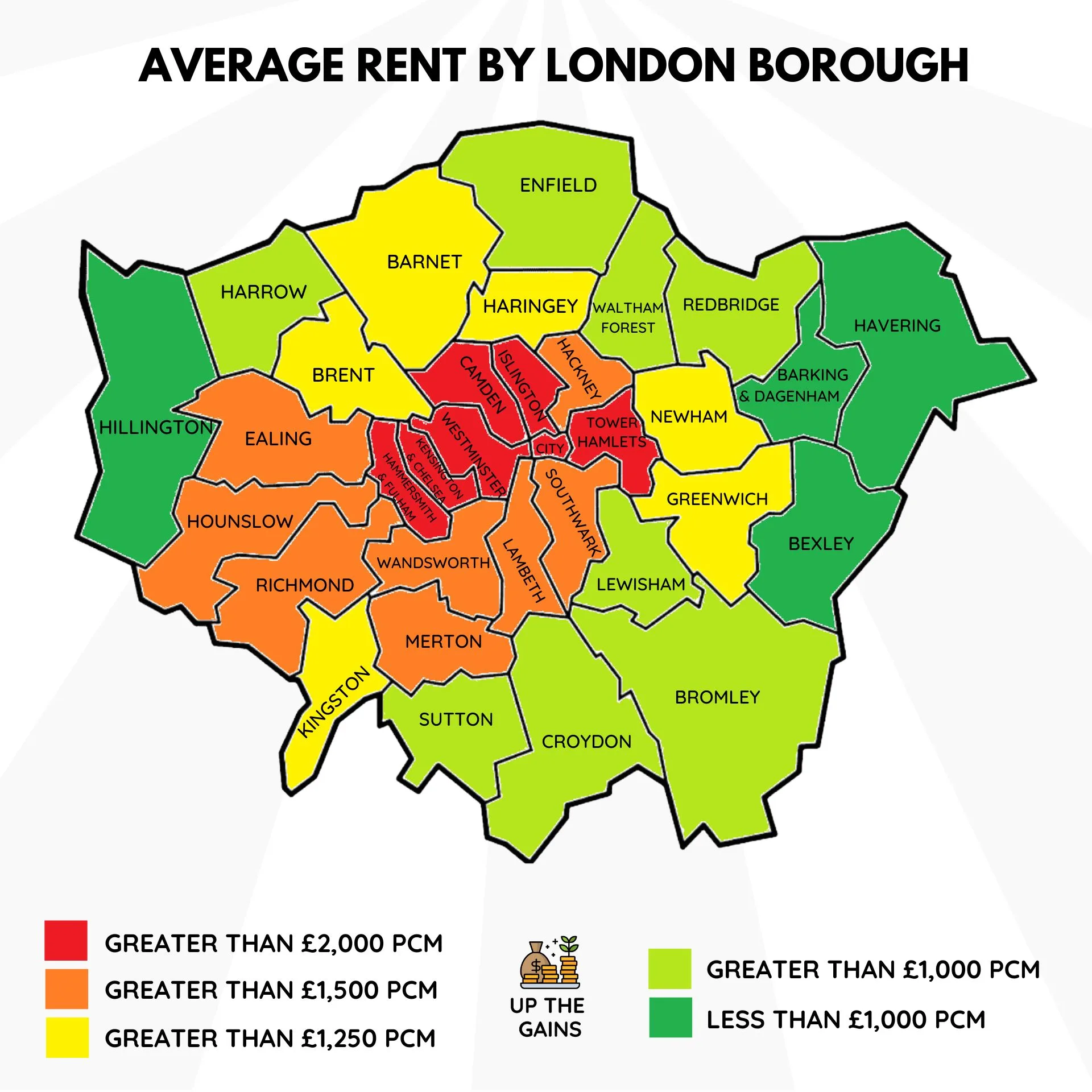
The most expensive borough in London is Kensington and Chelsea, and this is followed closely by the City of Westminster and then, surprisingly, Camden.
The cheapest area in London is currently Bexley, Barking & Dagenham, Havering and Hillingdon. They are however the furthest away from the city centre so you need to juggle this with your commute.
My most recent flat in London was in Blackhorse Road, Waltham Forest which was situated at the end of the Victoria Line plus had relatively cheap rent.

New to investing?
Get my free Checklist: the steps I would follow to open and fill an ISA without the classic mistakes. Plus one email a week, unsubscribe any time.
What salary do I need to live comfortably in London?

So what do you actually need to earn? This depends on whether you want to just survive or properly enjoy the city.
The Trust for London’s Minimum Income Standard – which is based on what real people think everyone should be able to afford — found that a single adult in Inner London needs to earn roughly £54,400 a year for a decent standard of living. In Outer London, it’s a bit less, but still well above average.
For context, that’s 78% more than the £30,500 a single adult needs for the same standard of living in the rest of urban UK. And the biggest drivers? Housing and childcare.
It’s well worth checking out a take-home pay calculator to see what this kind of salary will actually look like when it reaches your pocket.
A survey by Reed also found that Londoners estimate you need around £65,000 to live comfortably. That lines up pretty well with my own experience – I’d say a good salary in London sits somewhere between £50,000 and £65,000 for a single person.
The median full-time salary across the UK is £40,911 (ONS, April 2026). London pay is higher, but plenty of Londoners still earn less than that minimum standard, which is not exactly what you’d call comfortable.
To live comfortably, you need to earn way above average. That’s a big reason I eventually left London.
 Read nextHow to Find a Mortgage Advisor in the UK: The Ultimate Guide
What are the public transportation costs like in London?
The transportation costs in London are excellent because there is so many options for you to take.
The London Underground links are phenomenal, backed up by an extensive overground network that can get you both across the city and the entire country.
Driving in central London can be expensive, with the congestion charge around the city centre being quite pricey, especially if you travel through it daily.
As of January 2026, it’s £18/day (up from £15). Also now applies on weekends (Sat/Sun 12pm–6pm)
Plus, on the 29th August 2023 the ULEZ low emission zone extended to the wider boroughs of London meaning you could be charged if your vehicle doesn’t meet requirements.
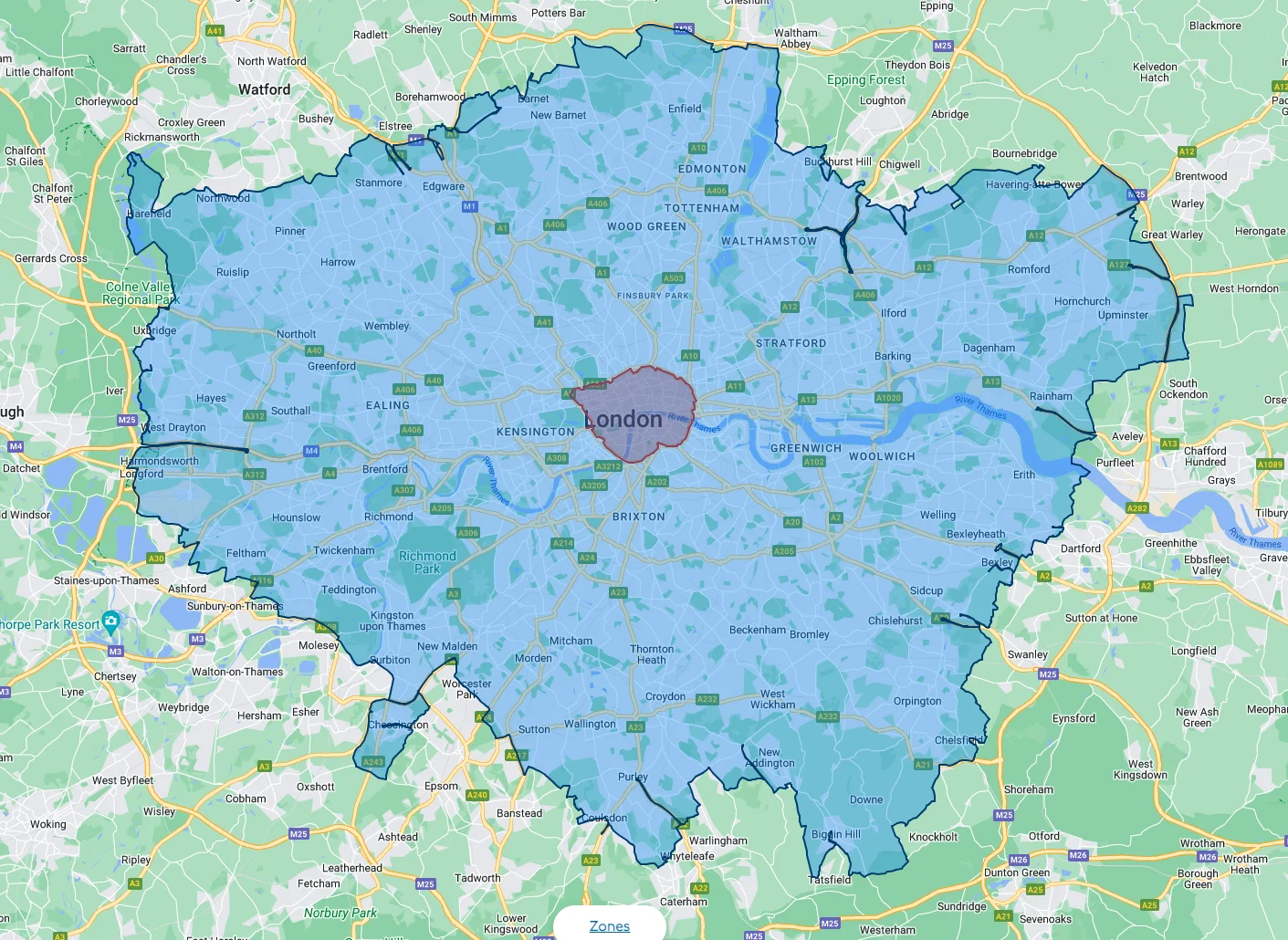
You can check if your car meets requirements on the TFL website.
Most Londoners rely on the public transport network to get them from A to B, usually via tube, DLR, bus or overground.
Buying things like a monthly travelcard keeps the average monthly cost of travel lower. Also, look to avoid travelling at the busier times of the day so you can get the off-peak fares.
London Underground & Overground Fares
- Pay as you go single journeys range from £3.00 off-peak in Zone 1 to £5.90 at peak times across Zones 1 to 6
- Weekly spend on travel cards ranges from £44.70 for Zones 1 to 2 to £81.60 for Zones 1 to 6
- Monthly spend on travel cards ranges from £171.70 for Zones 1 to 2 to £313.40 for Zones 1 to 6
Bus Fares
18+ (adult): £1.75 a single journey and a £5.25 daily cap, rising to £1.85 and £5.55 from 1 November 2026
Child/11-15 with Zip card travel free on buses; half-adult fare is £0.85
Latest figures provided by TFL
Taxi Fares
London is famous for its black cabs and whilst they are a lot of fun, they can be expensive if you’re going far. They run on the meter and change in price depending if peak or off-peak.
You can also access Uber and Bolt, the city’s largest digital taxi apps and often cheaper than black cabs.
How much do everyday items cost in London?
Everyday item costs in London vary depending on where you are and how swanky you’re feeling.
You can easily go out and spend £100s but equally can grab a deal somewhere with a burger and a pint for £10 (more like £15 these days).

On a two-month tour of central London in 2023, I wrote down every cost I spent and made a list of the items for you with averages. Prices will be a bit higher now.
Here are some average living expenses in London from my study:
- Average dinner at a pub for 2 (without wine or beer) – £36
- Average restaurant prices for 2 (with a glass of wine each) – £58
- A pint of lager – £6.10
- A pint of IPA – £6.50
- A pint of Guinness – £6.80 (this makes me sad)
- A glass of house wine – £5.80
- Cinema tickets – £13.80
- Haircuts – Men £25 / Women £110+
- Theatre tickets for 2 – £40-£250 average amount depending on the seats
- Gym membership – £30-75 a month
Not sure where to start?
Pick your goal (debt free, start investing, side income, saving for something big) and get a free money plan you can level up on. Takes about two minutes.
Get your free money planAverage bills in London
The average bills in London are also something you will need to keep in consideration.
From keeping the lights on to keeping your tummy full, London has its own unique price tag.
Here’s how those unavoidable expenses break down.
The Average Cost of Groceries
The average cost of groceries for a couple is around £300 a month based on data from NimbleFins.
For a family of 4 with dependants this increases to £526 a month!
When it comes to daily living, food can eat into your budget more quickly than you might expect.
It’s wise to skip high-end stores and instead make a beeline for places like Aldi or Lidl or make sure you’re earning cashback on all your everyday spending.
Life Online: TV Licences and Broadband Charges
In today’s world, fast internet isn’t a luxury; it’s a necessity, especially if you’re studying or working from home.
And don’t forget: if you stream anything or have a TV set, a UK TV license is compulsory.
My BT bill was £32 but I paid for high-speed internet as I often worked from home. My TV licence was £13 a month back then (it’s now £180 a year, or £15 a month).
So, before you even unpack, make sure to compare broadband deals and packages that suit your needs. There’s usually a good deal to be had if you dig a little.
Energy Bills: Keeping the Home Fires Burning
You’ve paid the rent – now it’s time to keep the lights on. Many Londoners pay separate gas and electricity bills, but combining these can be both easier and cheaper.
Believe me, dual fuel tariffs are worth considering.
A monthly commitment of about £145 for both gas and electricity is a good ballpark figure for a typical home paying by Direct Debit, based on Ofgem’s price cap of £1,723 a year from October to December 2026.
This does depend on the energy rating of your house so be sure to check into this before you buy that beautiful old house that costs a fortune to heat.
How to reduce the cost of living in London?

Living in London on a budget can be done. I’ve been there and done it, starting on a 25k salary right through to a 60k salary.
Unfortunately, living costs are on the rise and there are always fixed bills that you can’t get out of.
For example, you always have to pay council tax and your energy bills, but there are other ways to keep costs down.
Here are 10 ways I used to help me spread the cost of living:
- Use budgeting apps or money-saving apps
- Look for discounts
- Sign up for Cashback apps
- Home or outdoor workouts
- Walk more and reduce public transport
- Batch cook meals
- Savvy shopping in Lidl and Aldi
- Buy unbranded goods and clothes
- Flat sharing in furnished accommodation
- Ride a bike
Student accommodation costs in London
Student accommodation costs vary from £150-300 a week depending on the area, quality of the student halls and space required.
This is somewhat lower than the average London flat share which is currently sitting at around £800-1000 for a single room.
Should you opt out and go for a one bedroom flat this increases again depending on which borough you go for.
Is London expensive?
Yes, London is one of the most expensive cities in the world, and when compared to the rest of the UK the only city that comes close to the cost of living in London is Edinburgh or Manchester.
House prices and everyday items are much higher, but salaries also match this, with the average wage in London being 25% higher than in the rest of the UK average, according to City AM.
If you add up your monthly cost of living in London, then it can price a lot of people out, but it is more than possible to live in London and enjoy it. It’ll just hurt your wallet along the way.
FAQs
What is a good salary in London?
If you’re single, then a decent salary to live in London is somewhere between £50,000 and £65,000. This salary will allow you to have a comfortable property and enjoy the occasional luxury or night out.
You will likely need to avoid trying to live in central London, where the annual average cost of living is much higher, but if you are smart and live in the suburbs, your daily expenses can be pretty affordable.
How much rent do Londoners pay?
The average rent across London is £2,338 a month (ONS, September 2026).
Renting rates are higher in the capital as higher property prices make it harder for Londoners to get onto the property ladder.
Londoners are spending more on rent than in other cities, with up to 40% of their monthly wage going towards rent
Can I live in London on 30k a year?
Yes, you can live in London on a 30k salary but you will most likely need to live in a property share and conduct a monthly budget to ensure you cover costs.
At this salary level, your income tax will be lower as you’re not in the higher tax bracket.
Living in the suburbs of London makes it slightly cheaper and being a savvy shopper will help lower your outgoing but it is more than possible to live in London on this salary.
Is London cheaper than New York?
Yes, London is cheaper than New York but not by much.
Although in general the UK pays less than their American cousins, we don’t have to pay large premiums on health insurance.
How much do you need to earn to live comfortably in London?
For most single people, it takes a salary of over £50,000 to live comfortably in London.
This is simply the number it takes to live relatively comfortably in a decent area and still be able to afford a few luxuries each month.
Final Thoughts
So, we’ve established that the cost of living in London is higher than in all other places in the UK. However, if you manage your money, it’s more than possible to get by.
Overall your monthly rent will be your most significant cost, so if you’re wise about where you live, you can keep to a monthly budget!
That being said, if you want to save and invest your money but are on an average wage, then London isn’t the best place to live.
My London budget and monthly expenses changed a lot over the years as energy prices rose and average rents increased, but luckily so did my salary, so I could offset this by increasing my income.
The UK capital is beautiful, but boy, is it an expensive city!
Share this article with friends
Disclaimer: Content on this page is for informational purposes and does not constitute financial advice. Always do your own research before making a financially related decision.